
- 0
- 1,107 word
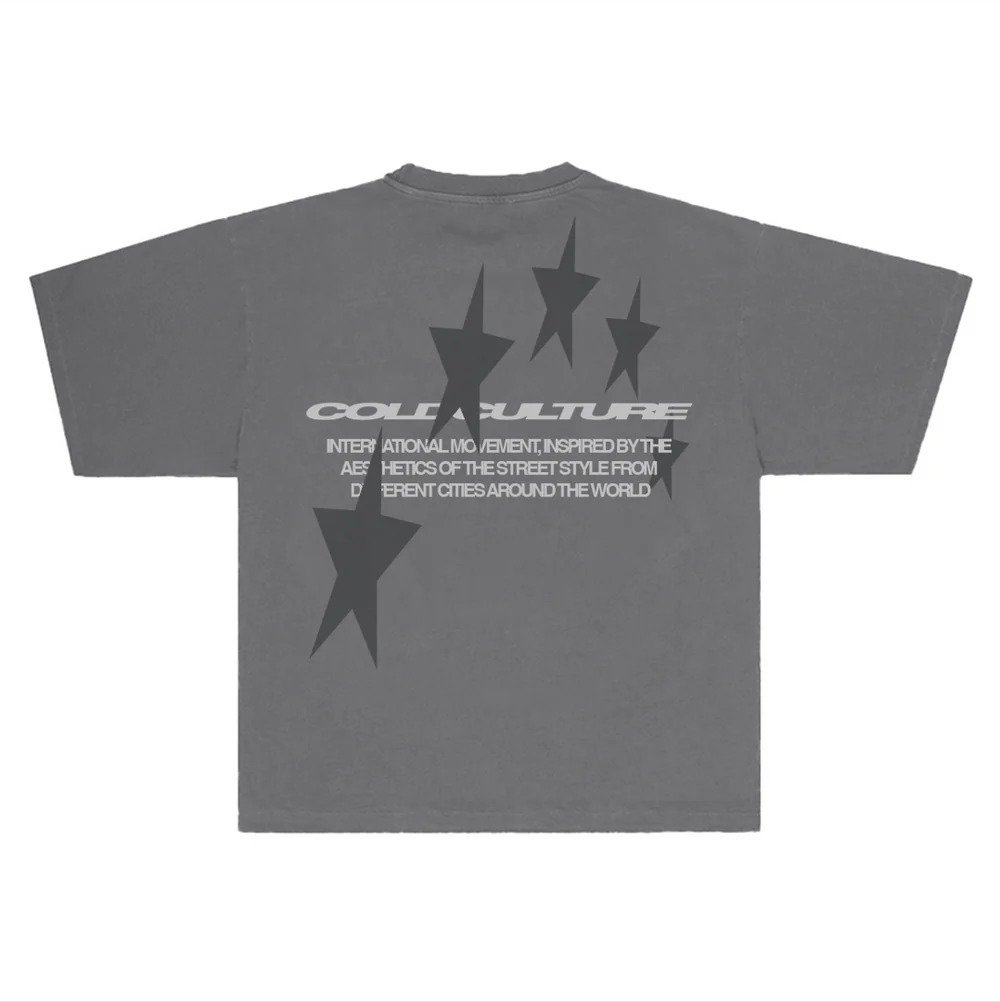
Seventeen shirts hang on the tee page, and every single one of them rings up at €80. Not €79 for the plain ones and €85 for the big graphics — the same figure, seventeen times over. On a catalogue of 117 pieces that’s a strange little island of flatness, and it quietly changes how you shop that rail at Cold Culture, because the number under the photo has stopped telling you anything at all.
One number, seventeen hangers
Most shops train you to read price as a ranking. Cheaper shirt, thinner cotton, smaller print. Pricier shirt, heavier weight, more ink. You scroll, you compare the figures, and the figures do your thinking for you.
That doesn’t work here. A white tee with a single small chest mark and a shirt carrying a full front graphic cost you the identical €80, so the comparison you’re used to making collapses before you even open a product page. Which sounds annoying. It’s actually a relief, once you adjust — you get to pick on looks and fit instead of doing arithmetic in your head on a phone screen in a café.
The prices behind the price
Here’s the part that makes the flat €80 interesting rather than just tidy. The shirts don’t all carry the same list price behind that figure. Some sit above €110 on paper; most sit at €100. So the reduction you’re getting swings by more than twenty euros from shirt to shirt, while your card gets charged the same amount either way.
| Tee | Listed at | You pay |
| Down to Luck, bright blue | €122 | €80 |
| Cosmos Arc, smoked gray | €113 | €80 |
| Tinta India Cosmos Arc | €112 | €80 |
| Down to Luck, dark blue | €111 | €80 |
| Equipo Frío, Olympic gray | €111 | €80 |
| Companion Lion, black | €110 | €80 |
| The remaining ten shirts | €100 | €80 |
Read down that middle column, and you can more or less see the shop’s own opinion of its tee rail. The two Down to Luck shirts and the two Cosmos Arc prints are the ones it values highest. Ten shirts share a flat €100 behind them. None of that shows up at checkout, which is exactly why it’s worth a look before you buy — it’s the only pricing signal left on the page.
If money’s off the table, what’s left?
Three things, and they’re all visual. Color, print scale, and how the cotton falls on you. Scrolling the camiseta cold culture page with those three in mind takes about four minutes, versus the twenty you’d spend trying to work out whether the dearer shirt is somehow better.
Start with what you already own too much of. If your drawer is five white shirts deep, the two blues and the indigo archive print are doing more for you than a sixth white one, even though all of them cost €80. And if you wear a lot of black on the bottom half, the Olympic gray and the light gray Cliff read cleaner against it than ivory does.
Color does most of the sorting
The seventeen split along fairly plain lines. Five shirts land in white or ivory, five in a shade of gray, three in blue, and then there’s one black, one green camo. That tells you something about the rail’s intent, honestly — it’s built around neutrals with a few louder exceptions rather than the other way round.
- White and ivory shirts show print detail best, and they show sweat marks and coffee just as clearly.
- Grays hide both, and the smoked and Olympic tones sit closer to charcoal than to pale heather.
- The blues and the green camo are the shirts people actually notice, so they get worn less often and last longer by accident.
- Black shows white print at full contrast but fades fastest in strong Spanish sun.
Eighty euros through a Cádiz August
Spain punishes a summer wardrobe. In Cádiz or Toledo you’re changing shirts twice a day through July, and whatever you bought in March gets thirty or forty wears in a single season instead of the ten a northern European summer would give it.
So the flat €80 lands differently depending on what you plan to do with the shirt. Spread across a summer of near-daily wear it’s small money per outing. Bought as a shirt you keep for weekends and good occasions, it’s a considered purchase, and you should care about the print you chose. Same price, two completely different calculations, and only you know which one you’re making.
Where the tee sits against the rest of the shop
Worth knowing for context: the tee rail isn’t the only flat one here. The Sweatshirts rail runs at a level €90 as well, while the hoodie page spreads from €90 up to €111 and the shorts stretch all the way from €55 to €99. Against those, €80 for every shirt starts to look like a house style rather than a coincidence — the shop seems to prefer one clean number per category wherever it can manage it.
Frequently Asked Questions
Does the €80 cover every tee, or just some of them?
Every one of the seventeen shirts currently on that page. There’s no premium tier and no cheaper basics line sitting underneath it.
Is a shirt listed at €122 better made than one listed at €100?
Nothing on the page says so. The higher list prices track the prints the shop rates most, not a different cotton or a different cut, so treat them as a popularity hint and not a quality grade.
Which color should I pick if it’s my first shirt from here?
A gray, probably. The smoked and Olympic tones go with more of what you own, they survive a Spanish summer better than white, and they still let a print read properly.
What about shipping and returns?
Both appear at checkout rather than on the product page, so check them there before you confirm — no figure printed in an article would be worth trusting.
| Key TakeawaysAll seventeen tees sell at a flat €80, so price can’t rank them for you.Behind that figure the list prices run from €100 to €122 — the only ranking the page gives you.Ten of the seventeen are white, ivory or gray, so color is where the real choosing happens.The Sweatshirts rail is flat at €90 too, which suggests one price per category is a house rule here, not a fluke. |
A flat rail is a small kindness. It takes the comparison shopping out of your hands and hands you back the only question that matters — which of these shirts do you actually want to put on tomorrow morning? Scroll the seventeen slowly, ignore the figure in the corner, and pick the two you keep coming back to.
Author

IQnewswire@gmail.com
Related Posts
10 Questions to Ask Before Hiring an Events Agency in KSA
- 0
- 1,232 word
A bad choice of agency is a lot more expensive than mere monetary loss. Time, reputation, and trust of your guests are...
Read out all
How to Choose the Right Communication Radio for Work in Mexico
- 0
- 923 words
Reliable communication can make daily operations safer, faster, and more coordinated. Construction crews, security teams, hotels, factories, transportation companies, event organizers, boat...
Read out all
How to Stock a Small Office for the Year: A Practical Supplies Plan
- 0
- 1,439 word
Office supplies rarely make a small business’s list of big decisions, and that is exactly the problem. They get bought in a...
Read out all
Fallston AC Repair: Practical Diagnostics, Humidity Challenges, and Repair-or-Replace Choices
- 0
- 1,221 word
When a cooling system falters on a hot day, the problem feels urgent. Yet a calm, step-by-step approach saves time and prevents...
Read out all
Household Water Pressure Problems: How to Diagnose PRV and Expansion Tank Issues at Home
- 0
- 978 words
Surging showers one minute and a trickle the next can make a normal day feel complicated. Most whole‑home pressure issues trace back...
Read out all
Household Water Pressure: Diagnose Risk and Prevent Damage Before Leaks Start
- 0
- 1,026 word
Water pressure that looks fine at the faucet can still be hard on your plumbing. Excess pressure and sudden stops in flow...
Read out all