
- 0
- 691 words
Have you ever seen it in a text or comment and paused for a second? Texting shortcuts can be confusing at first, especially when people use them casually in everyday chats. In this guide, you will learn the meaning of, how it is used in texting, and when it feels natural to use it yourself.
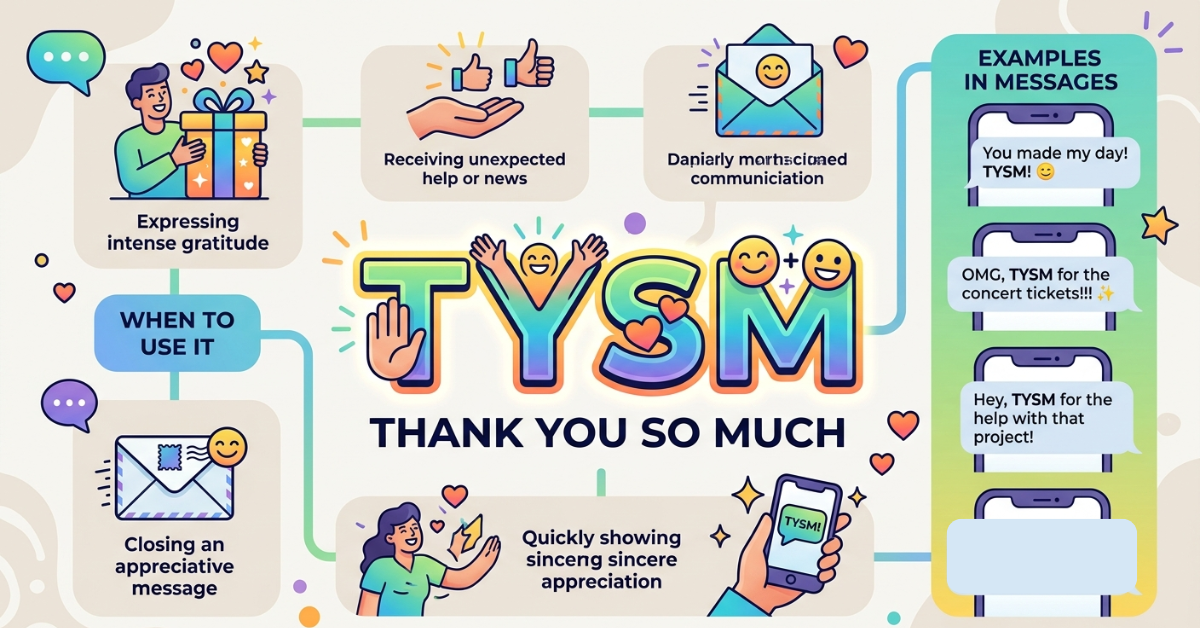
It stands for “thank you so much.” It is a common abbreviation used in messages, comments, and social media posts to express gratitude quickly and warmly.
What it Means in Texting
It is one of the easiest texting abbreviations to understand. It is simply a shorter way of saying “thank you so much.” People use it when they want to show appreciation without typing out the full phrase.
You will often see it in:
- text messages
- WhatsApp chats
- Instagram comments
- Snapchat replies
- TikTok messages
- online gaming chats
It is casual, friendly, and widely understood across digital conversations.
Why People Use TYSM
People use it because it saves time and still sounds polite. It feels a little warmer than a short “thanks” and more expressive than “ty.”
Common reasons include:
- It is quick to type
Short forms make texting faster and easier. - It sounds appreciative
The “so much” part adds warmth and sincerity. - It fits casual online communication
Abbreviations are common in social media and chat apps. - It keeps messages light and friendly
TYSM works well in relaxed conversations.
Examples of TYSM in Real Conversations
Here are a few natural examples:
- “TYSM for helping me with this.”
- “TYSM, I really appreciate it.”
- “TYSM for the gift!”
- “TYSM for your support.”
- “TYSM!! That means a lot.”
In each case, the message shows gratitude in a simple, friendly way.
TYSM vs Other Thank-You Shortcuts
There are several short ways to say thank you online, but each one feels a little different.
- TY = thank you
- THX = thanks
- TYSM = thank you so much
It usually feels more heartfelt than the shorter versions. It is a good choice when you want your appreciation to sound a bit stronger.
When to Use TYSM
It is best for informal situations. It works well with friends, classmates, family, and online communities.
Good times to use it:
- after someone helps you
- when replying to a kind message
- when thanking someone for a favor
- in casual social media replies
Example:
“TYSM for sending the notes. That helped a lot.”
When Not to Use TYSM
It is not the best choice in formal writing. In professional emails, school assignments, or official messages, it is better to write the full phrase.
Better formal version:
- “Thank you so much for your help.”
- “I truly appreciate your support.”
Using the full phrase sounds more polished and appropriate in formal settings.
Is TYSM Polite?
Yes, it is generally polite. It is often seen as kind, appreciative, and friendly. The meaning stays positive, but the tone depends on the situation.
If you use it in a casual chat, it sounds perfectly natural. In a formal message, though, writing out the full words is usually the better choice.
Quick Summary
- TYSM means thank you so much
- It is commonly used in texting and social media
- It is casual, friendly, and polite
- It works best in informal conversations
- In formal writing, use the full phrase instead
FAQ
What does TYSM mean in text?
It means “thank you so much.” People use it in texting to show gratitude quickly.
Is TYSM rude?
No, it is not rude. It is usually polite and warm in casual conversation.
Can I use TYSM in professional messages?
It is better to avoid it in professional or formal messages. Writing the full phrase sounds more appropriate.
Is TYSM the same as TY?
Not exactly. TY means “thank you,” while it means “thank you so much,” which sounds more expressive.
Where is TYSM commonly used?
It is commonly used in text messages, social media comments, chats, and other informal online conversations.
Conclusion
Now you know the meaning and how it fits into everyday texting. It is a simple abbreviation that helps people express gratitude in a fast, friendly way. When used in the right context, it makes messages feel warm and nat
Author

linguaezone.com@gmail.com
Related Posts
Kill Two Birds With One Stone Alternative: 50 Better Options
- 0
- 1,569 word
Have you ever paused before saying “kill two birds with one stone” because it sounded too violent or simply didn’t fit the...
Read out all
Happy Sabbath Meaning: A Complete Guide to Its Significance
- 0
- 1,632 word
Have you ever received the message “Happy Sabbath” and wondered what it truly means? Is it simply another way of saying “have...
Read out all
I’m So Proud of You in Other Words: 120+ Heartfelt Alternatives
- 0
- 1,562 word
Have you ever wanted to tell someone you’re proud of them but felt like saying “I’m so proud of you” sounded repetitive?...
Read out all
How Do You Spell Happy Anniversary? Correct Spelling Guide
- 0
- 1,221 word
Have you ever paused before writing an anniversary card and wondered, “How do you spell happy anniversary?” You’re not alone. Whether you’re...
Read out all
Waiting for Your Response Email: Best Examples & Tips
- 0
- 1,483 word
Have you ever sent an important email and found yourself wondering whether you should follow up or simply wait? Whether you’re communicating...
Read out all
Great Asset to the Team: Meaning, Examples & Tips
- 0
- 1,494 word
Have you ever wanted to compliment a coworker but struggled to find words that sound professional and sincere? One of the most...
Read out all