
- 0
- 1,483 word
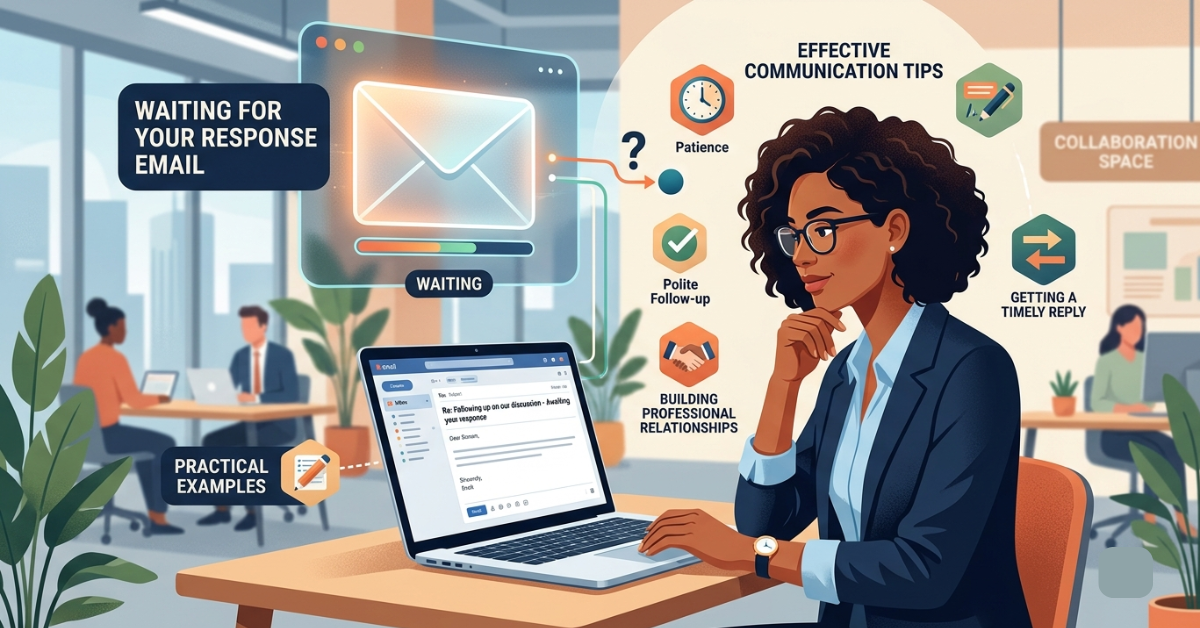
Have you ever sent an important email and found yourself wondering whether you should follow up or simply wait? Whether you’re communicating with a client, recruiter, manager, professor, or business partner, knowing how to write a waiting for your response email can make a significant difference in getting timely replies while maintaining professionalism.
A well-crafted email shows patience, respect, and clear communication without sounding demanding. In this guide, you’ll learn when to send a waiting email, how to phrase it politely, common mistakes to avoid, and ready-to-use templates for different situations.
What Is a Waiting for Your Response Email?
A waiting for your response email is a professional message sent to politely remind someone that you’re awaiting their reply or feedback. It acknowledges that you’ve previously reached out and gently encourages the recipient to respond when convenient.
These emails are commonly used for:
- Job applications
- Business proposals
- Client approvals
- Project updates
- Customer support requests
- Academic communications
- Vendor follow-ups
- Partnership discussions
The goal isn’t to pressure the recipient—it’s to keep the conversation moving while remaining courteous.
Why Sending a Polite Follow-Up Matters
People receive dozens—or even hundreds—of emails every day. Sometimes your message simply gets buried in a crowded inbox.
Sending a respectful follow-up helps:
- Bring your email back to their attention.
- Demonstrate professionalism.
- Show genuine interest.
- Prevent unnecessary delays.
- Improve communication and project timelines.
A thoughtful reminder often increases the chances of receiving a response without damaging the relationship.
When Should You Send a Waiting for Your Response Email?
Timing depends on the context.
After a Job Interview
Wait approximately:
- 5–7 business days if no timeline was provided.
- Until after the expected decision date if the recruiter gave one.
Business Proposal
Allow:
- 3–5 business days for routine proposals.
- 1–2 weeks for large contracts or complex negotiations.
Client Feedback
A reminder after 2–4 business days is generally appropriate, especially if your work depends on their approval.
Internal Team Communication
If the task is urgent, following up within 24–48 hours may be acceptable.
How to Write a Professional Waiting for Your Response Email
A strong follow-up email follows a simple structure.
1. Use a Clear Subject Line
Examples include:
- Following Up on My Previous Email
- Just Checking In
- Awaiting Your Feedback
- Friendly Reminder
- Follow-Up Regarding Our Discussion
- Checking on the Status
Avoid vague subject lines like “Hello” or “Update.”
2. Start with a Polite Greeting
Examples:
- Dear Mr. Ahmed,
- Hi Sarah,
- Hello Dr. Khan,
Choose the greeting based on your relationship with the recipient.
3. Mention Your Previous Email
Briefly remind them of your earlier message.
Example:
I hope you’re doing well. I wanted to follow up regarding the email I sent last Tuesday about the project proposal.
This immediately provides context.
4. State Why You’re Following Up
Keep your purpose concise.
Example:
I’m waiting for your feedback before moving forward with the next phase of the project.
5. Remain Respectful
Avoid language that sounds impatient.
Good examples:
- Whenever you have time.
- At your earliest convenience.
- When it’s convenient for you.
- I appreciate your consideration.
6. End Positively
Close with appreciation.
Example:
Thank you for your time. I look forward to hearing from you.
Best Waiting for Your Response Email Examples
Example 1: General Business Follow-Up
Subject: Following Up on My Previous Email
Hi James,
I hope you’re doing well.
I’m following up regarding my email from earlier this week about the marketing proposal. I understand you may have a busy schedule, but I wanted to check whether you’ve had a chance to review it.
I’m waiting for your response and would appreciate any updates whenever it’s convenient.
Thank you, and I look forward to hearing from you.
Best regards,
Emily
Example 2: Job Interview Follow-Up
Subject: Follow-Up Regarding Interview
Dear Hiring Manager,
Thank you again for taking the time to interview me for the Marketing Coordinator position.
I’m writing to politely follow up regarding the hiring decision. I’m still very interested in joining your team and would appreciate any updates when available.
Thank you for your consideration.
Kind regards,
Michael
Example 3: Client Approval
Subject: Awaiting Your Feedback
Hi Rachel,
I hope everything is going well.
I wanted to check whether you’ve had an opportunity to review the design concepts I shared last week.
Once I receive your feedback, I’ll begin the final revisions.
Thank you for your time.
Best,
Alex
Polite Alternatives to “Waiting for Your Response”
Repeating the same phrase can make emails sound repetitive. Instead, consider these alternatives:
| Instead of | Try Saying |
| Waiting for your response | Looking forward to your reply |
| Waiting for your feedback | I’d appreciate your feedback |
| Please respond soon | Whenever you have a chance |
| Reply quickly | At your earliest convenience |
| Waiting for your confirmation | Kindly let me know your decision |
| Waiting to hear back | Looking forward to hearing from you |
These expressions sound warmer and more natural.
Common Mistakes to Avoid
Even experienced professionals occasionally send ineffective follow-up emails.
Avoid these mistakes:
Being Too Pushy
Poor example:
Why haven’t you responded yet?
Better:
I just wanted to follow up in case my previous email was overlooked.
Following Up Too Soon
Sending reminders only a few hours later may appear impatient.
Give the recipient reasonable time before checking in.
Writing Long Emails
Keep follow-up messages concise.
Aim for 75–150 words whenever possible.
Forgetting the Context
Always remind the recipient which conversation you’re referring to.
Using Negative Language
Avoid phrases like:
- I’m still waiting.
- You haven’t replied.
- I’ve emailed multiple times.
Instead, remain positive and solution-focused.
Email Etiquette Tips That Increase Response Rates
Small improvements can make your emails far more effective.
Keep It Short
Busy professionals appreciate concise communication.
Make Your Request Clear
Specify exactly what you’re waiting for.
For example:
- Approval
- Feedback
- Documents
- Confirmation
- Decision
Proofread Before Sending
Check for:
- Grammar
- Spelling
- Recipient’s name
- Attachments
- Subject line
Choose the Right Time
Business emails often receive higher engagement during weekday working hours.
Waiting for Your Response Email vs. Follow-Up Email
Although people often use these terms interchangeably, they have slightly different purposes.
| Waiting for Your Response Email | Follow-Up Email |
| Focuses on awaiting a reply | Can include reminders, updates, or additional information |
| Usually shorter | May contain new details |
| Sent after no response | Can be sent after meetings, interviews, purchases, or events |
In practice, a waiting email is a type of follow-up email.
Professional Closing Lines
Consider ending your email with one of these phrases:
- I appreciate your time and consideration.
- Thank you for your attention.
- Looking forward to hearing from you.
- I appreciate your prompt response.
- Thank you for your assistance.
- I look forward to your feedback.
- Please let me know if you need any additional information.
A professional closing leaves a positive final impression.
Key Takeaways
- A waiting for your response email is a polite reminder sent after an earlier message.
- Keep your follow-up brief, respectful, and specific.
- Give recipients enough time before sending a reminder.
- Use professional language instead of demanding responses.
- Include context so the recipient immediately understands your email.
- End with appreciation and a clear call to action.
Frequently Asked Questions
What is a waiting for your response email?
A waiting for your response email is a courteous follow-up message sent to remind someone you’re awaiting their reply, feedback, or decision. It’s commonly used in professional, academic, and business communication.
Is it polite to say “waiting for your response”?
Yes, but softer alternatives often sound more natural. Phrases like “I look forward to hearing from you” or “I’d appreciate your feedback” are generally considered more professional.
How long should I wait before sending a follow-up email?
For most professional situations, waiting three to seven business days is appropriate. The ideal timing depends on the urgency and context of your original email.
How do I politely remind someone to reply?
Start by referencing your previous message, acknowledge they may be busy, and kindly ask whether they’ve had an opportunity to review your email. Keep the tone friendly and respectful.
Can I send multiple follow-up emails?
Yes, but avoid excessive reminders. Two or three well-spaced follow-ups are generally acceptable before considering another communication method.
What should I avoid in a waiting for your response email?
Avoid sounding impatient, using accusatory language, sending reminders too frequently, or writing lengthy emails. Professionalism and courtesy usually lead to better response rates.
Conclusion
Writing an effective waiting for your response email is about balancing persistence with professionalism. A concise, polite follow-up can bring your message back to the recipient’s attention without creating pressure or frustration.
Whether you’re waiting for interview feedback, client approval, business decisions, or project updates, using the right tone, timing, and structure helps build stronger professional relationships and improves the likelihood of receiving a timely response. The next time you’re waiting to hear back, apply these strategies to write follow-up emails that are respectful, clear, and effective.
Author

linguaezone.com@gmail.com
Related Posts
Kill Two Birds With One Stone Alternative: 50 Better Options
- 0
- 1,569 word
Have you ever paused before saying “kill two birds with one stone” because it sounded too violent or simply didn’t fit the...
Read out all
Happy Sabbath Meaning: A Complete Guide to Its Significance
- 0
- 1,632 word
Have you ever received the message “Happy Sabbath” and wondered what it truly means? Is it simply another way of saying “have...
Read out all
I’m So Proud of You in Other Words: 120+ Heartfelt Alternatives
- 0
- 1,562 word
Have you ever wanted to tell someone you’re proud of them but felt like saying “I’m so proud of you” sounded repetitive?...
Read out all
How Do You Spell Happy Anniversary? Correct Spelling Guide
- 0
- 1,221 word
Have you ever paused before writing an anniversary card and wondered, “How do you spell happy anniversary?” You’re not alone. Whether you’re...
Read out all
Great Asset to the Team: Meaning, Examples & Tips
- 0
- 1,494 word
Have you ever wanted to compliment a coworker but struggled to find words that sound professional and sincere? One of the most...
Read out all
FYP Full Form in Chat: Meaning, Uses, and Examples
- 0
- 1,368 word
Have you ever received a message saying “FYP” and wondered what it actually meant? Or perhaps you’ve seen it all over TikTok...
Read out all