
- 0
- 2,018 words
Introduction
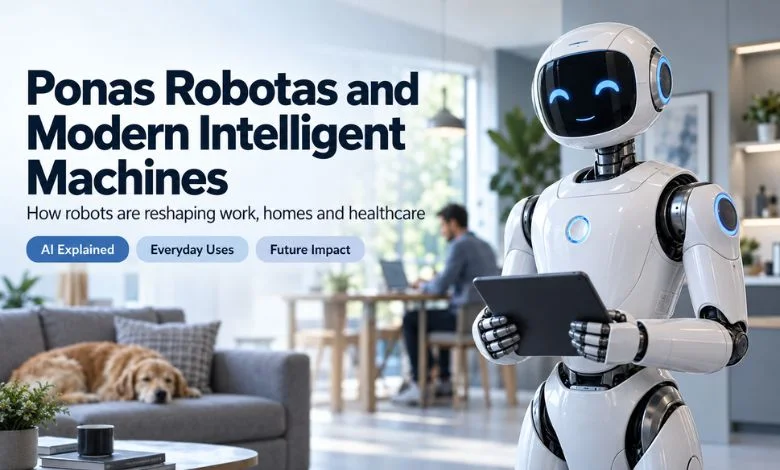
Technology continues to transform the way people live, work, communicate, and solve everyday problems. Among the most interesting developments is the growing use of robots and intelligent machines. The keyword ponas robotas offers an interesting starting point for exploring this technological world. Although the exact meaning and identity of Ponas Robotas are not clearly established, the phrase can be explored in the broader context of robotics, automation, artificial intelligence, and modern digital innovation.
Robots are no longer limited to science fiction movies or advanced research laboratories. Today, they are used in factories, hospitals, schools, warehouses, homes, and many other environments. Some robots perform repetitive tasks, while others assist people with complicated activities that require precision and consistency.
Understanding Ponas Robotas also provides an opportunity to examine how robotic technology is developing and why intelligent machines are becoming increasingly important in modern society. From basic mechanical systems to sophisticated artificial intelligence, robotics represents one of the most exciting areas of technological progress.
What Is Ponas Robotas?
Ponas Robotas is a phrase that can be discussed in connection with the broader concept of robotics. However, without a verified source identifying a particular product, company, character, or platform by this name, it would be inaccurate to assign it a specific technical identity.
The word combination may attract attention from people searching for information about robots, automated systems, or artificial intelligence. It also creates an opportunity to explore the relationship between humans and machines.
A robot generally refers to a programmable machine designed to perform particular tasks automatically or with limited human assistance. Robots can operate through mechanical instructions, computer programs, sensors, and artificial intelligence.
Modern robotic systems are designed for different purposes. Some move objects, some inspect products, and others interact with people. Their capabilities depend on their hardware, software, programming, and operating environment.
The broader idea behind Ponas Robotas therefore connects naturally with the increasing importance of intelligent machines in everyday life.
Understanding the Development of Robotics
Robotics has developed through decades of scientific research and engineering innovation. Early automated machines were relatively simple and could perform only a limited number of programmed actions.
Industrial robotics became especially important during the twentieth century. Manufacturers began introducing robotic arms to perform repetitive tasks such as welding, assembling, painting, and handling materials.
These machines helped businesses improve production speed and maintain consistent quality. They also reduced the need for workers to perform certain dangerous or physically demanding activities.
As computer technology improved, robots became more advanced. Engineers introduced better sensors, improved processing systems, and more flexible programming methods.
Today, robotics combines several important technologies, including mechanical engineering, electrical engineering, computer science, and artificial intelligence.
This combination allows robots to perform increasingly sophisticated activities while adapting to different working conditions.
Important Features of Modern Robots
Robots can have many different features depending on their intended purpose. Nevertheless, several technologies are commonly found in modern robotic systems.
1. Sensors and Environmental Awareness
Sensors help robots understand their surroundings. They collect information about nearby objects, movement, temperature, distance, light, and other environmental conditions.
For example, a cleaning robot may use sensors to detect walls, furniture, and obstacles. An industrial robot may use cameras to identify products moving along an assembly line.
These capabilities help machines perform tasks more accurately and avoid unnecessary collisions.
2. Artificial Intelligence
Artificial intelligence has become an important part of modern robotics. AI allows machines to process information, recognize patterns, and make decisions based on available data.
For instance, an intelligent robot may recognize different objects and determine which one it needs to pick up.
Machine learning can also help robotic systems improve their performance by analyzing previous information and identifying patterns.
However, not every robot uses artificial intelligence. Many machines still operate through predefined instructions and traditional programming.
3. Movement and Navigation
Movement is another important characteristic of robotics. Some robots use wheels, while others use tracks, mechanical legs, or robotic arms.
Navigation technology helps machines move through their surroundings. Advanced systems can use cameras, sensors, and mapping software to understand their location.
Autonomous mobile robots are particularly useful in warehouses, where they transport products between different areas.
4. Human Interaction
Some robots are designed to communicate with people. They may use microphones, speakers, touchscreens, cameras, or text-based interfaces.
These systems can answer questions, provide instructions, and help users complete basic tasks.
Human interaction is especially important in educational robotics, customer service, healthcare assistance, and entertainment.
Applications of Robotics in Everyday Life
Robotics has become part of many industries. Its applications continue to expand as technology becomes more affordable and accessible.
Robotics in Manufacturing
Manufacturing is one of the most established areas of robotic technology.
Factories use robotic arms to assemble products, move materials, apply coatings, and perform quality inspections. These machines can repeat specific movements with remarkable consistency.
Automation also helps manufacturers increase production capacity and reduce certain operational risks.
Although robots cannot replace every human responsibility, they can support workers by handling repetitive and physically demanding activities.
Robotics in Healthcare
Healthcare organizations use robotic technologies to support medical professionals and improve patient care.
Surgical robotic systems can help trained surgeons perform particular procedures with specialized instruments. Rehabilitation robots can assist patients during physical therapy.
Hospitals also use automated machines to transport supplies, organize equipment, and support logistical operations.
These technologies are designed to assist medical teams rather than independently replace professional medical judgment.
Robotics in Education
Educational robotics introduces students to programming, engineering, mathematics, and problem-solving.
Students can build simple robots using electronic components, sensors, motors, and programmable controllers.
Working with these machines encourages experimentation and creativity. It also helps learners understand how software instructions influence physical objects.
Educational robotics is particularly valuable because it connects theoretical knowledge with practical activities.
Robotics in Agriculture
Agriculture is another industry benefiting from automation.
Modern agricultural robots can help with planting, harvesting, monitoring crops, and identifying certain plant problems.
Drones equipped with cameras can collect information about fields and help farmers monitor crop conditions.
Automated irrigation systems can also use environmental information to manage water distribution.
These technologies may help farmers improve efficiency and make better use of available resources.
Robotics at Home
Home robotics has become increasingly popular.
Robot vacuum cleaners, automatic lawn mowers, and smart household devices help people manage everyday responsibilities.
Some household robots can map rooms, identify obstacles, and follow scheduled cleaning routines.
As technology improves, domestic robots may become more capable of performing different household activities.
The Relationship Between Robotics and Artificial Intelligence
Robotics and artificial intelligence are closely connected, but they are not identical technologies.
Robotics focuses on creating physical machines that can interact with the real world. Artificial intelligence focuses on developing computer systems capable of performing tasks that traditionally require human-like intelligence.
When these technologies work together, robots can become more adaptable and capable.
For example, a traditional robotic arm may follow a fixed movement pattern. An AI-powered robotic arm may use computer vision to identify objects and adjust its movements according to their positions.
This combination creates opportunities for more flexible automation.
However, intelligent robotics also presents challenges. AI systems require reliable data, careful testing, and appropriate safeguards. A robot that makes an incorrect decision can cause operational problems or physical harm.
For this reason, safety and responsible development remain essential.
Benefits of Robotic Technology
Robotics offers several advantages to individuals, organizations, and industries.
Improved efficiency: Robots can perform repetitive activities continuously, helping organizations increase productivity.
Greater precision: Properly programmed machines can complete certain tasks with consistent accuracy.
Workplace safety: Robots can handle some dangerous materials and operate in environments that may be unsuitable for people.
Time savings: Automation can reduce the time required to complete routine activities.
Consistency: Robotic systems can repeat established procedures without experiencing ordinary human fatigue.
Innovation: Robotics encourages the development of new products, services, and business opportunities.
These advantages explain why organizations continue investing in automation and intelligent machines.
Challenges and Limitations of Robotics
Despite its advantages, robotics is not a perfect solution for every situation.
High Initial Costs
Developing and installing advanced robotic systems can require substantial investment. Small businesses may find it difficult to afford specialized equipment.
Additional expenses may include maintenance, software updates, employee training, and replacement components.
Technical Complexity
Robots require proper programming, configuration, and maintenance. A technical problem can interrupt operations and create unexpected expenses.
Organizations need qualified professionals who understand the equipment and can troubleshoot problems.
Employment Concerns
Automation can change the nature of employment in different industries. Certain repetitive jobs may become less common as machines take over particular activities.
At the same time, robotics creates demand for professionals working in engineering, programming, maintenance, and system management.
Education and professional training are important for helping workers adapt to these changes.
Security and Privacy
Connected robots may collect information through cameras, microphones, and other sensors.
If these systems are not properly protected, private information could be exposed or misused.
Manufacturers should therefore prioritize secure software, responsible data collection, and regular system updates.
How Robotics May Develop in the Future
The future of robotics is likely to involve greater cooperation between humans and intelligent machines.
Researchers are working on robots that can understand instructions more effectively, recognize objects, and operate in environments that change frequently.
Humanoid robots are another developing area. These machines are designed with human-like physical structures, potentially allowing them to interact with tools and spaces created for people.
Autonomous vehicles and delivery robots may also become more common as navigation systems improve.
Another important development is collaborative robotics. Collaborative robots, sometimes called cobots, are designed to work alongside human employees in suitable environments.
Instead of completely replacing people, these machines can assist with lifting, assembly, inspection, and other activities.
In this broader technological environment, the keyword Ponas Robotas can serve as an interesting entry point for readers exploring the possibilities of modern robotics.
Why People Are Interested in Ponas Robotas
Unfamiliar digital terms often attract attention because people want to understand their meaning and discover whether they refer to a product, service, website, or emerging technology.
Ponas Robotas is an example of a phrase that may encourage curiosity.
People searching for it may be interested in robotics, automated machines, artificial intelligence, or technology-related information.
When researching an unfamiliar term, it is important to distinguish between verified information and general explanations.
Readers should look for reliable documentation, official descriptions, product information, and trustworthy references before deciding that a particular phrase represents an established robotic system.
This approach helps prevent confusion and makes online research more productive.
How Beginners Can Start Learning About Robotics
Anyone interested in robotics can begin learning without immediately purchasing expensive equipment.
The first step is understanding basic concepts such as electricity, programming, sensors, motors, and mechanical movement.
Beginners can then experiment with affordable educational kits that introduce simple robotic projects.
Learning a programming language such as Python can also be helpful. Python is widely used in educational projects, automation, and certain robotics applications.
Online tutorials and practical exercises provide additional opportunities to develop technical knowledge.
Students can begin with simple projects, such as building a small obstacle-avoiding robot or programming a motor to follow specific instructions.
As their skills improve, they can explore more advanced areas such as computer vision, machine learning, and autonomous navigation.
The most important part of learning robotics is consistent practice and curiosity.
Conclusion
Ponas Robotas is an interesting keyword for exploring the expanding world of robotics and intelligent technology. Although a specific product or organization under this exact name cannot be confirmed from the phrase alone, its broader technological connections offer plenty of useful information.
Robotics is transforming manufacturing, healthcare, education, agriculture, and household activities. Modern machines can perform repetitive tasks, assist professionals, improve operational efficiency, and support innovative solutions.
At the same time, challenges involving costs, employment, security, and technical reliability must be considered.
The future of robotics will likely depend on responsible innovation and effective cooperation between humans and machines. As artificial intelligence, sensors, and automation continue improving, robotic systems may become even more useful in everyday life.
For anyone interested in technological progress, exploring Ponas Robotas provides an opportunity to learn more about the fascinating developments shaping the modern robotic world.
Author

blowouttaper.co.uk@gmail.com
Related Posts
Messonde: Exploring the Meaning, Features, Uses, and Growing Interest in Messonde
- 0
- 2,143 words
In today’s rapidly changing digital world, new words, names, platforms, and concepts frequently attract attention. One term that may leave people curious...
Read out all
Emsella: How the Emsella Chair Helps With Bladder Leaks
- 0
- 1,171 word
You laugh at a joke, you sneeze, you pick up your child — and you feel a small leak. You tell yourself...
Read out all
Which Backpack Features Are Worth Paying for on Cyber Monday
- 0
- 832 words
A backpack can look like a good deal until you realize the features you paid for rarely come into play. An extra...
Read out all
Finding Courage, Hope, and Strength in Uncertain Times
- 0
- 949 words
Life is full of unexpected moments. Some days bring happiness and new opportunities, while others challenge our patience and confidence. There are...
Read out all
Wireless Microphone for Fitness Instructors: Clear Voice Recording in Noisy Studios
- 0
- 1,655 word
Clear voice recording in a noisy fitness studio starts with a wireless microphone worn close to the instructor, enough headroom for shouted...
Read out all
Martian Mallow: The Fascinating Story Behind the Vintage Lip Smacker and Its 1990s Nostalgia
- 0
- 2,440 words
Introduction Some products become memorable because of their quality, while others earn a special place in people’s memories through their unusual names,...
Read out all