
- 0
- 2,314 words
The dodgers vs milwaukee brewers match player stats provide an interesting look at two competitive Major League Baseball teams with different strengths, playing styles, and talented rosters. Whenever the Los Angeles Dodgers meet the Milwaukee Brewers, baseball fans expect exciting pitching performances, powerful hitting, defensive plays, and important moments that can change the direction of a game.
The Dodgers are widely recognized for their strong batting lineup, experienced pitchers, and ability to perform under pressure. Meanwhile, the Brewers have built a reputation for competitive pitching, athletic defense, and smart offensive strategies. Comparing their player statistics helps fans understand how individual performances influence the final score.
In this article, we explore the most important statistics to examine during a Dodgers-Brewers matchup, including batting averages, home runs, RBIs, pitching performance, strikeouts, and defensive contributions. We also explain how to interpret player numbers and identify the performances that matter most.
Latest Dodgers vs Brewers Matchup: 2026 NLCS
One of the most important recent meetings between these teams came during the 2026 National League Championship Series. Milwaukee demonstrated its ability to compete against Los Angeles through consistent hitting, effective bullpen work, and timely scoring.
The Brewers won all four games of the series:
| Game | Date | Dodgers | Brewers |
|---|---|---|---|
| Game 1 | October 11, 2026 | 1 | 2 |
| Game 2 | October 12, 2026 | 4 | 7 |
| Game 3 | October 14, 2026 | 2 | 6 |
| Game 4 | October 15, 2026 | 4 | 6 |
dodgers vs milwaukee brewers match player stats completed a four-game sweep, showing impressive consistency against a strong Dodgers lineup. Baseball Almanac+2
This series provides an excellent example of why individual player statistics are important. A team can have talented hitters and experienced pitchers, but successful execution in important situations often determines the outcome.
Dodgers vs Milwaukee Brewers Match Player Stats: Important Batting Performances
Batting statistics help explain which players contributed most to their team’s offensive performance. Several numbers deserve particular attention when evaluating a Dodgers-Brewers matchup.
Los Angeles Dodgers batting statistics
The Dodgers have several important offensive players whose performances can influence a game.
- Mookie Betts: His ability to reach base, hit for power, and contribute defensively makes him an important part of the Dodgers lineup. In Game 2 of the 2026 NLCS, he recorded one hit in three at-bats and scored one run.
- Freddie Freeman: Freeman is known for his consistent contact hitting and ability to drive in runners. He recorded one RBI in Game 2.
- Shohei Ohtani: Ohtani brings exceptional power and offensive versatility. His plate appearances can change the momentum of a game, even when he does not record a hit.
- Teoscar Hernández: Hernández provides additional power and run-producing potential. He contributed an RBI in Game 2.
- Tommy Edman: Edman’s speed and versatility can create offensive opportunities. He scored twice in Game 2.
Baseball Almanac
Milwaukee Brewers batting statistics
Milwaukee’s offensive production was especially important during the championship series. Several players delivered valuable performances.
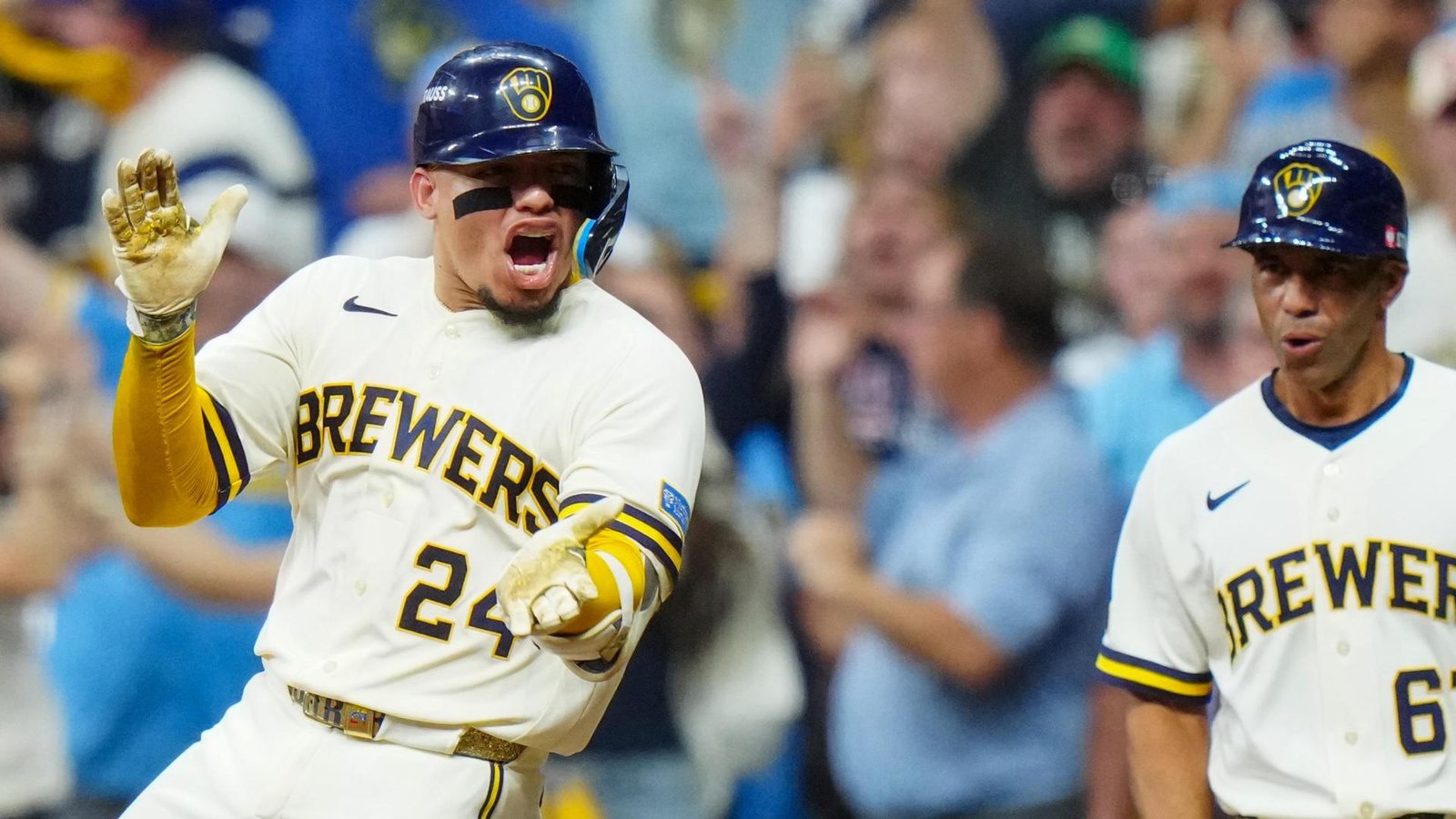
- William Contreras: Contreras was one of the standout performers in Game 2. He recorded three hits in four at-bats, scored one run, hit a home run, and collected three RBIs.
- Brice Turang: Turang recorded two hits in three at-bats, scored three runs, collected one RBI, and added a double.
- Christian Yelich: Yelich contributed two hits and two RBIs in Game 2, providing valuable production from the designated hitter position.
- Jake Bauers: Bauers recorded one hit and one RBI, helping Milwaukee maintain offensive pressure.
- David Hamilton: Hamilton contributed two hits, scored three runs, and stole two bases.
These performances demonstrate how Milwaukee used multiple offensive contributors rather than depending on one player to generate all its runs. Baseball Almanac
Detailed Player Statistics From Game 2
The October 12, 2026 matchup offers a useful statistical example because both teams produced different offensive results.
Official game result: Milwaukee Brewers 7, Los Angeles Dodgers 4.
| Player | Team | Hits | Runs | RBIs |
|---|---|---|---|---|
| Mookie Betts | Dodgers | 1 | 1 | 0 |
| Freddie Freeman | Dodgers | 0 | 0 | 1 |
| Teoscar Hernández | Dodgers | 0 | 0 | 1 |
| Shohei Ohtani | Dodgers | 0 | 0 | 0 |
| Tommy Edman | Dodgers | 1 | 2 | 0 |
| William Contreras | Brewers | 3 | 1 | 3 |
| Brice Turang | Brewers | 2 | 3 | 1 |
| Christian Yelich | Brewers | 2 | 0 | 2 |
| David Hamilton | Brewers | 2 | 3 | 0 |
| Jake Bauers | Brewers | 1 | 0 | 1 |
Source: October 12, 2026 game box score. Statistics shown are from that game, not season totals. Baseball Almanac
The numbers highlight an important difference between the teams. Milwaukee collected 12 hits, while Los Angeles managed only three. The Brewers also received substantial production from their middle and lower lineup positions.
Contreras was particularly effective because he combined consistent contact with power hitting. His three RBIs directly helped Milwaukee build its advantage.
Pitching Statistics: Dodgers vs Brewers
Pitching is another essential part of the Dodgers vs Milwaukee Brewers match player stats. A strong offensive lineup cannot always overcome an opposing pitching staff that consistently limits scoring opportunities.
Dodgers pitching performance
Yoshinobu Yamamoto started Game 2 for Los Angeles. He pitched 2.2 innings, allowed four hits and three earned runs, walked two batters, and recorded one strikeout.
Other Dodgers pitchers also appeared during the game:
- Alex Vesia pitched 0.1 innings and recorded one strikeout.
- Roki Sasaki pitched one inning without allowing a run.
- Kris Bubic allowed one earned run during his appearance.
- Brock Stewart allowed one earned run.
- Tanner Scott recorded three strikeouts in one inning.
- Edgardo Henriquez allowed two earned runs in one inning.
The Dodgers used several bullpen options, but Milwaukee continued creating scoring opportunities throughout the contest. Baseball Almanac+1
Brewers pitching performance
Milwaukee’s pitching staff played a major role in securing the victory.
Logan Henderson started the game and pitched four innings. He allowed three hits and four runs, although only two were earned. He also recorded two strikeouts.
The bullpen then delivered an impressive performance:
- Trevor Megill’s teammates helped maintain the lead through effective relief appearances.
- JoJo Romero earned the win after pitching one scoreless inning.
- Abner Uribe recorded 1.1 scoreless innings and two strikeouts.
- Aaron Ashby pitched 1.2 scoreless innings and earned the save.
The Brewers’ bullpen prevented Los Angeles from scoring again after the fifth inning. This was a major factor in the final result. Baseball Almanac
Home Runs, RBIs, and Extra-Base Hits
Home runs and extra-base hits often become defining moments in Dodgers-Brewers games. These statistics show which players can turn an ordinary scoring opportunity into a major offensive advantage.
William Contreras delivered one of the most memorable moments in Game 2 of the 2026 NLCS when he hit a home run against the Dodgers. The home run came in the fifth inning and helped Milwaukee strengthen its position.
Brice Turang also contributed an important extra-base hit with a double. His ability to combine contact hitting with speed made him a valuable offensive contributor.
For Los Angeles, Kyle Tucker recorded a double during the same game, while Mookie Betts and Tommy Edman helped create opportunities through their offensive contributions.
When examining these statistics, fans should consider more than the number of home runs. Doubles, triples, walks, and total bases can also explain why a team creates more scoring opportunities.
Comparing the Two Teams’ Overall Performance
The following comparison highlights the difference between the teams during Game 2.
| Statistical category | Dodgers | Brewers |
|---|---|---|
| Runs | 4 | 7 |
| Hits | 3 | 12 |
| Errors | 2 | 2 |
| Home runs | 0 | 1 |
| Strikeouts by pitchers | 10 | 9 |
| Walks allowed by pitchers | 6 | 2 |
| Left on base | 2 | 11 |
Baseball Almanac
One interesting detail is that Milwaukee left 11 runners on base but still won comfortably. This indicates that the Brewers generated numerous opportunities, even though they did not convert every scoring chance.
The Dodgers, meanwhile, struggled to produce consistent hits. Their three-hit performance made it difficult to build rallies or put sustained pressure on Milwaukee’s pitchers.
Defensive Contributions and Fielding Statistics
Batting and pitching are important, but defensive performance also deserves attention when analyzing baseball matchups.
Fielding percentage, errors, double plays, assists, and defensive positioning can influence the outcome of close contests.
During Game 2, both teams recorded two errors. Although the Dodgers and Brewers made the same number of fielding mistakes, Milwaukee managed to maintain its offensive advantage.
The Brewers also benefited from important defensive plays. Their ability to turn ground balls into outs helped limit the Dodgers’ opportunities to extend innings.
For Los Angeles, players such as Betts and Edman provide defensive versatility. Their ability to play different positions gives the coaching staff additional lineup flexibility.
Defensive statistics are particularly useful when comparing players who have similar batting numbers. A player who contributes consistent defense can provide significant value even without recording multiple hits.
Head-to-Head Records Between the Dodgers and Brewers
The history between these franchises provides additional context for understanding their matchups.
According to Sports Reference’s historical head-to-head comparison, the Dodgers have accumulated 156 wins against Milwaukee’s 36 wins in their recorded playoff meetings. The Brewers have won 40 regular-season meetings against Los Angeles, compared with 161 Dodgers victories in the listed historical comparison. Stathead
These historical figures should be considered separately from recent results. A franchise’s long-term record does not necessarily predict what will happen in its next game.
The 2026 championship series demonstrated this clearly. Despite Los Angeles’ historical success, Milwaukee won all four games and advanced by completing the sweep.
What Makes Individual Player Statistics Important?
Individual statistics help fans understand how a baseball game develops. Instead of looking only at the final score, readers can examine the performances responsible for the result.
Here are some important categories to consider.
1. Batting average
Batting average measures how frequently a batter records a hit in official at-bats. A higher average can indicate consistent contact hitting, although it does not explain every aspect of offensive value.
2. On-base percentage
On-base percentage measures how often a player reaches base through hits, walks, and hit-by-pitches. It helps identify players who consistently create opportunities.
3. Slugging percentage
Slugging percentage measures a batter’s power production by calculating total bases per at-bat. It gives additional context to home runs and extra-base hits.
4. Runs batted in
RBIs show how many runs a batter drives in through their offensive actions. This statistic is particularly useful when examining performance with runners on base.
5. Earned run average
ERA measures the average number of earned runs a pitcher allows per nine innings. A lower ERA generally indicates stronger run prevention.
6. Strikeouts
Strikeouts show how often a pitcher retires opposing batters without requiring a ball to be put into play. They are an important measure of pitching effectiveness.
Together, these categories provide a more complete understanding of individual contributions.
Key Players to Watch in Future Dodgers vs Brewers Games
Shohei Ohtani
Ohtani remains one of the most exciting offensive players in baseball. His combination of power, speed, and plate discipline makes him a constant threat. Fans should watch his home runs, RBIs, walks, and extra-base hits when evaluating his performances.
Mookie Betts
Betts provides a combination of contact hitting, power, speed, and defensive ability. His on-base percentage and runs scored can help explain how effectively the Dodgers establish offensive momentum.
William Contreras
Contreras demonstrated his offensive value during the 2026 NLCS. His three-hit, three-RBI performance in Game 2 showed how important a productive catcher can be to Milwaukee’s lineup.
Brice Turang
Turang is another important player to monitor. His speed, contact hitting, and ability to reach base can make him a difficult opponent for any pitching staff.
How to Read a Dodgers vs Brewers Box Score
A baseball box score contains detailed information about every player’s performance. Understanding its abbreviations makes it easier to follow the game.
| Abbreviation | Meaning |
|---|---|
| AB | At-bats |
| H | Hits |
| R | Runs scored |
| RBI | Runs batted in |
| HR | Home runs |
| BB | Walks |
| SO | Strikeouts |
| AVG | Batting average |
| OBP | On-base percentage |
| SLG | Slugging percentage |
| IP | Innings pitched |
| ERA | Earned run average |
| WHIP | Walks and hits per inning pitched |
For example, a player with three hits in four at-bats has a .750 batting average for that particular game. However, a single-game average should not be confused with a player’s full-season batting average.
Similarly, a pitcher who records six strikeouts in five innings has demonstrated an ability to retire opposing hitters through strikeouts, but walks and earned runs must also be considered when evaluating the complete performance.
What Can Fans Expect From Future Matchups?
Future Dodgers-Brewers games should remain interesting because both organizations have the resources and talent to compete at a high level.
The Dodgers will look to their experienced hitters and pitching depth to create advantages. Their offensive approach often focuses on patience, power, and making opposing pitchers work through difficult at-bats.
Milwaukee can counter with aggressive baserunning, consistent contact, and an effective bullpen. The Brewers’ performance in the 2026 NLCS showed that they can create problems for even the most talented opposing rosters.
Several factors could influence future results:
- Starting pitcher matchups and pitching depth.
- Home runs and extra-base hits.
- Batting performance with runners in scoring position.
- Defensive mistakes and double plays.
- Bullpen effectiveness during the final innings.
- Stolen bases and aggressive baserunning.
These factors make every meeting between the two teams worth following.
Frequently Asked Questions
1. Who won the Dodgers vs Milwaukee Brewers 2026 NLCS?
The Milwaukee Brewers won the 2026 National League Championship Series by sweeping the Los Angeles Dodgers in four games.
2. Who was the standout hitter in Game 2?
William Contreras was a standout performer. He recorded three hits, one home run, one run scored, and three RBIs.
3. How many runs did the Brewers score in Game 2?
Milwaukee scored seven runs, defeating Los Angeles by a final score of 7-4.
4. How many hits did the Dodgers record in Game 2?
The Dodgers recorded three hits, compared with 12 hits by the Brewers.
5. Which Dodgers players are important to watch?
Shohei Ohtani, Mookie Betts, Freddie Freeman, and Teoscar Hernández are important offensive players to monitor.
6. Which Brewers players made important contributions?
William Contreras, Brice Turang, Christian Yelich, Jake Bauers, and David Hamilton delivered valuable offensive contributions during Game 2.
Conclusion
The dodgers vs milwaukee brewers match player stats offer valuable insight into the individual performances and team strategies that shape an exciting MLB matchup. The 2026 NLCS provided an excellent example of Milwaukee’s offensive consistency and strong bullpen performance against a talented Los Angeles roster.
William Contreras, Brice Turang, Christian Yelich, and David Hamilton played important offensive roles, while Milwaukee’s pitching staff successfully protected its leads. On the Dodgers’ side, players such as Mookie Betts, Freddie Freeman, Shohei Ohtani, and Tommy Edman remained important contributors.
Ultimately, baseball statistics tell a much bigger story than the final score. Batting averages, home runs, RBIs, pitching performances, and defensive contributions help fans understand exactly how a game unfolds. Whether following the regular season or postseason competition, comparing these numbers is one of the best ways to appreciate the rivalry between the Los Angeles Dodgers and Milwaukee Brewers.
Author

blowouttaper.co.uk@gmail.com
Related Posts
New York Yankees vs Houston Astros Match Player Stats: Complete Game Analysis and Performance Breakdown
- 0
- 2,053 words
Baseball fans always look forward to an exciting matchup between the New York Yankees and the Houston Astros. Both teams have established...
Read out all
Developing Future Soccer Stars Through Structured Training, Consistent Practice, and Teamwork
- 0
- 2,337 words
Introduction to Soccer Player Development Soccer is more than a popular sport; it is an opportunity for young athletes to develop physical...
Read out all