
- 0
- 1,208 word
Have you ever seen someone describe themselves as a “Bratz girl” on social media and wondered what they meant? Or perhaps you’ve heard the term used in a playful or even slightly insulting way. The word has become increasingly popular online, but its meaning can vary depending on the context.
Understanding the bratz meaning goes beyond simply knowing about a famous doll line. The term carries cultural, fashion, and slang associations that have evolved over the years. In this guide, you’ll learn where the word came from, how people use it today, and why it continues to resonate with younger generations.
What Is the Meaning of Bratz?
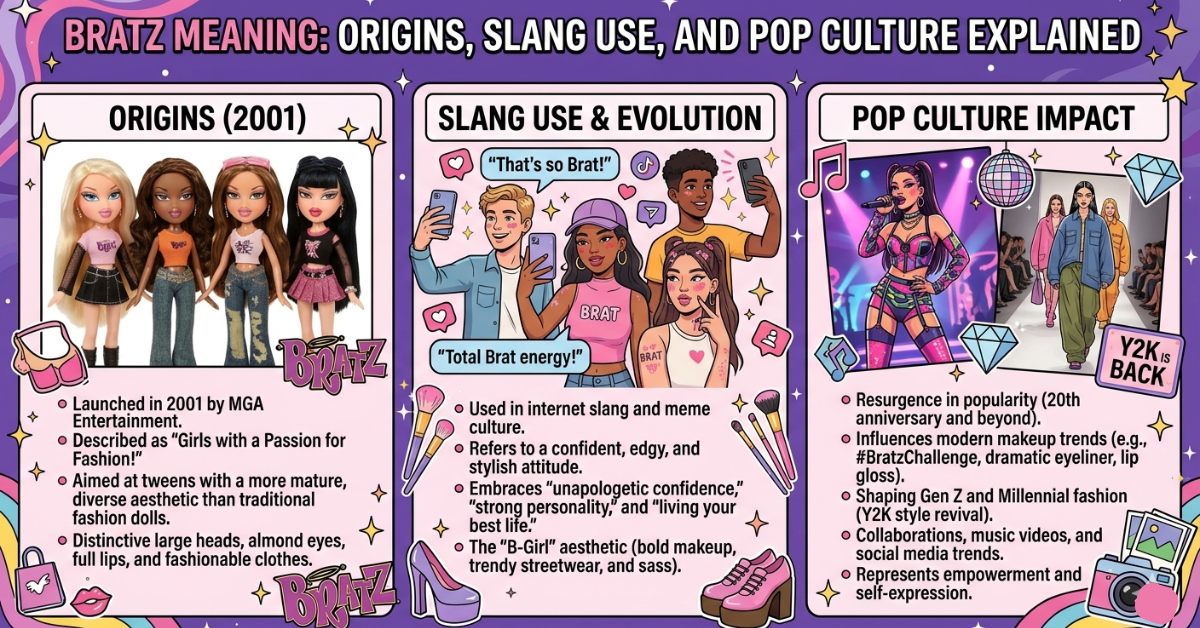
At its core, “Bratz” refers to a popular fashion doll franchise introduced in 2001. However, the word has developed broader meanings in everyday conversation and internet culture.
Generally, the term can refer to:
- The fashion dolls themselves
- A person who embraces a bold, glamorous style
- Someone with confidence and a rebellious attitude
- Occasionally, a playful description of someone acting spoiled or sassy
The exact meaning depends entirely on the situation in which the word is used.
The Origin of the Word “Bratz”
The name “Bratz” is a stylized version of the word brats, which traditionally refers to mischievous or badly behaved children.
The creators intentionally changed the spelling to make it look modern, edgy, and memorable. The alternative spelling helped establish a distinct brand identity and gave the dolls an attitude-driven image.
The term quickly became associated with:
- Self-expression
- Fashion-forward personalities
- Individuality
- Confidence
- Nonconformity
Over time, these characteristics shaped how people interpreted the word outside the toy industry.
The History of Bratz Dolls
The Launch in 2001
The Bratz doll line debuted in 2001 and immediately stood out from traditional dolls.
The original characters included:
- Yasmin
- Cloe
- Jade
- Sasha
Their large eyes, trendy outfits, dramatic makeup, and diverse backgrounds appealed to children looking for something different.
Why the Dolls Became So Popular
Several factors contributed to the dolls’ success:
Unique Fashion Style
The dolls wore contemporary clothing inspired by real-world trends.
Diverse Representation
The characters came from various ethnic backgrounds, making many children feel represented.
Strong Personalities
Each character had her own interests and traits rather than fitting into one stereotype.
Empowerment and Individuality
The brand encouraged kids to embrace their uniqueness and creativity.
Because of these qualities, the word “Bratz” eventually became synonymous with confidence and bold self-expression.
Bratz Meaning in Slang
In modern slang, the term often describes someone with a specific vibe or aesthetic.
A person called a “Bratz girl” may be seen as:
- Fashionable
- Self-confident
- Glamorous
- Stylish
- Slightly rebellious
- Outspoken
For example:
“She has such a Bratz vibe with her makeup and outfits.”
In this context, the term is usually a compliment and refers to someone who embodies a confident, trend-setting personality.
Is Calling Someone a Bratz an Insult?
Not necessarily.
The meaning changes according to tone and context.
Positive Meaning
When used positively, it can describe someone who:
- Knows their worth
- Loves fashion
- Has confidence
- Embraces individuality
Example:
“She’s a total Bratz icon on social media.”
Negative Meaning
Sometimes the term can imply that someone is:
- Spoiled
- Demanding
- Dramatic
- Self-centered
Example:
“He acts like a brat when he doesn’t get what he wants.”
Notice that this negative meaning comes more from the traditional word “brat” than from the Bratz doll brand itself.
The Bratz Aesthetic Explained
One reason the term remains popular is the rise of the Bratz aesthetic on platforms like TikTok and Instagram.
This aesthetic usually includes:
Dramatic Makeup
- Glossy lips
- Defined eyebrows
- Long eyelashes
- Bold eye makeup
Trendy Clothing
- Crop tops
- Mini skirts
- Baggy jeans
- Platform shoes
Confident Attitude
The Bratz style is as much about personality as appearance. Confidence, independence, and self-expression are central themes.
Why Gen Z Loves the Bratz Style
Many younger people connect with the Bratz image because it promotes individuality.
The appeal lies in several ideas:
Authenticity
People want to express themselves without fitting into traditional expectations.
Nostalgia
Those who grew up with the dolls enjoy revisiting a beloved part of their childhood.
Fashion Inspiration
Early-2000s fashion trends have become popular again, making the Bratz look feel modern once more.
Empowerment
The characters encouraged self-confidence and celebrating differences.
Common Ways People Use the Word Bratz Today
The term appears in many different situations.
As a Fashion Description
“Her makeup gives major Bratz energy.”
As a Compliment
“You’re serving a complete Bratz look today.”
As an Online Aesthetic
“My goal is to create a Bratz-inspired wardrobe.”
As a Playful Tease
“Stop being such a brat and share your snacks.”
The intended meaning depends heavily on context and tone.
Bratz vs. Brat: What’s the Difference?
| Term | Meaning | Typical Use |
| Bratz | Fashion dolls or a bold, stylish aesthetic | Positive or neutral |
| Brat | A spoiled or badly behaved child | Usually negative |
Although the words are connected, they are not exactly the same.
The stylized spelling transformed a traditionally negative word into a recognizable cultural brand associated with fashion and confidence.
Cultural Impact of Bratz
The influence of Bratz extends far beyond toys.
The brand has inspired:
- Fashion trends
- Makeup tutorials
- Social media aesthetics
- Fan communities
- Animated films and television projects
- Digital content and memes
Today, references to Bratz frequently appear in online culture, demonstrating how deeply the brand has embedded itself in modern fashion and identity discussions.
Key Takeaways
- Bratz originally referred to a fashion doll brand launched in 2001.
- The name comes from the word “brats” but has developed a broader meaning.
- In slang, it often describes someone who is stylish, confident, and glamorous.
- The term can occasionally carry negative meanings depending on context.
- The Bratz aesthetic continues to influence fashion and social media culture.
Frequently Asked Questions
What is the exact meaning of Bratz?
Bratz primarily refers to a fashion doll franchise known for its stylish characters. In modern slang, it can also describe someone with a bold and glamorous personality.
Is Bratz a positive term?
Usually, yes. Many people use it to describe confidence, fashion sense, and individuality. However, context can sometimes make it sound negative.
Why are Bratz dolls called Bratz?
The creators used a stylized spelling of the word “brats” to create a memorable and edgy brand identity.
What does a Bratz girl mean?
A Bratz girl is often seen as fashionable, self-assured, and expressive. The phrase is commonly used online to describe a confident and trendy aesthetic.
Is Bratz the same as brat?
No. Although they share linguistic roots, “Bratz” generally refers to the brand or aesthetic, while “brat” usually means someone who behaves in a spoiled manner.
Why has the Bratz aesthetic become popular again?
The revival of early-2000s fashion, social media trends, and nostalgia have helped bring the Bratz style back into mainstream culture.
Conclusion
The bratz meaning has evolved significantly over the years. What began as the name of a doll franchise has transformed into a cultural symbol representing confidence, individuality, and bold self-expression. While the word still shares roots with the traditional term “brat,” its modern usage is often far more positive and fashion-oriented.
Whether you’re exploring internet slang, revisiting childhood memories, or simply curious about pop culture terminology, understanding the meaning behind Bratz offers an interesting look at how language and brands can evolve over time.
Author

linguaezone.com@gmail.com
Related Posts

I’m Patient: Understanding the Meaning, Mindset, and Power of Patience
- 0
- 1,816 word
I’m Patient: What Does It Really Mean? Have you ever found yourself waiting for something important and realized that getting frustrated will...
Read out all
Do and Not: Understanding the Difference and Using Both Correctly
- 0
- 2,303 words
Introduction: Why “Do and Not” Matters in Everyday Communication Have you ever written a sentence and wondered whether you should use “do,”...
Read out all
Proscribed: Meaning, Definition, Examples, and Correct Usage
- 0
- 2,338 words
Introduction: What Does “Proscribed” Mean? Have you ever come across the word proscribed and wondered what it actually means? It is one...
Read out all
Imput: Meaning, Common Usage, and Why People Often Use It Instead of Input
- 0
- 1,592 word
What Does Imput Mean? Have you ever typed “imput” instead of “input” and wondered whether you made a mistake? You are certainly...
Read out all
Emaculate vs Demasculate: Understanding the Difference and Correct Usage
- 0
- 2,156 words
Introduction: Emaculate vs Demasculate Have you ever come across the words emasculate and demasculate and wondered whether they mean the same thing?...
Read out all
What Does LYK Mean in Text? Simple Guide
- 0
- 1,029 word
Ever received a message that says “LYK” and paused for a second? You are not alone. If you have been wondering what...
Read out all