Cacoon or Cocoon: Which Spelling Is Correct?
- 0
- 1,243 word
Have you ever typed cacoon or cocoon into a search bar and wondered which spelling is actually correct? You’re not alone. It’s one of the most common spelling mistakes people make when learning about butterflies, moths, or even when describing something cozy and protective.
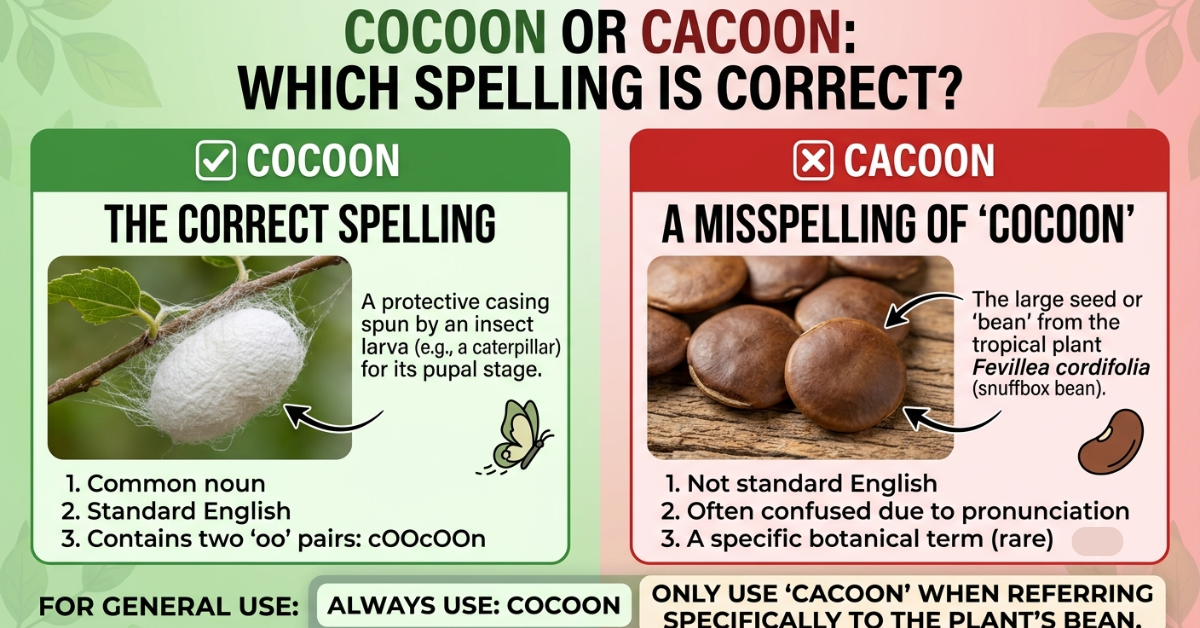
The truth is simple: “cocoon” is the correct spelling, while “cacoon” is a common misspelling. But there’s another interesting twist—many people also believe butterflies make cocoons, which isn’t entirely true. In this guide, you’ll learn the difference between cacoon or cocoon, understand the phrase cacoon or cocoon butterfly, and discover the fascinating science behind insect metamorphosis.
What Does Cocoon Mean?
A cocoon is a protective silk casing spun by the larvae of many moth species before they transform into adults. Inside this shelter, the insect undergoes one of nature’s most remarkable transformations.
The word cocoon is also used metaphorically to describe a place of comfort, warmth, or protection. For example:
- “She cocooned herself in a warm blanket.”
- “The baby slept safely in a cozy cocoon.”
In both scientific and everyday language, cocoon is the only correct spelling.
Cacoon or Cocoon: Which Spelling Is Correct?
If you’re deciding between cacoon or cocoon, here’s the answer:
| Word | Correct? | Meaning |
| Cocoon | Yes | Protective silk covering made by certain insects |
| Cacoon | No | Incorrect spelling of cocoon |
The confusion usually happens because both words sound similar when spoken. English spelling can be tricky, and replacing the “o” with an “a” is a common typing mistake.
Quick Tip:
If you’re writing about insects, butterflies, or something cozy, always use cocoon.
Cacoon or Cocoon Butterfly: Does a Butterfly Make a Cocoon?
This is where many people get confused.
Although people often search for cacoon or cocoon butterfly, butterflies do not create cocoons.
Instead, butterflies form a chrysalis.
What Is a Chrysalis?
A chrysalis is the hard outer shell that protects a butterfly during its transformation from caterpillar to adult butterfly.
Unlike a cocoon, a chrysalis:
- Isn’t made from silk.
- Is actually the caterpillar’s own hardened outer skin.
- Often has beautiful colors or metallic markings.
So while the search term cacoon or cocoon butterfly is extremely common, the scientifically correct term is butterfly chrysalis.
Cocoon vs Chrysalis: What’s the Difference?
Understanding this distinction helps clear up one of the biggest misconceptions in biology.
| Feature | Cocoon | Chrysalis |
| Made by | Mostly moth caterpillars | Butterfly caterpillars |
| Material | Silk | Hardened exoskeleton |
| Appearance | Soft, silk-covered | Smooth, hard shell |
| Function | Protects developing moth | Protects developing butterfly |
In simple words:
- Moths spin cocoons.
- Butterflies form chrysalises.
Why Do People Search for “Cacoon”?
The misspelling happens for several reasons.
1. Pronunciation
“Cocoon” is pronounced:
kuh-KOON
Because the first syllable is unstressed, many people mistakenly hear an “a” sound instead of an “o.”
2. Typing Errors
Fast typing on smartphones often leads to accidental spelling changes.
3. Lack of Familiarity
People who rarely write about insects may simply assume the spelling is “cacoon.”
The Amazing Purpose of a Cocoon
A cocoon isn’t just a sleeping bag for insects. It’s a sophisticated survival structure.
Its main purposes include:
- Protecting the insect from predators
- Preventing dehydration
- Shielding against weather changes
- Providing a safe environment during metamorphosis
Inside the cocoon, the insect’s body breaks down and reorganizes into its adult form.
It’s one of the most incredible biological processes found in nature.
The Life Cycle of a Butterfly
Although butterflies don’t make cocoons, their life cycle is just as fascinating.
Stage 1: Egg
A butterfly lays eggs on leaves where future caterpillars will have food.
Stage 2: Caterpillar (Larva)
The caterpillar spends most of its time eating and growing.
Stage 3: Chrysalis
The caterpillar forms a chrysalis, where complete metamorphosis occurs.
Stage 4: Adult Butterfly
The adult butterfly emerges with fully developed wings and begins reproducing.
The Life Cycle of a Moth
Moths follow a slightly different process.
- Egg
- Caterpillar
- Cocoon
- Adult moth
The cocoon is unique to many moth species and marks the beginning of the pupal stage.
Common Misconceptions About Cocoons
Let’s separate fact from fiction.
Myth 1: Butterflies Spin Cocoons
False.
Butterflies create chrysalises, not cocoons.
Myth 2: Every Insect Makes a Cocoon
False.
Many insects develop differently and never produce cocoons.
Myth 3: Cocoon and Chrysalis Mean the Same Thing
False.
They’re two different protective structures used by different insects.
Where Does the Word “Cocoon” Come From?
The word cocoon comes from the French word cocon, meaning the silky covering spun by insect larvae.
Over time, English adopted the spelling cocoon, which has remained unchanged.
Cocoon in Everyday Language
The word has expanded beyond biology.
People commonly use it to describe comfort, privacy, or protection.
Examples include:
- Cocoon chair
- Sleeping cocoon
- Baby cocoon
- Cocoon blanket
- Emotional cocoon
These expressions all suggest safety and enclosure.
Easy Ways to Remember the Correct Spelling
If you often confuse cacoon or cocoon, try these memory tricks.
- Think of the two “o” letters as forming a protective shell.
- Remember: Moths make cocoons.
- Butterflies make chrysalises, not cocoons.
- Spell it exactly as co + coon.
Practice writing it a few times, and it quickly becomes natural.
Why This Difference Matters
Using the correct terminology improves:
- Academic writing
- Biology assignments
- Nature blogs
- Children’s education
- Scientific communication
Knowing that butterflies form chrysalises instead of cocoons also demonstrates a better understanding of insect biology.
Practical Tips for Students and Nature Enthusiasts
If you’re learning about butterflies and moths:
- Always spell it cocoon.
- Remember that butterflies develop inside a chrysalis.
- Observe insects in gardens or nature parks to see metamorphosis firsthand.
- Use reliable biology resources when studying insect life cycles.
- Teach children the difference early to avoid common misconceptions.
Key Takeaways
- Cocoon is the correct spelling.
- Cacoon is simply a misspelling.
- Butterflies do not make cocoons.
- Butterflies develop inside a chrysalis.
- Most moth caterpillars spin silk cocoons.
- Cocoon also has a figurative meaning representing safety and comfort.
Frequently Asked Questions
Is cacoon a real word?
No. Cacoon is not a recognized English word. It is simply a common misspelling of cocoon.
Cacoon or cocoon—which should I use?
Always use cocoon. Whether you’re talking about insects, sleeping bags, or cozy environments, cocoon is the correct spelling.
Do butterflies live in cocoons?
No. This is a widespread misunderstanding. Butterflies transform inside a chrysalis, while many moths develop inside cocoons.
What is the difference between a cocoon and a chrysalis?
A cocoon is a silk covering spun by many moth caterpillars. A chrysalis is the hardened outer shell formed by butterfly caterpillars during metamorphosis.
Why do people search for “cacoon or cocoon butterfly”?
People often confuse the correct spelling of cocoon and mistakenly believe butterflies make cocoons. In reality, butterflies form chrysalises, making this a common search query based on two misconceptions.
Can the word cocoon be used figuratively?
Yes. Outside biology, cocoon often describes wrapping yourself in warmth, comfort, privacy, or protection, such as “cocooning yourself in a blanket.”
Conclusion
If you’ve ever wondered whether to write cacoon or cocoon, the answer is clear: cocoon is the correct spelling every time. The confusion becomes even greater when discussing butterflies, but understanding that butterflies form chrysalises while many moths spin cocoons makes the distinction easy to remember.
Whether you’re writing a school project, creating educational content, or simply satisfying your curiosity, using the correct terms helps communicate accurately. Keep exploring the wonders of nature, and you’ll discover that even small differences in language can reveal fascinating facts about the world around us.
Author
khatrialiraza31@gmail.com
Related Posts
Kill Two Birds With One Stone Alternative: 50 Better Options
- 0
- 1,569 word
Have you ever paused before saying “kill two birds with one stone” because it sounded too violent or simply didn’t fit the...
Read out all

Happy Sabbath Meaning: A Complete Guide to Its Significance
- 0
- 1,632 word
Have you ever received the message “Happy Sabbath” and wondered what it truly means? Is it simply another way of saying “have...
Read out all

I’m So Proud of You in Other Words: 120+ Heartfelt Alternatives
- 0
- 1,562 word
Have you ever wanted to tell someone you’re proud of them but felt like saying “I’m so proud of you” sounded repetitive?...
Read out all

How Do You Spell Happy Anniversary? Correct Spelling Guide
- 0
- 1,221 word
Have you ever paused before writing an anniversary card and wondered, “How do you spell happy anniversary?” You’re not alone. Whether you’re...
Read out all

Waiting for Your Response Email: Best Examples & Tips
- 0
- 1,483 word
Have you ever sent an important email and found yourself wondering whether you should follow up or simply wait? Whether you’re communicating...
Read out all

Great Asset to the Team: Meaning, Examples & Tips
- 0
- 1,494 word
Have you ever wanted to compliment a coworker but struggled to find words that sound professional and sincere? One of the most...
Read out all