
- 0
- 862 words
Have you ever wanted to show gratitude in a way that feels warmer than a plain “thank you”? That is where this phrase comes in. It is simple, friendly, and often used when someone wants to sound genuine without being too formal.
In this article, we will look at what the expression means, when it works best, and how people use it in everyday conversation, captions, GIFs, and memes. You will also see better alternatives when you want your message to sound more natural.
What the Phrase Means
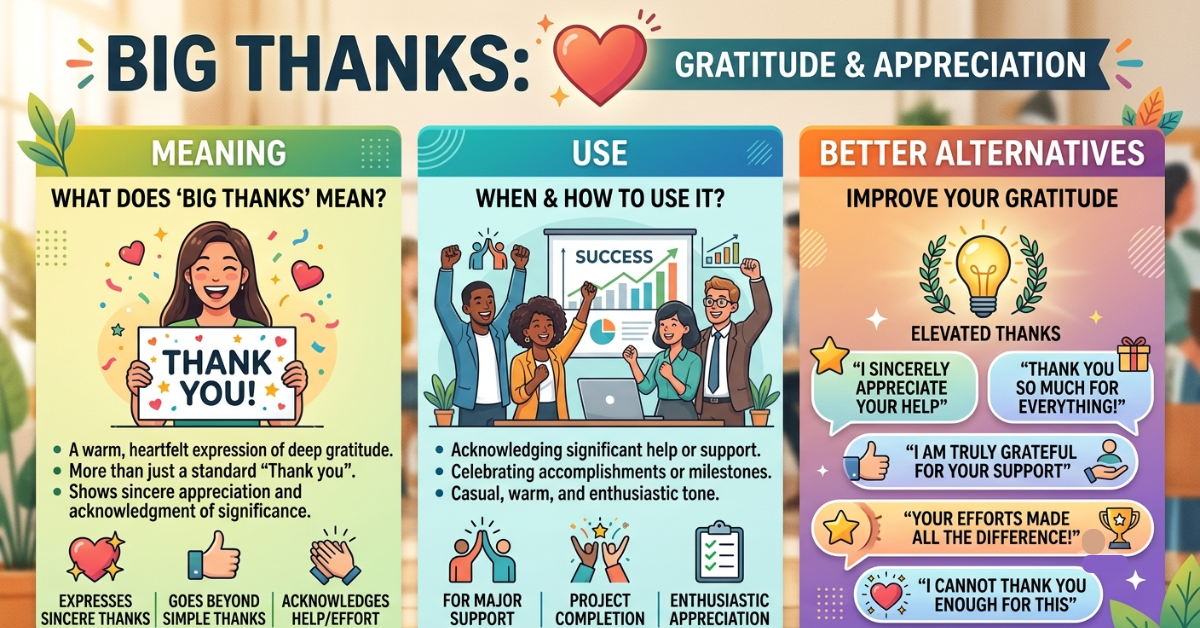
This is an informal way to show strong appreciation. It usually suggests that you are not just politely thankful, but truly grateful.
People often use it when:
- Someone helps them in a meaningful way
- They want to sound warm and casual
- They are posting on social media
- They are replying quickly in chat or comments
It works because it feels relaxed and human. Instead of sounding stiff, it sounds like something a real person would naturally say.
When to Use It
The phrase is best for casual or semi-casual situations. It fits messages where the tone should feel friendly, open, and sincere.
Good situations include:
- Thanking a friend for support
- Replying to a classmate or coworker
- Writing a post after receiving help
- Adding appreciation in a caption
Examples:
- Big thanks to everyone who supported the event.
- A big thanks to my teacher for the guidance.
- Big thanks for helping me finish this on time.
These versions sound simple and natural without trying too hard.
How It Compares to Similar Phrases
There are many ways to express gratitude, and each one creates a slightly different tone.
Thank you
This is the most common and neutral option. It works in almost any setting.
A big thanks
This version feels a little softer and more complete. It is often used in casual writing and friendly posts.
Big thanks to
This is especially useful when you want to name the person or group you are appreciating.
Huge thanks
This sounds stronger and more emotional. It is a good choice when someone’s help really mattered.
Many thanks
This feels a bit more polished and formal, so it is often better for emails or professional replies.
Why It Shows Up So Often Online
The phrase is popular on social media because it is short, easy to understand, and works well with visual content.
That is why people search for things like big thanks gif and big thanks meme. A GIF can make gratitude feel playful, while a meme can add humor or personality to the message.
It is also common in:
- Instagram captions
- Facebook posts
- WhatsApp replies
- Comment sections
- Celebration announcements
In online spaces, short phrases often work best because they are quick to read and easy to share.
How to Make It Sound More Genuine
A thank-you message feels stronger when it includes a little detail. Instead of using a short phrase on its own, add a reason or mention what the person did.
Try this:
- Big thanks for your support during the project.
- Big thanks to my family for always encouraging me.
- Big thanks for taking the time to help me today.
These versions feel more personal and thoughtful than a very short reply.
Simple tips for better appreciation
- Mention the exact help you received
- Use a name when possible
- Keep the tone warm and clear
- Avoid repeating the same phrase too often
When Not to Use It
This phrase is not the best choice for very formal communication. In business emails, official letters, or serious professional writing, a more polished option may sound better.
You may want to use:
- Thank you very much
- Many thanks
- Sincere appreciation
- I truly appreciate it
These alternatives are usually better when the situation requires more formality.
Key Takeaways
- The phrase is a casual way to express strong appreciation.
- It works best in everyday conversation, captions, and online replies.
- It becomes more meaningful when you add details.
- GIFs and memes often make it more expressive on social platforms.
- Formal writing usually needs a more professional alternative.
FAQ
What does this phrase mean?
It is a friendly and informal way to express strong gratitude. It usually feels warmer than a standard thank-you.
Is “big thanks to” correct English?
Yes, it is commonly used in everyday speech and writing. It works well when you want to thank a person, group, or organization.
Is “a big thanks” formal?
No, it is better for casual or semi-formal situations. For formal writing, a more polished phrase is usually a better fit.
Why do people use it with GIFs or memes?
Because it adds personality and makes the message feel lighter. Visual content often makes gratitude more fun and shareable.
What is a better alternative for professional writing?
“Many thanks” or “I sincerely appreciate it” usually sounds more appropriate in formal communication.
Conclusion
This phrase is popular because it is simple, natural, and easy to use in everyday communication. It helps people show appreciation without sounding too stiff or overly formal.
Used with care, it can make messages warmer and more personal. The best version is the one that feels honest, clear, and suitable for the situation.
Author

linguaezone.com@gmail.com
Related Posts
Kill Two Birds With One Stone Alternative: 50 Better Options
- 0
- 1,569 word
Have you ever paused before saying “kill two birds with one stone” because it sounded too violent or simply didn’t fit the...
Read out all
Happy Sabbath Meaning: A Complete Guide to Its Significance
- 0
- 1,632 word
Have you ever received the message “Happy Sabbath” and wondered what it truly means? Is it simply another way of saying “have...
Read out all
I’m So Proud of You in Other Words: 120+ Heartfelt Alternatives
- 0
- 1,562 word
Have you ever wanted to tell someone you’re proud of them but felt like saying “I’m so proud of you” sounded repetitive?...
Read out all
How Do You Spell Happy Anniversary? Correct Spelling Guide
- 0
- 1,221 word
Have you ever paused before writing an anniversary card and wondered, “How do you spell happy anniversary?” You’re not alone. Whether you’re...
Read out all
Waiting for Your Response Email: Best Examples & Tips
- 0
- 1,483 word
Have you ever sent an important email and found yourself wondering whether you should follow up or simply wait? Whether you’re communicating...
Read out all
Great Asset to the Team: Meaning, Examples & Tips
- 0
- 1,494 word
Have you ever wanted to compliment a coworker but struggled to find words that sound professional and sincere? One of the most...
Read out all