
- 0
- 739 words
Modern vehicles contain small assemblies that perform useful tasks within limited space. Hinges, brackets, and actuators help accessories move or stay aligned. Their effectiveness depends on careful engineering.
Some accessories, such as a car plate hider, change appearance through mechanical movement, while others use electronic materials and remain stationary.
The Building Blocks of Compact Mechanisms
A mechanical system transfers force or motion between connected parts. An assembly may combine several elements for predictable results. Engineers select components according to load, space, and operating conditions.
A hinge guides rotation around a fixed axis. A sliding guide constrains movement along a defined path. Springs store and release energy, while latches hold components in position. Small electric motors can provide motion when manual operation is inconvenient.
Mechanical Movement Versus Optical Switching
Not every accessory that changes appearance relies on moving parts. A useful comparison is the difference between a hinged panel and an electrically controlled optical surface.
A hinged panel needs clearance to travel through its intended path. Designers must account for pivot placement, friction, and the forces acting on the assembly. An optical surface changes its light-transmission properties instead, so its visible transformation does not require a panel to rotate or slide.
For example, the car plate hider range from Alite includes Blackout systems that use an electro-optic layer. When activated by a wireless remote, the covering surface turns opaque black. When deactivated, it becomes transparent again. The license plate stays fixed throughout the process.
How Engineers Control Movement
Compact mechanisms must move only where intended. Uncontrolled play can produce noise, misalignment, or inconsistent operation, especially when the vehicle encounters rough surfaces.
Engineers use several techniques to manage movement:
- Guided motion: Rails, pivots, and bearings restrict components to a defined path.
- Positive retention: Latches or stops help keep an assembly in its intended position.
- Load distribution: Brackets spread forces across mounting points instead of concentrating stress.
- Friction management: Appropriate materials and contact surfaces reduce resistance and wear.
- Clearance planning: Space around moving parts prevents interference with nearby trim.
- Electrical integration: Wiring and controls must accommodate motion without being pinched or strained.
These principles apply to folding brackets, adjustable mounts, retractable components, and other small automotive assemblies.
Packaging and Mounting Constraints
Exterior accessories must fit around existing body panels, fasteners, and styling details. A mechanism that works on a workbench may behave differently once installed in a confined location.
Designers begin by defining the available envelope: the maximum height, width, and depth of the assembly. They then examine the motion path, mounting loads, and access needed for installation or servicing.
Even stationary electronic accessories face packaging challenges. Optical films, protective covers, control modules, and cables all occupy space. Eliminating mechanical movement can simplify clearance planning, but it does not remove the need for secure mounting and careful routing.
Reliability in Real Driving Conditions
Vibration, water, dust, and temperature changes influence the lifespan of exterior accessories. Mechanical joints can loosen or wear, while electrical connections and protective surfaces face different stresses.
Reliable design therefore starts with the expected environment. Engineers consider material compatibility, corrosion resistance, fastening methods, and the number of operating cycles a component may experience.
Testing can reveal problems that drawings alone cannot show. Repeated operation helps identify wear points, while vibration and environmental exposure can expose weaknesses in mounting or sealing.
Maintenance requirements also differ. A moving assembly may need inspection of its joints and clearances. An optical system places greater emphasis on surface condition and the integrity of its electrical connections.
Why Simpler Motion Can Improve Design
Reducing the number of moving interfaces can make an accessory easier to package and may eliminate some mechanical wear points. However, fewer moving parts do not automatically guarantee reliability. Electronic systems introduce their own requirements for power delivery, switching consistency, and environmental protection.
The best design is the one that matches the required function. A bracket that must physically reposition an object needs an appropriate mechanism. A surface that only needs to change appearance may benefit from an optical approach.
Conclusion
Compact automotive accessories demonstrate how mechanical engineering balances movement, mounting strength, space, and durability. Hinges, guides, and latches remain useful wherever physical repositioning is required.
At the same time, Alite Blackout shows how an electronically controlled surface can produce a visible change without moving the license plate. Comparing these approaches reveals the broader design principle: choose the simplest suitable technology for the task, then engineer every supporting component for dependable operation.
Author

Qseo.firms@gmail.com
Related Posts

Fallston AC Repair: Practical Diagnostics, Humidity Challenges, and Repair-or-Replace Choices
- 0
- 1,221 word
When a cooling system falters on a hot day, the problem feels urgent. Yet a calm, step-by-step approach saves time and prevents...
Read out all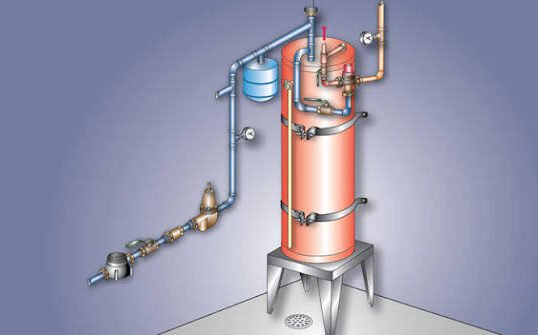
Household Water Pressure Problems: How to Diagnose PRV and Expansion Tank Issues at Home
- 0
- 978 words
Surging showers one minute and a trickle the next can make a normal day feel complicated. Most whole‑home pressure issues trace back...
Read out all
Household Water Pressure: Diagnose Risk and Prevent Damage Before Leaks Start
- 0
- 1,026 word
Water pressure that looks fine at the faucet can still be hard on your plumbing. Excess pressure and sudden stops in flow...
Read out all
Heating System Installation in Sedalia: How Climate, Ducts, and Fuel Choices Shape Comfort
- 0
- 1,144 word
Installing a new heating system is more than picking a furnace out of a catalog. In Sedalia, winter lows, humid shoulder seasons,...
Read out all
Room-by-Room Prep That Makes Professional House Cleaning More Effective
- 0
- 1,274 word
Professional cleaners can work faster and reach more detail when a home is prepared for the tasks ahead. The goal is not...
Read out all
Minimizing Downtime in Commercial Moves: A Practical Playbook for Operations Managers
- 0
- 1,386 word
Every hour your team spends off the clock during an office, clinic, or retail relocation is an hour of lost service. Commercial...
Read out all