
- 0
- 954 words
Panels are the part of a solar setup people buy by feel, usually after the generator has already arrived. The array is the last purchase in the chain and the easiest one to get wrong. Too few and the unit never refills; too many and the input ceiling refuses the surplus. The array only matters through what reaches the battery, which is why output, tilt and shade losses decide the count. One panel too few is a week of cloudy afternoons with a unit that never quite refills. One too many is money in the garden. This article works out a panel number from daily use, real output and a margin for bad weather.
Daily Energy Target
Watt-Hour Use per Day
Start with what the battery has to replace in a day rather than with the battery’s size. A fridge, a router, a few lamps and two phones come to roughly 3kWh, and a unit that size needs 3kWh of charging to stay level. A plug meter on the fridge for a week tells you more than any appliance label, because duty cycles are invisible. That single figure decides whether the best solar generator for the job is a small unit with one panel or a larger one with four. Add the standby loads too, since routers and televisions draw all night. Two weeks of readings beat one, because a cold snap changes what the fridge does.
Recharge Window in Sunlight
The window is shorter than the day. Usable charging happens between about nine and four, and the middle three hours do most of the work. A 3kWh daily need therefore has to be met inside five hours, which sets a floor on array size rather than a target. In December the same window may be three hours, so the array produces half of what July promised and the plan has to survive that. A panel that starts producing at seven and stops at six still only charges at a useful rate for half of that. Work out the window for your latitude in the month you care about, not for the year.
Panel Output Variables
Orientation and Tilt
Direction matters more than wattage. A panel facing the sun at the right tilt collects perhaps a third more than the same panel laid flat, and a panel facing the wrong way loses more than shade would take. In the northern hemisphere south is the default, and the tilt roughly follows the latitude with a steeper angle in winter. Adjust twice a year if the mount allows it, and note the dates. A mount that can be adjusted twice a year beats a fixed one set perfectly on the first attempt. A panel on a balcony rail is usually at the wrong tilt, and a wedge under it is the cheapest fix. Tilt equal to latitude minus fifteen degrees is a common winter setting, and it sheds snow better too.
Shade and Heat Losses
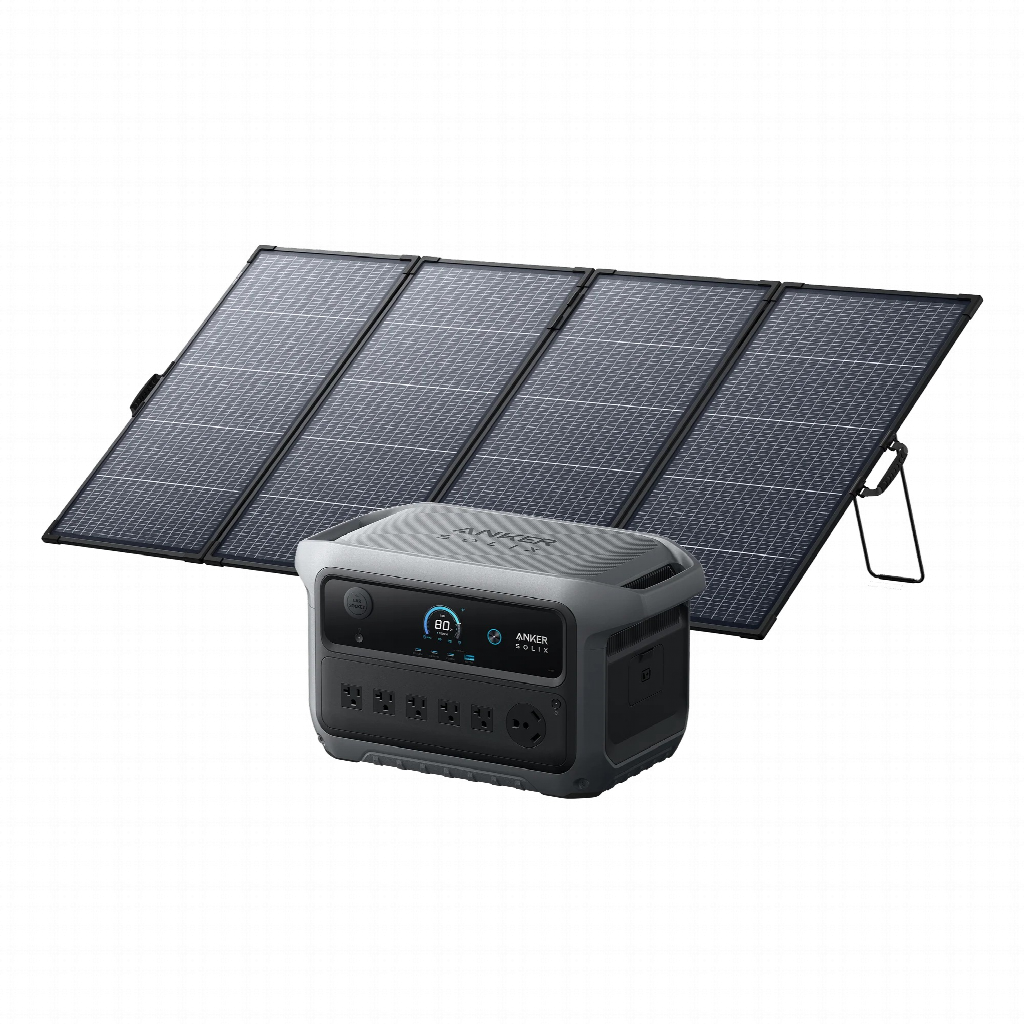
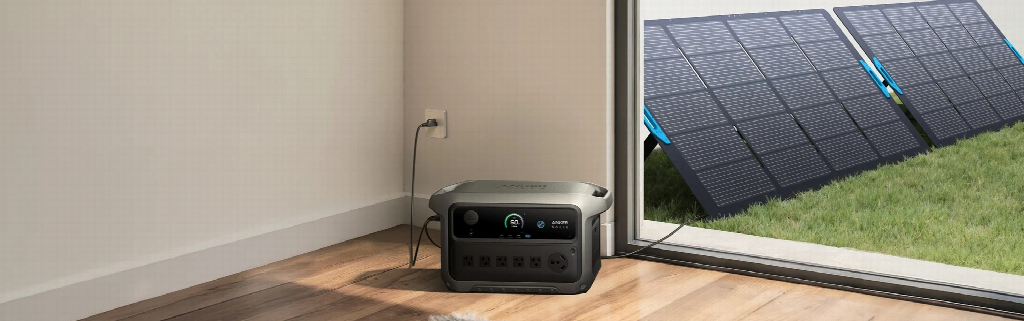
Two losses are easy to underestimate. Shade on one cell can cut a whole panel’s output rather than a fraction of it, because cells are wired in series. Heat is the other: a panel at 60°C delivers several per cent less than one at 25°C, which is an ordinary summer afternoon rather than an extreme. The 400W panel that ships with the Anker SOLIX C2000 Gen 2 is the shape of setup that holds its output in both conditions. A bypass diode limits the damage from shade, but it cannot recover the output of a shaded string. Mount with an air gap behind the panel, because one backed against a wall runs hotter and delivers less.
Sizing Margin
Cloudy-Day Coverage
A margin is not slack; it is the cloudy day. A grey sky gives ten to twenty-five per cent of clear-sky output, so an array sized exactly to the daily need runs a deficit for as long as the weather holds. One extra panel covers a day of cloud and two cover a week of it. Size for the worst week you are willing to tolerate rather than the best day you can imagine. Three days of autonomy is a reasonable target for a household that does not want to think about the weather. That means the array covers the daily need plus a third, which is one extra panel on a three-panel job. Cloudy weeks are not rare enough to ignore, which is why one spare panel earns its place.
Panel Mismatch and Spares
Panels in one string should match, because the weakest sets the current for all of them. Mixing a 200W and a 400W panel does not add up to 600W; it behaves closer to two 200W panels with a confused controller. Buy identical panels and keep a spare connector and a length of cable in the bag. A spare panel is rarely worth carrying, but a spare cable often is. Panels of the same model and age behave predictably together, which is why buying them in one order matters. A second-hand panel added later drags the string down by its own weakest cell.
Conclusion
Count panels against real conditions, not lab ratings. Start from the daily need, divide by the charging window, add the margin for cloud and keep the panels identical. The number that comes out is smaller than most people fear and larger than most people guess. Four panels, three or six: the number is only as good as the daily figure you started with. Two panels is a guess and four is a plan, and the difference between them is a week of readings rather than a week of browsing. Write the daily figure on the panel order and the rest is arithmetic.
Author

khizarnisar367@gmail.com
Related Posts

How Do You Calculate Solar Generator Runtime?
- 0
- 916 words
Solar generator runtime is not simply the battery capacity divided by the largest appliance wattage. A useful estimate has to reflect how...
Read out all
What Is a Solar Powered Generator and Who Needs One?
- 0
- 916 words
A solar powered generator is a portable energy system that collects electricity from solar panels, stores it in a battery, and supplies...
Read out all
Indoor Air Quality Testing: Creating Healthier and More Comfortable Indoor Environments
- 0
- 2,600 words
Understanding the Importance of Indoor Air Quality The quality of the air inside a building can have a significant impact on comfort,...
Read out all
Restore Home Comfort with Reliable Furnace Repair Solutions
- 0
- 2,331 words
Introduction A properly functioning furnace is essential for maintaining a warm, comfortable indoor environment when temperatures drop. Whether a heating system serves...
Read out all
Home Security: Smart Ways to Protect Your Property and Family
- 0
- 2,217 words
Understanding the Importance of Home Security Creating a safe living environment is a priority for homeowners who want to protect their families,...
Read out all
Hotel Parking Lots: Essential Features, Smart Design, Safety, and Guest Convenience
- 0
- 3,078 words
A comfortable hotel experience begins long before guests enter the reception area or check into their rooms. For many travelers, the first...
Read out all