
- 0
- 916 words
Solar generator runtime is not simply the battery capacity divided by the largest appliance wattage. A useful estimate has to reflect how equipment actually operates. Some devices draw steady power, some cycle on and off, and others run for only a few minutes. The power station itself also consumes a small amount of energy while active. A good calculation therefore starts with a simple formula, then adds real household behavior. This approach produces a much more practical estimate for outages, home backup, or extended off-grid power.
Build a Runtime Estimate From Real Energy Demand
Begin With Capacity Divided by Load
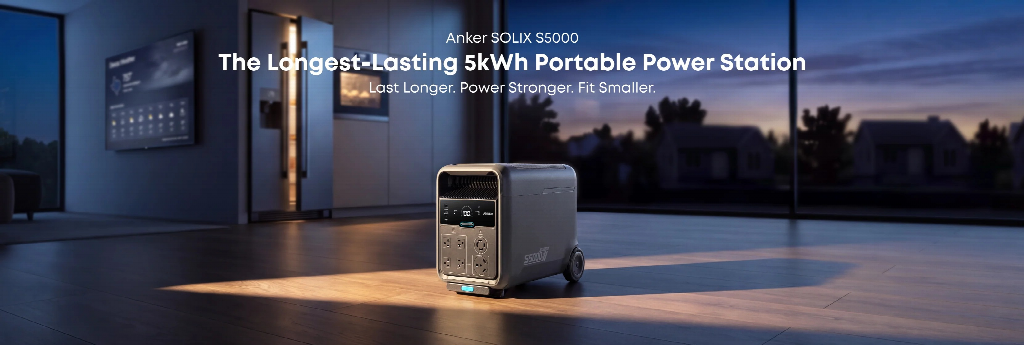
The basic runtime formula is battery capacity in watt-hours divided by the load in watts. For example, a 5,024Wh battery supplying a constant 500W load gives a theoretical result of about 10 hours before other operating factors enter the calculation. The Anker SOLIX S5000 has a stated 5,024Wh capacity, so this formula provides a useful starting point. The same method works when comparing portable power stations with different capacities. However, treat the result as a baseline rather than a guaranteed runtime. Real operation includes conversion efficiency, the power station’s own energy consumption, appliance behavior, and environmental conditions. The formula establishes the energy budget; the next step is making that budget resemble actual use.
Replace Nameplate Watts With an Operating Pattern
Many household appliances do not draw their rated power continuously. A refrigerator cycles as its thermostat responds to temperature. A coffee maker may operate for only several minutes. A microwave draws substantial power but usually runs for a short period. Runtime planning becomes more accurate when each appliance is assigned both a power requirement and an expected operating duration. The S5000 illustrates this distinction well. Anker’s internal testing lists 86 hours for a refrigerator, 4.7 hours for a coffee maker, 3.8 hours for a microwave, and 63 hours for a television. These figures are not interchangeable with simple wattage calculations because each appliance follows a different operating pattern. Anker also notes that actual runtime varies with environmental factors.
Convert a Household Schedule Into Watt-Hours
For mixed loads, calculate energy consumption appliance by appliance. Multiply each device’s watts by the number of hours it is expected to operate, then add the results. A 100W device running for five hours represents 500Wh of demand. A 1,000W appliance running for 15 minutes represents 250Wh. Repeat that process for the equipment planned during the backup period. This creates a daily energy budget that can be compared with the generator’s available capacity. The method also prevents short high-power activities from being treated like all-day loads. With 4,500W rated output and 8,000W peak output, the S5000 is designed to support substantial household loads, but runtime still depends on how long those connected appliances operate.
Refine the Calculation for a Whole Backup Period
Include the Power Station’s Own Energy Use
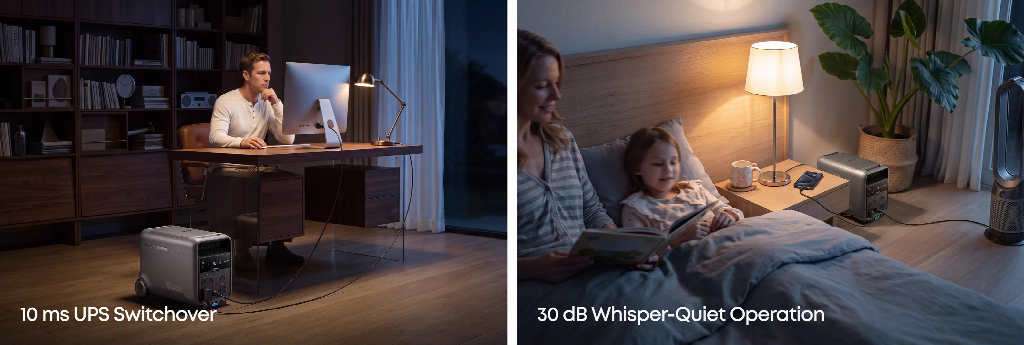
A power station needs energy to keep its electronics active, so a refined runtime calculation should account for that internal demand. The S5000 specifies 8.8W of active idle power. This figure becomes especially meaningful during long periods with light or intermittent loads. Its OptiSave 2.0 technology is designed around runtime efficiency, and Anker states 96% power efficiency along with 512 hours of idle standby time. The company also lists an A+ runtime rating verified by TÜV SÜD. Rather than assuming that every stored watt-hour reaches an appliance, users can treat the basic capacity calculation as the theoretical starting point and then use manufacturer runtime data and efficiency information to make the estimate more realistic for the intended operating pattern.
Model the Outage in Time Blocks
A household does not consume electricity at one fixed rate for 24 or 48 hours. Morning may bring coffee preparation and cooking. Daytime may center on refrigeration and work equipment. Evening can add television and lighting, while overnight demand may become much lighter. Dividing an outage into time blocks captures these changes more accurately than calculating one average appliance load. Anker positions the S5000 for up to 48 hours of home backup under its specified scenario, while individual internal test examples include 25 hours for a window AC, 14.5 hours for a furnace, and 124 hours for LED lights. These examples show how dramatically runtime changes with the load. A time-block model lets households combine those different usage patterns into one practical backup schedule.
Recalculate When Capacity Expands
Runtime planning changes when the battery system itself becomes scalable. The S5000 starts at approximately 5kWh and supports expansion from 5 to 30kWh. Anker positions the expanded configuration for up to 12 days of backup power under its stated conditions. The calculation method remains the same: determine the available energy, estimate the total energy demand over the chosen period, and compare the two. Expansion simply changes the energy side of that equation. This makes scenario planning useful. A household can calculate one runtime estimate for the base 5,024Wh configuration and another for a larger configuration while keeping the same appliance schedule. The result shows how additional stored energy translates into additional backup time for that specific household pattern.
Conclusion
Solar generator runtime becomes much easier to estimate when the calculation follows actual household behavior. Start with watt-hours divided by watts, then account for appliance operating time, cycling loads, internal power consumption, and changing demand across the day. For larger backup systems, repeat the calculation at each capacity level. The Anker SOLIX S5000 combines 5,024Wh base capacity, 5–30kWh scalability, and detailed appliance runtime examples, providing several useful reference points for turning a theoretical runtime formula into a practical home backup estimate.
Author

khizarnisar367@gmail.com
Related Posts
How Many Solar Panels Does a Generator Need?
- 0
- 954 words
Panels are the part of a solar setup people buy by feel, usually after the generator has already arrived. The array is...
Read out all
What Is a Solar Powered Generator and Who Needs One?
- 0
- 916 words
A solar powered generator is a portable energy system that collects electricity from solar panels, stores it in a battery, and supplies...
Read out all
Indoor Air Quality Testing: Creating Healthier and More Comfortable Indoor Environments
- 0
- 2,600 words
Understanding the Importance of Indoor Air Quality The quality of the air inside a building can have a significant impact on comfort,...
Read out all
Restore Home Comfort with Reliable Furnace Repair Solutions
- 0
- 2,331 words
Introduction A properly functioning furnace is essential for maintaining a warm, comfortable indoor environment when temperatures drop. Whether a heating system serves...
Read out all
Home Security: Smart Ways to Protect Your Property and Family
- 0
- 2,217 words
Understanding the Importance of Home Security Creating a safe living environment is a priority for homeowners who want to protect their families,...
Read out all
Hotel Parking Lots: Essential Features, Smart Design, Safety, and Guest Convenience
- 0
- 3,078 words
A comfortable hotel experience begins long before guests enter the reception area or check into their rooms. For many travelers, the first...
Read out all