
- 0
- 1,412 word
Most compounds in this market are sold as themselves. A smaller group is sold as combinations, and the combinations are where the labelling gets weakest and the assumptions get strongest. Clenbuterol products are a clear example: the compound is frequently paired with other actives in a single preparation, and the resulting product is described in terms that conceal more than they reveal.
This piece is about those combinations, what they are constructed from, and why a mixture demands a different standard of evidence from a single ingredient.
The logic behind combining
A combination product exists to solve a delivery problem, and the problems are usually one of two kinds.
The first is synergy: two actives that act through different mechanisms, assembled on the argument that the combination produces more than either alone. The second is convenience: several actives delivered in one preparation rather than several, which reduces the number of products a buyer has to acquire and the number of administrations they have to manage.
Both are legitimate design goals. Neither is a reason to relax the verification standard, and both make verification harder.
What clenbuterol is typically combined with
Clenbuterol is a beta-2 adrenergic agonist, a bronchodilator. That mechanism is the key to understanding what it gets paired with, because the compounds chosen for a combination are usually selected to address something the beta-2 mechanism does not.
The common pairings fall into three groups.
Other thermogenics and lipolytic agents, on the argument that two mechanisms acting on energy expenditure are additive. This is the most common combination and the least well evidenced, because the argument for additivity is pharmacological reasoning rather than a trial result.
Stimulants and appetite suppressants, which produce overlapping effects through different routes. Combinations of this kind are where the cardiovascular load becomes the dominant consideration, because the effects on heart rate compound in a way that the effects on fat loss may not.
Compounds intended to offset a side effect — for example, something included on the argument that it mitigates a consequence of the primary active. This is the hardest class to evaluate, because the offsetting claim is usually made without evidence and sometimes without a plausible mechanism.
The compound that gives the category its name
The best-known combination in this market is sold under the brand name Helios, and it is a useful case study because it illustrates how much a product name can conceal.
The name tells you nothing about the contents. What the product is, in practice, is a preparation combining clenbuterol with one or more additional actives — the specific composition varies by manufacturer, and that variation is the central problem. Two products both sold as Helios can contain different things.
That is the same ambiguity that afflicts every blend in this market, and the same consequence follows: the name describes a category rather than a formulation, so the composition has to come from the label, and the label has to be verified rather than trusted.
Why mixtures demand a higher standard
For a single-compound product, verification is one identity confirmation. For a mixture, it is one per component, at the stated ratio, from a single sample. That difference is not incremental.
Three specific problems follow.
Coverage. A certificate that documents one component thoroughly and names the others only on the label has documented a fraction of the product. In a two-component preparation that is half a product; in a three-component one it is less.
Ratio. The proportions determine the effect, and they are frequently undeclared. Two preparations with the same total and different ratios are different products with the same name.
Interaction. Combining actives means combining their risk profiles, and the combination is not always the sum. Two compounds acting on the cardiovascular system do not produce an additive effect that can be assessed by looking at each one separately.
Unit confusion, which is specific to this compound
There is a labelling problem particular to clenbuterol that becomes more dangerous in a mixture.
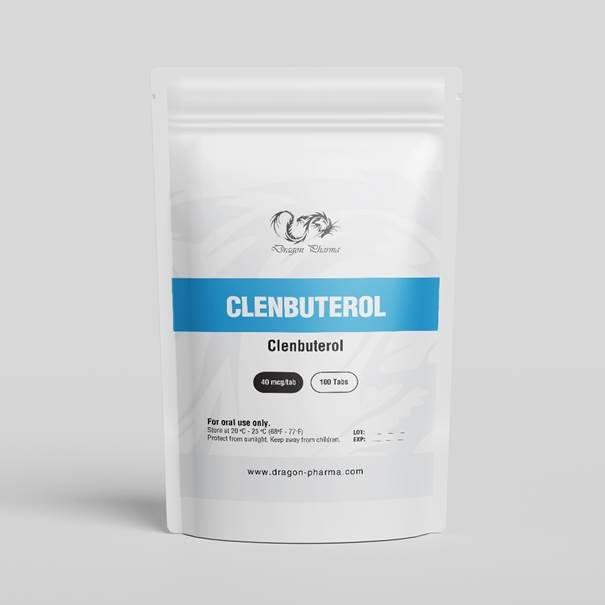
The compound is active at microgram quantities, not milligrams. A clenbuterol preparation at 40 micrograms per tablet is a normal presentation. A listing that states 40 without the unit, or that conflates micrograms and milligrams, is describing something that could be a thousand times stronger than intended.
In a single-ingredient product this is a labelling error. In a combination, where the clenbuterol content is one line among several, it is easy to miss and harder to check. Any listing for a combination product should state the unit explicitly for every active, and a listing that does not has left the most important number ambiguous.
What a legitimate combination label looks like
It is easier to judge a label against a concrete standard than against a list of warnings, so here is what one should contain for a two-component preparation.
A name for the product and, separately, a statement of its composition. The two are not the same thing and the failure to separate them is the root of most of the confusion in this category.
Then, for each active: the quantity per unit and the unit itself, stated explicitly. For a clenbuterol component that means micrograms; for a thyroid component it would mean micrograms of liothyronine or levothyroxine. A label that lists quantities without units has left the most consequential number unreadable.
Then the batch number, and a reference to where its certificate can be found. Not a claim that a certificate exists — a pointer to the document, with the numbers matching.
A buy helios online listing that does all of this is telling you more than the category norm, because the norm is a brand name and a strength figure with no composition statement at all.
The comparison that makes the point is with the thyroid compounds, which are usually sold as single actives with a stated quantity in micrograms. A buy t4 online listing for levothyroxine has one active and one unit to declare, which is why it is legible. Add a second active and every one of those declarations has to be repeated, and the products that skip that repetition are the ones to be wary of.
What to check before considering one
The verification checklist for a mixture is the checklist for any product in this market, applied once per component.
A batch-specific certificate, produced independently, with the batch number matching the vial or pack.
Identity confirmation by mass spectrometry for each active. A purity figure for the mixture tells you how much of the sample is accounted for; it does not tell you what the components are.
The ratio, declared. Where composition is stated, the product is legible. Where it is not, the behaviour is a guess.
The unit, stated, for every active. Micrograms and milligrams are not interchangeable and the difference is three orders of magnitude.
Sterility and endotoxin results where the format is injectable, with the method stated.
A buy clenbuterol online listing for the single-compound product is the reference point against which a combination should be read: it has one active, one unit, one identity to confirm. A combination multiplies every one of those requirements, and a listing that documents itself to the same standard as a single-compound product has done something unusual and worth noting.
The the oral range shows the range of formats this market sells, which is useful context for one reason: the combinations are not visually distinct from the single-ingredient products. The difference is in the label, and the label is what has to be read.
Questions people ask
What is Helios? A brand name for a clenbuterol-based combination sold in this market. The name describes a category rather than a fixed formulation, so the composition varies by manufacturer and has to come from the label.
Why combine clenbuterol with anything? Either to add a second mechanism on the argument that the effects are additive, or to address a side effect. Both are pharmacological reasoning; neither is usually supported by a trial.
Is a combination more effective than a single compound? Not established. The additive argument is plausible and untested, and the interaction risk is real.
What is the biggest labelling risk? The unit. Clenbuterol is active in micrograms. A label that omits the unit, in a mixture where that line is one of several, leaves the most important number unreadable.
What should a certificate show for a mixture? Every component, at its stated ratio, with identity confirmation for each, from a single sample of the batch you are buying.
Author

Spero.outreach.team@gmail.com
Related Posts

ABS Testauslösung: Meaning, Importance, Testing Process, and Complete Safety Guide
- 0
- 2,527 words
Introduction Safety equipment plays an essential role in protecting people during unexpected situations. Whether someone is exploring snowy mountains, participating in winter...
Read out all
Incredorable: Exploring the Meaning, Features, Uses, and Growing Appeal of This Unique Term
- 0
- 2,291 words
Language constantly evolves as people create new words, expressions, and phrases to communicate ideas in more interesting ways. Some words become popular...
Read out all
Badseed Tech Carpio: Everything You Need to Know About This Innovative Ergonomic Wrist Rest
- 0
- 2,271 words
Technology has changed the way people work, communicate, learn, and entertain themselves. From professional computer users to passionate gamers, millions of people...
Read out all
Building Better Learning Habits Through Positive Reinforcement and Individualized Developmental Support
- 0
- 2,891 words
Flexible thinking is an important developmental skill that helps children understand different situations, consider alternative ideas, and adjust when things do not...
Read out all
How Proper Outdoor Cleanup Can Improve Space, Appearance, and Property Value
- 0
- 2,361 words
Outdoor spaces play an important role in the overall appearance, functionality, and comfort of a property. Gardens, backyards, patios, and storage areas...
Read out all
Leather Chaps for Men How to Choose Right Pair for Comfort
- 0
- 2,525 words
Whether you’re riding a motorcycle across the open highway, working on a ranch, or embracing Western fashion, leather chaps for men remain...
Read out all