
- 0
- 736 words
Have you ever stopped mid-sentence and wondered whether it should be totalling or totaling? You’re not alone. This small spelling difference confuses writers, students, and even professionals more often than you might think.
In this guide, we’ll break down everything you need to know about the word, including its meaning, correct usage, regional differences, and how it compares in American and British English. By the end, you’ll write with confidence—no second-guessing required.
What Does “Totalling” Mean?
The word refers to the process of adding numbers to find a final sum. It is the present participle form of “total.”
For example:
- The accountant is totalling the expenses.
- She is totalling all the scores from the match.
In simple terms, totalling means “adding up everything to get a final result.”
It is commonly used in British English, while American English prefers a slightly different spelling.
Totalling or Totaling: What’s the Difference?
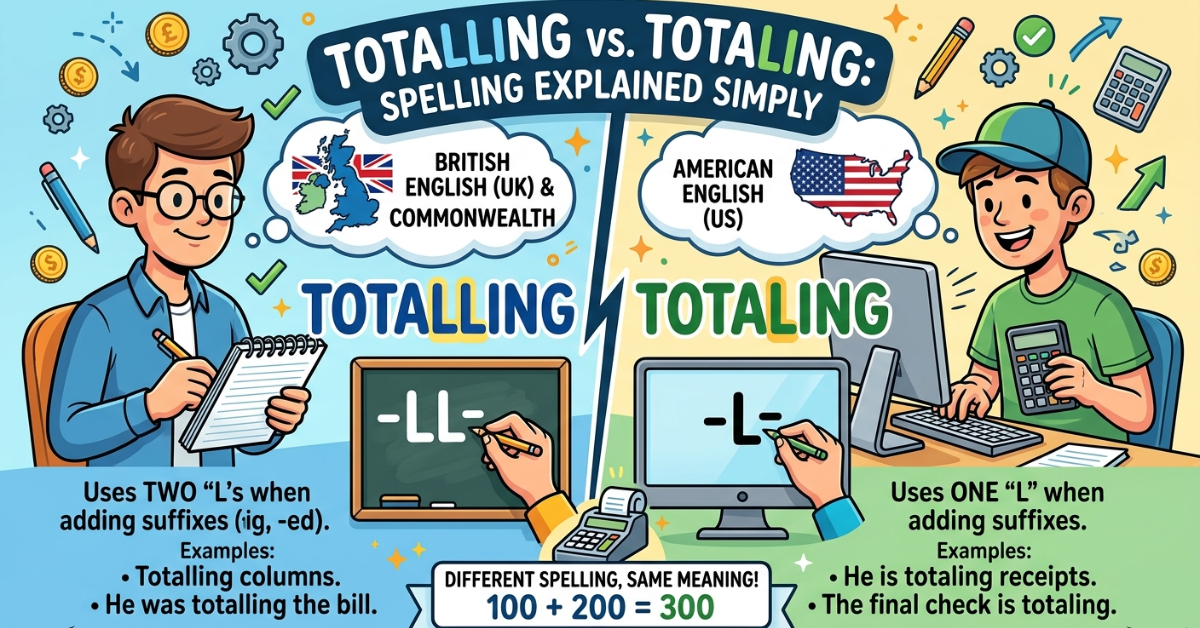
The confusion between comes down to regional spelling conventions.
British English: “Totalling”
- Used in the UK, Australia, India, and other Commonwealth countries
- Spelled with a double “l”
- Example: The clerk is totalling the receipts
American English: “Totaling”
- Used in the United States
- Spelled with a single “l”
- Example: The clerk is totaling the receipts
Both forms are correct—the difference is purely stylistic, not grammatical.
Totaling vs Totalling: Which One Should You Use?
When comparing the words, the answer depends on your audience.
If you’re writing for:
- 🇬🇧 UK readers → use totalling
- 🇺🇸 US readers → use totaling
- Global audience → choose one style and stay consistent
Consistency is more important than preference. Mixing both in the same document looks unprofessional.
Why Is “Totalling” Spelled Differently?
The spelling difference comes from how English evolved across regions.
British English generally retains traditional spellings influenced by Latin and older English forms, while American English simplified many words for easier writing.
This is why you see differences like:
- travelling vs traveling
- cancelling vs canceling
- totalling vs totaling
These variations are part of broader English language standardization systems.
Common Usage Examples of Totalling
To understand the spelling in real contexts, here are practical examples:
- The system is totalling monthly sales automatically.
- She spent hours totalling the final marks.
- The manager is totalling project costs before approval.
These examples show how naturally the word fits into everyday writing.
Common Mistakes People Make
Even experienced writers sometimes get confused with the word. Here are frequent mistakes:
- Mixing both spellings in one document
- Using “totalling” in US-only publications
- Overthinking the spelling instead of focusing on consistency
- Confusing “totaling” with unrelated terms like “totally”
A simple rule: pick one spelling system and stick to it.
Quick Tips to Remember the Correct Form
Here are some easy ways to avoid confusion:
- Think: “British = double L” → totalling
- Think: “American = simplified” → totaling
- Always match your audience’s English style guide
- Use grammar tools set to UK or US English if unsure
Key Takeaways
- Totalling = British English spelling
- Totaling = American English spelling
- Both are correct, just regionally different
- Consistency matters more than choice
- The meaning remains the same in all contexts
FAQs About Totalling vs Totaling
1. Is “totalling” correct English?
Yes, totalling is correct in British English and widely used in Commonwealth countries. It simply follows UK spelling rules.
2. Is “totaling” wrong?
No, totaling is correct in American English. It is the standard spelling used in the United States.
3. What is the difference between totaling and totalling?
The difference is regional spelling. Totalling vs totaling refers to UK vs US English, not meaning or grammar.
4. Which spelling should I use in academic writing?
It depends on your institution’s style guide. UK universities prefer totalling, while US institutions use totaling.
5. Why does English have two spellings?
English evolved differently in the UK and US, leading to spelling variations like totalling spelling differences in many words.
6. Can I mix both spellings in one document?
It’s not recommended. Choose either totalling or totaling and stay consistent throughout your writing.
Conclusion
Understanding the word and its variations is simple once you know the regional difference. The meaning never changes—only the spelling does.
Whether you’re writing for school, work, or publishing online, consistency is the real key. Choose your version, stick with it, and your writing will instantly look more professional and polished.
If you want to improve your grammar further, keep exploring similar spelling differences—you’ll be surprised how many small changes make a big impact.
Author

linguaezone.com@gmail.com
Related Posts

Kill Two Birds With One Stone Alternative: 50 Better Options
- 0
- 1,569 word
Have you ever paused before saying “kill two birds with one stone” because it sounded too violent or simply didn’t fit the...
Read out all
Happy Sabbath Meaning: A Complete Guide to Its Significance
- 0
- 1,632 word
Have you ever received the message “Happy Sabbath” and wondered what it truly means? Is it simply another way of saying “have...
Read out all
I’m So Proud of You in Other Words: 120+ Heartfelt Alternatives
- 0
- 1,562 word
Have you ever wanted to tell someone you’re proud of them but felt like saying “I’m so proud of you” sounded repetitive?...
Read out all
How Do You Spell Happy Anniversary? Correct Spelling Guide
- 0
- 1,221 word
Have you ever paused before writing an anniversary card and wondered, “How do you spell happy anniversary?” You’re not alone. Whether you’re...
Read out all
Waiting for Your Response Email: Best Examples & Tips
- 0
- 1,483 word
Have you ever sent an important email and found yourself wondering whether you should follow up or simply wait? Whether you’re communicating...
Read out all
Great Asset to the Team: Meaning, Examples & Tips
- 0
- 1,494 word
Have you ever wanted to compliment a coworker but struggled to find words that sound professional and sincere? One of the most...
Read out all