
- 0
- 2,055 words
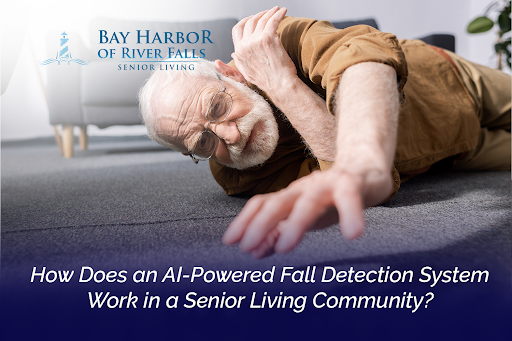
Falls are one of the most important safety concerns for older adults. According to the CDC, more than one in four adults age 65 and older falls each year, and falling once can double the likelihood of falling again.
For families considering senior living in River Falls, WI, understanding how a community approaches fall prevention can be just as important as learning about apartments, dining, activities, and care services.
Technology is increasingly becoming part of that approach. Modern AI-powered fall detection systems can help care teams identify potential falls and respond more quickly, while also providing information that may help communities understand patterns and improve safety.
But how does the technology actually work?
What Is AI-Powered Fall Detection?
AI-powered fall detection is a technology that uses artificial intelligence to analyze activity and identify patterns that may indicate a person has fallen.
Unlike a traditional emergency call button, which generally requires a resident to actively request help, an AI-based system can monitor activity within designated areas and identify potential incidents automatically.
At Bay Harbor of River Falls, the community uses the SafelyYou Respond™ system as part of its approach to fall prevention and resident safety. The community says its care team uses the technology to help identify fall risks, analyze data, and develop proactive safety plans.
The purpose is not to replace caregivers. Instead, technology can provide another layer of information that helps care teams respond and make more informed safety decisions.
How Does an AI Fall Detection System Work?
At a high level, an AI-powered system combines monitoring technology, artificial intelligence, and care-team response.
The process generally works through several stages.
1. The System Monitors Designated Areas
AI-powered fall detection technology can monitor designated spaces within a senior living environment.
The system observes movement and activity patterns rather than relying solely on a resident to manually activate an emergency device.
This can be particularly useful because a person who falls may be confused, injured, unconscious, or otherwise unable to press a call button.
2. Artificial Intelligence Analyzes Movement
The system uses AI to distinguish between different types of movement.
For example, sitting down, standing up, walking, lying down, or experiencing a sudden change in position may create different movement patterns.
The AI is trained to identify patterns that may indicate a potential fall and distinguish them from ordinary daily activity.
The goal is to reduce unnecessary alerts while identifying situations that deserve attention.
3. A Potential Fall Can Trigger an Alert
When the technology identifies a movement pattern consistent with a potential fall, an alert can be generated for the appropriate care team.
This can help staff know that a resident may need assistance without depending entirely on the resident being able to call for help.
This additional layer of awareness can be especially valuable in senior living environments where residents may have different mobility levels and care needs.
4. Care Staff Can Respond
Technology is only one part of the process.
Once a potential incident is identified, trained staff can assess the situation and provide appropriate assistance.
The response may involve checking on the resident, determining whether medical attention is needed, documenting the event, and communicating with family members or healthcare professionals when appropriate.
At Bay Harbor of River Falls, the community states that staff are available around the clock and that its fall prevention technology works alongside its care approach.
5. Data Can Help Identify Patterns
One of the most useful aspects of AI-based systems is that they can provide information beyond a single incident.
Over time, fall-related data may help care teams identify patterns that could warrant closer attention.
For example, a care team may notice that incidents are occurring repeatedly in a particular location or around a particular time of day. That information can contribute to conversations about environmental changes, mobility support, routines, or other fall-prevention strategies.
The CDC’s fall-prevention approach similarly emphasizes identifying risk factors and taking steps to address them rather than waiting for an injury to occur.
AI Fall Detection vs. Traditional Emergency Call Systems
AI-powered monitoring and traditional emergency call systems serve different purposes.
A traditional call button can be extremely useful because it gives residents a direct way to request assistance. However, it generally depends on the person being able and willing to activate it.
AI-powered detection can provide an additional layer of awareness because a potential fall may be identified without the resident pressing a button.
This does not mean AI should replace emergency call systems or human care. Instead, the technologies can complement one another.
A comprehensive assisted living community in River Falls can combine technology, trained staff, accessible environments, and individualized care to create a more comprehensive approach to resident safety.
Why Fall Detection Matters for Older Adults
Falls can have serious consequences for older adults.
A fall may result in injuries such as fractures or head injuries, but the effects can extend beyond the physical injury. A senior who becomes afraid of falling again may reduce physical activity, avoid social activities, or become less confident about moving independently.
The CDC reports that falls are the most common cause of traumatic brain injuries among older adults and that more than one in four adults 65 and older falls each year.
This makes fall prevention an important part of supporting healthy aging.
Technology alone cannot eliminate fall risk. Factors such as medications, vision, strength, balance, mobility, environmental hazards, and health conditions can all influence an individual’s risk.
That is why technology works best as part of a broader safety strategy.
What Are the Benefits of AI Fall Detection in Senior Living?
AI-powered fall detection can provide several potential advantages when appropriately implemented within a senior living environment.
Faster Awareness of Potential Incidents
If a resident cannot call for assistance after a fall, automated detection may provide an additional way for staff to become aware that something may have happened.
Additional Information for Care Teams
Technology can provide information that helps staff understand incidents and identify patterns that may otherwise be difficult to recognize.
More Proactive Fall Prevention
Rather than focusing only on what happened after an incident, data can potentially help care teams identify recurring risks and consider preventive changes.
Greater Reassurance for Families
Families often worry about what happens when they are not physically present with their loved one. Knowing that a community uses multiple safety measures can provide additional reassurance, although no technology can guarantee that every fall will be detected or prevented.
Does AI Fall Detection Prevent Falls?
No. AI fall detection does not guarantee that a fall will be prevented.
Its primary purpose is to help identify potential falls and support an appropriate response. Depending on the system and how a community uses it, information from detected incidents may also help care teams recognize patterns associated with fall risk.
Fall prevention requires a broader approach that can include exercise, balance and strength activities, medication reviews, vision care, appropriate footwear, environmental safety, and individualized clinical assessment.
The CDC’s STEADI initiative recommends screening, assessing, and intervening to address fall risk among older adults.
How Technology Works Alongside Human Care
It is important to remember that AI is a tool, not a caregiver.
A technology system can identify patterns and generate information, but trained professionals are responsible for interpreting what is happening and deciding what action is appropriate.
At Bay Harbor of River Falls, technology is part of a broader care environment that includes around-the-clock staff support, personalized assistance, wellness programs, social activities, and accessible community spaces.
This combination of technology and human attention is what makes technology meaningful in a senior living setting.
What Families Should Ask About Fall Prevention During a Senior Living Tour
If you are comparing senior living communities, fall prevention should be part of your conversation with the care team.
Consider asking:
- What systems are available if a resident falls?
- How quickly are staff notified when a potential fall occurs?
- Are emergency call systems available in resident apartments?
- How does the community identify residents who may have a higher fall risk?
- How are fall incidents documented and reviewed?
- How does the care team use information from incidents to improve safety?
- What mobility and wellness programs are available?
- How are apartments and common areas designed to support safe movement?
These questions can help families understand not only what technology a community uses, but also how that technology fits into its overall approach to care.
How Bay Harbor of River Falls Uses Technology to Support Resident Safety
At Bay Harbor of River Falls, resident safety is integrated into the community’s broader approach to independent and assisted living.
The community currently highlights its use of SafelyYou Respond™, an AI-driven monitoring solution intended to help identify and reduce fall risks. Bay Harbor states that its care team works with healthcare professionals to analyze data and develop proactive safety plans tailored to individual residents.
The community also provides a comprehensive wireless call system and round-the-clock staff support, creating multiple layers of assistance for residents.
For families researching assisted living in River Falls, WI, these technologies can be considered alongside the community’s care approach, living environment, wellness programs, and opportunities for social engagement.
A Modern Approach to Senior Safety
Technology is changing the way senior living communities approach resident safety.
AI-powered fall detection does not replace caregivers, eliminate every fall risk, or guarantee that an incident will never happen. Instead, it can provide another layer of awareness that supports timely response and more informed fall-prevention strategies.
For older adults, that can mean combining modern technology with something even more important: attentive, compassionate human care.
At Bay Harbor of River Falls, technology is part of a larger commitment to helping residents maintain independence while having support available when they need it. Families can explore the community, meet the care team, and learn more about how safety, comfort, and independence work together in everyday life.
Frequently Asked Questions About AI Fall Detection for Seniors
How does AI-powered fall detection work?
AI-powered fall detection uses artificial intelligence to analyze movement patterns and identify activity that may indicate a fall. When a potential incident is identified, the system can alert the appropriate care team so the situation can be assessed.
Can AI detect a fall without the senior pressing a button?
Some AI-powered systems are designed to identify potential falls without requiring the resident to manually activate an emergency button. This can provide an additional layer of awareness when a resident is unable to call for help.
Does AI fall detection prevent falls?
Not by itself. AI fall detection primarily helps identify potential incidents. Preventing falls requires a broader approach that may include mobility support, exercise, environmental safety, medication review, and individualized care planning.
Is AI fall detection better than an emergency call button?
They serve different purposes. An emergency call system allows a resident to request assistance, while AI-based detection can potentially identify a fall without the resident activating a device. Using multiple safety measures can provide broader coverage.
Why is fall prevention important for seniors?
Falls are common among older adults and can result in serious injuries. The CDC reports that more than one in four adults age 65 and older falls each year, making fall prevention an important part of healthy aging.
What should families ask a senior living community about fall prevention?
Families should ask about emergency response systems, staff availability, fall-risk assessments, mobility support, environmental safety, incident documentation, and whether the community uses technology such as AI-powered fall detection.
Final Thoughts
An AI-powered fall detection system is one example of how technology can support modern senior living. By analyzing movement, identifying potential incidents, and providing information to care teams, these systems can add another layer to a community’s safety strategy.
But the technology works best when it is combined with trained caregivers, personalized care, accessible environments, wellness programs, and meaningful human connection.
For families exploring senior living options in Wisconsin, understanding how a community approaches safety can help them make a more informed decision. Bay Harbor of River Falls combines a supportive senior living environment with advanced fall-prevention technology, around-the-clock staff support, and a focus on helping residents maintain independence and confidence.
A safer senior living experience is not about technology alone. It is about using the right tools alongside compassionate people to help older adults live with greater confidence, comfort, and peace of mind.
Author

primestarfirm@gmail.com
Related Posts

Fall Activities for Seniors: 12 Ways to Stay Active and Connected
- 0
- 1,902 word
Fall brings cooler temperatures, colorful leaves, seasonal traditions, and plenty of opportunities to spend meaningful time with family and friends. For older...
Read out all
Why Familiar Places and Routines Matter for People With Dementia
- 0
- 2,432 words
For someone living with dementia, everyday life can sometimes feel confusing. Changes in memory, communication, perception, and the ability to recognize people...
Read out all
When Accidents Turn Your Life Upside Down, Who Do You Call?
- 0
- 1,068 word
A car accident happens in seconds, but the aftermath can stretch on for months, even years. Medical bills pile up, insurance adjusters...
Read out all
Glossywise Com: A Practical Guide to Understanding the Website
- 0
- 1,552 word
The internet has made it easier than ever to find information about almost any subject. From business and technology to lifestyle and...
Read out all
Understanding Digital Documentation in Modern Medical Practices
- 0
- 1,613 word
Missed details, hard-to-read notes, and slow record transfers can create real headaches in patient care. And when someone is waiting for answers,...
Read out all
Make Every Outfit Shine With Distinctive Neckwear
- 0
- 1,217 word
When it comes to making a statement with your jewelry, nothing quite compares to the brilliance and boldness of diamond chains. Whether...
Read out all