Good Morning or Goodmorning? Grammar Explained
- 0
- 792 words
Have you ever paused while writing a message and wondered, is it good morning or goodmorning? It’s a small detail, but it can instantly affect how polished and correct your writing looks. Many people search for good morning or goodmorning grammar because this confusion is extremely common in everyday texting, emails, and greetings.
In this guide, you’ll learn the correct form, why it matters, how English grammar treats compound greetings, and how to avoid this mistake in formal and informal writing.
Is it Good Morning or Goodmorning? The Correct Answer
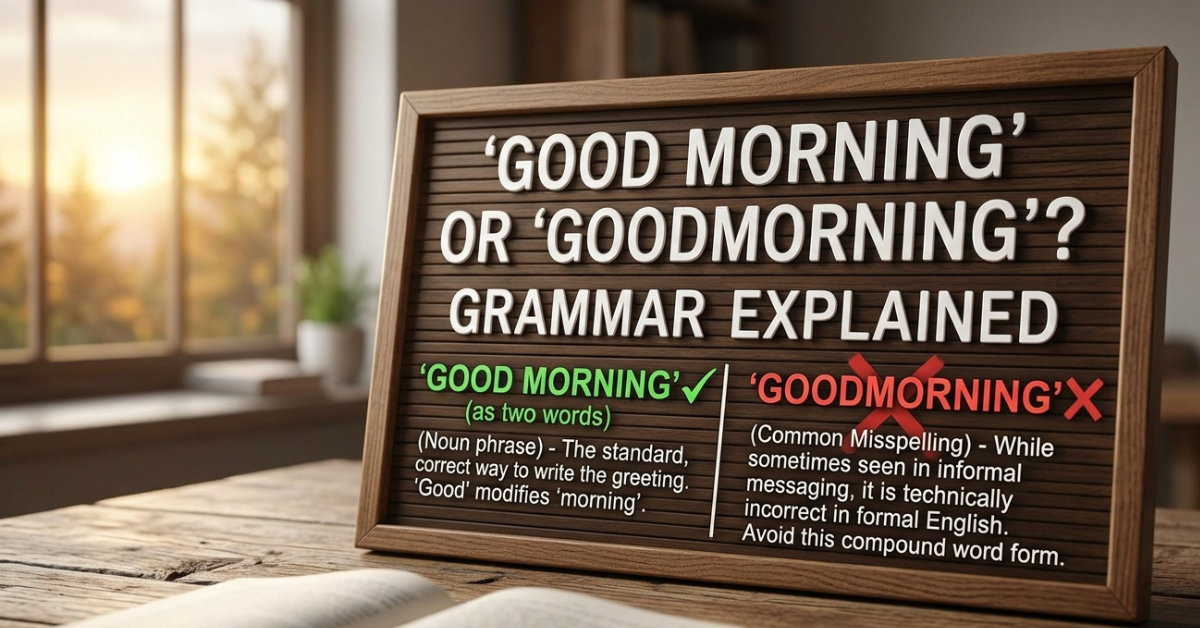
The correct form is “good morning” (two separate words).
“Goodmorning” as one word is incorrect in standard English grammar.
Why “Good Morning” is correct:
- “Good” is an adjective
- “Morning” is a noun
- Together, they form a phrase (not a single word)
- English does not merge most greetings into one word
So, when deciding between good morning or goodmorning, always choose good morning.
Good Morning or Goodmorning Grammar Rule Explained
The confusion around good morning or goodmorning grammar comes from how spoken language influences typing habits.
Grammar breakdown:
In English:
- Adjective + noun combinations remain separate
- good morning
- good night
- good afternoon
- These are called phrasal greetings
Even though we say it quickly in speech, grammar rules don’t allow it to become one word.
So, from a grammatical perspective:
good morning (correct)
goodmorning (incorrect)
Why People Write “Goodmorning” Incorrectly
Even though “goodmorning” is wrong in formal English, it is still widely used online. Here’s why:
1. Fast typing habits
People often skip spaces when texting quickly.
2. Social media influence
Hashtags like #goodmorning make it look like one word.
3. Informal digital writing
Apps and chats encourage speed over grammar.
4. Lack of grammar awareness
Many learners assume greetings behave like single words.
So while good morning or goodmorning may both appear online, only one is grammatically correct.
Where “Good Morning” Should Be Used
Understanding usage helps reinforce grammar rules.
Use “good morning” in:
- Formal emails
- Academic writing
- Professional messages
- Greeting cards
- Workplace communication
Example:
- Good morning, Sir. I hope you are doing well.
In all these cases, it should always be written as good morning.
Is “Goodmorning” Ever Acceptable?
Technically, no in formal English grammar.
However, you might still see it in:
- Social media hashtags (#goodmorning)
- Usernames or branding
- Casual texting
Even then, it is considered informal style, not correct grammar.
So if you’re asking is it good morning or goodmorning, the safe rule is:
Always use “good morning” unless you are styling a brand or hashtag.
Quick Comparison: Good Morning vs Goodmorning
| Feature | Good Morning | Goodmorning |
| Grammar correctness | Correct | Incorrect |
| Formal writing | Accepted | Not accepted |
| Social media use | Common | Seen as hashtag |
| Professional use | Required | Avoid |
This makes it clear that grammar is not a debate in formal English—only “good morning” is correct.
Practical Tips to Avoid This Mistake
If you often get confused, here are simple tips:
- Always remember: greetings = two words
- Think of “good night”, “good evening” (same rule)
- Turn on grammar checking tools like Grammarly or Microsoft Editor
- Practice writing formal greetings daily
- Avoid copying hashtag-style writing into formal text
Key Takeaways
- The correct form is good morning
- “Goodmorning” is informal and grammatically incorrect
- The confusion comes from texting habits and social media
- Always follow standard English grammar rules in formal writing
FAQs About Good Morning or Goodmorning
1. Is it good morning or goodmorning in English grammar?
The correct form is “good morning.” It follows standard English grammar rules where greetings are written as separate words.
2. Why is goodmorning wrong?
“Goodmorning” is wrong because “good” and “morning” are two separate grammatical words and should not be merged in formal writing.
3. Can I write goodmorning in WhatsApp or Instagram?
Yes, but only informally or as a hashtag. In proper grammar, you should still use “good morning.”
4. What is the difference between good morning and goodmorning grammar-wise?
“Good morning” is grammatically correct, while “goodmorning” is considered informal and incorrect in standard English usage.
5. Is good morning always two words?
Yes, in all formal and standard English writing, “good morning” is always written as two separate words.
6. What is the correct greeting in emails: good morning or goodmorning?
In emails, especially professional ones, you should always use “good morning” as it is grammatically correct and polite.
Conclusion
The confusion between is common, but the rule is simple: good morning is always correct in English grammar. Understanding this small detail can significantly improve the quality of your writing, especially in formal and professional communication.
So next time you’re unsure about is it good morning or goodmorning, remember—proper English always keeps them separate.
If you want to improve your grammar further, start paying attention to everyday phrases like this; small corrections lead to big improvements in writing clarity and confidence.
Author
khatrialiraza31@gmail.com
Related Posts
Kill Two Birds With One Stone Alternative: 50 Better Options
- 0
- 1,569 word
Have you ever paused before saying “kill two birds with one stone” because it sounded too violent or simply didn’t fit the...
Read out all
Happy Sabbath Meaning: A Complete Guide to Its Significance
- 0
- 1,632 word
Have you ever received the message “Happy Sabbath” and wondered what it truly means? Is it simply another way of saying “have...
Read out all

I’m So Proud of You in Other Words: 120+ Heartfelt Alternatives
- 0
- 1,562 word
Have you ever wanted to tell someone you’re proud of them but felt like saying “I’m so proud of you” sounded repetitive?...
Read out all

How Do You Spell Happy Anniversary? Correct Spelling Guide
- 0
- 1,221 word
Have you ever paused before writing an anniversary card and wondered, “How do you spell happy anniversary?” You’re not alone. Whether you’re...
Read out all

Waiting for Your Response Email: Best Examples & Tips
- 0
- 1,483 word
Have you ever sent an important email and found yourself wondering whether you should follow up or simply wait? Whether you’re communicating...
Read out all

Great Asset to the Team: Meaning, Examples & Tips
- 0
- 1,494 word
Have you ever wanted to compliment a coworker but struggled to find words that sound professional and sincere? One of the most...
Read out all