
Aura vs Ora: Key Differences, Meaning & Easy Guide
- 0
- 789 words
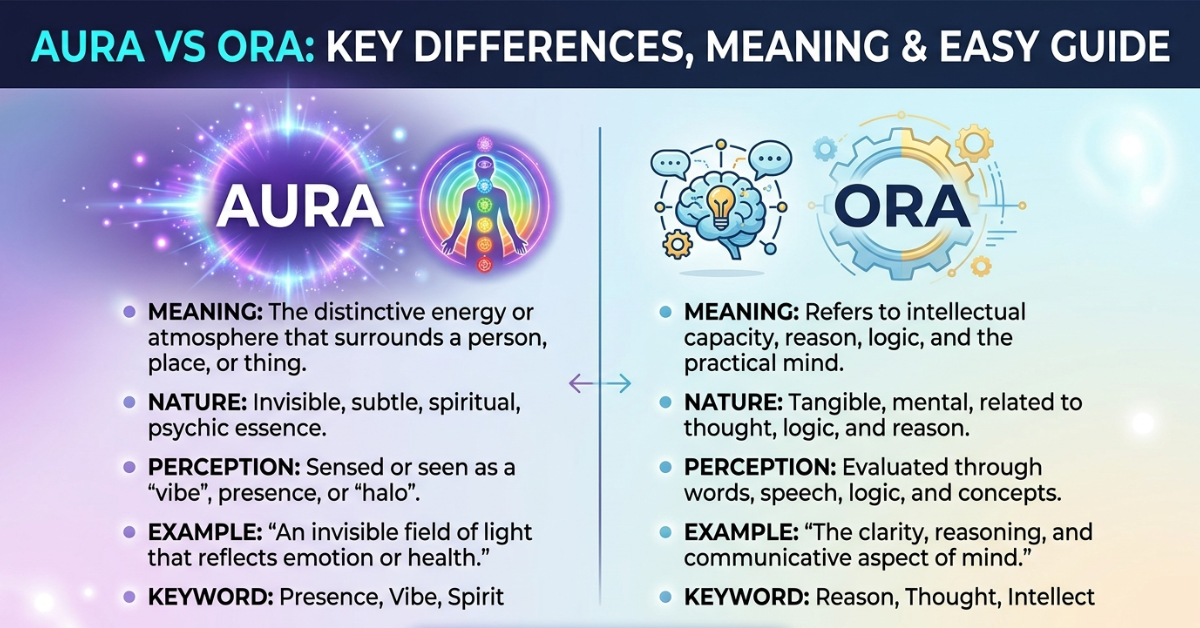
When people come across Aura vs Ora, it’s easy to get confused. These two words sound similar, but their meanings, usage, and contexts are completely different. Whether you’re writing, studying English, or just curious, understanding Aura vs Ora can help you avoid common mistakes and improve your vocabulary.
In this guide, we’ll break everything down in a simple, conversational way so you can clearly understand the difference without any confusion.
What Does “Aura” Mean?
The word aura refers to a feeling, energy, or atmosphere that surrounds a person, place, or thing. It is often used in emotional, spiritual, or descriptive contexts.
Common meanings of Aura:
- A subtle energy around a person (spiritual belief)
- A mood or atmosphere (literary use)
- The impression someone gives off
Examples:
- She has a calm and peaceful aura.
- The room had a mysterious aura.
- He carries an aura of confidence.
In simple words, aura is what you feel when you are around someone or something.
What Does “Ora” Mean?
Unlike aura, ora is not commonly used in modern English vocabulary. It is mainly a Latin word meaning “pray” or “speak,” and it is often seen in religious or historical contexts.
Where Ora is used:
- Latin expressions
- Religious texts
- Rare literary usage
Examples:
- “Ora pro nobis” means “Pray for us”
- Used in historical or classical writings
So, while aura is widely used in everyday language, ora is mostly limited to formal or traditional contexts.
Aura vs Ora: Key Differences Explained
Understanding Aura vs Ora becomes much easier when we compare them side by side.
1. Meaning
- Aura: Energy, vibe, or atmosphere
- Ora: Latin word meaning prayer or speech
2. Usage
- Aura: Common in modern English
- Ora: Rare, mostly historical or religious
3. Context
- Aura: Psychology, spirituality, descriptions
- Ora: Latin phrases, ancient texts
4. Popularity
- Aura: Widely used in daily language
- Ora: Very uncommon today
Why People Confuse Aura vs Ora
There are a few simple reasons why Aura vs Ora gets mixed up:
- They sound almost identical when spoken
- Both are short words with similar spelling
- People often see them in different contexts without explanation
- Typing errors in writing or texting
But once you understand their meanings, the confusion disappears completely.
Easy Trick to Remember the Difference
Here’s a simple memory trick:
- Aura = Atmosphere / Energy (think “A” for Atmosphere)
- Ora = Old Latin / Prayer (think “O” for Old language)
This small trick makes it easy to avoid mixing them up.
Real-Life Usage of Aura
The word aura is used in many real-life situations:
- Describing personality: She has a warm aura.
- Talking about places: The beach has a relaxing aura.
- Writing creatively: The story had a dark aura.
It’s flexible and widely used in both spoken and written English.
Real-Life Usage of Ora
Ora is much more limited but still meaningful in specific contexts:
- Religious prayers: Ora pro nobis
- Latin studies or historical documents
- Academic references
You won’t usually hear it in everyday conversation.
Aura vs Ora in Modern Language
In modern communication, especially online and in social media, Aura vs Ora is mostly relevant because of spelling confusion. People often type quickly and mix the words unintentionally.
However:
- Aura has become part of everyday vocabulary
- Ora remains a specialized or classical term
So, if you’re writing casually, you’ll almost always use “aura.”
Common Mistakes to Avoid
Here are a few mistakes people make when using Aura vs Ora:
- Using “ora” when they mean energy or vibe
- Assuming both words are interchangeable
- Mispronouncing aura as “ora” in speech
- Confusing Latin phrases with modern English usage
Being aware of these helps you communicate more clearly.
FAQs about Aura vs Ora
1. What is the main difference between aura and ora?
Aura refers to energy or atmosphere, while ora is a Latin word meaning prayer or speech.
2. Is aura a scientific term?
Not exactly. It is mostly used in descriptive, emotional, or spiritual contexts rather than science.
3. Is ora used in modern English?
Very rarely. It mainly appears in Latin phrases or historical texts.
4. Can aura and ora be used interchangeably?
No, they have completely different meanings and cannot be swapped.
5. Why do aura and ora sound similar?
They share similar phonetics, but their origins and meanings are entirely different.
Conclusion
Understanding Aura vs Ora becomes simple once you break it down. Aura represents energy, feeling, or atmosphere, while ora is a classical Latin term linked to prayer and speech.
If you remember this basic difference, you’ll never confuse them again. Whether you’re improving your writing or just expanding vocabulary, knowing these distinctions adds clarity and confidence to your communication.
Keep exploring language differences like Aura vs Ora, and you’ll notice how small details can make a big impact on how you express yourself.
Author
khatrialiraza31@gmail.com
Related Posts
Kill Two Birds With One Stone Alternative: 50 Better Options
- 0
- 1,569 word
Have you ever paused before saying “kill two birds with one stone” because it sounded too violent or simply didn’t fit the...
Read out all

Happy Sabbath Meaning: A Complete Guide to Its Significance
- 0
- 1,632 word
Have you ever received the message “Happy Sabbath” and wondered what it truly means? Is it simply another way of saying “have...
Read out all

I’m So Proud of You in Other Words: 120+ Heartfelt Alternatives
- 0
- 1,562 word
Have you ever wanted to tell someone you’re proud of them but felt like saying “I’m so proud of you” sounded repetitive?...
Read out all

How Do You Spell Happy Anniversary? Correct Spelling Guide
- 0
- 1,221 word
Have you ever paused before writing an anniversary card and wondered, “How do you spell happy anniversary?” You’re not alone. Whether you’re...
Read out all

Waiting for Your Response Email: Best Examples & Tips
- 0
- 1,483 word
Have you ever sent an important email and found yourself wondering whether you should follow up or simply wait? Whether you’re communicating...
Read out all

Great Asset to the Team: Meaning, Examples & Tips
- 0
- 1,494 word
Have you ever wanted to compliment a coworker but struggled to find words that sound professional and sincere? One of the most...
Read out all