
- 0
- 983 words
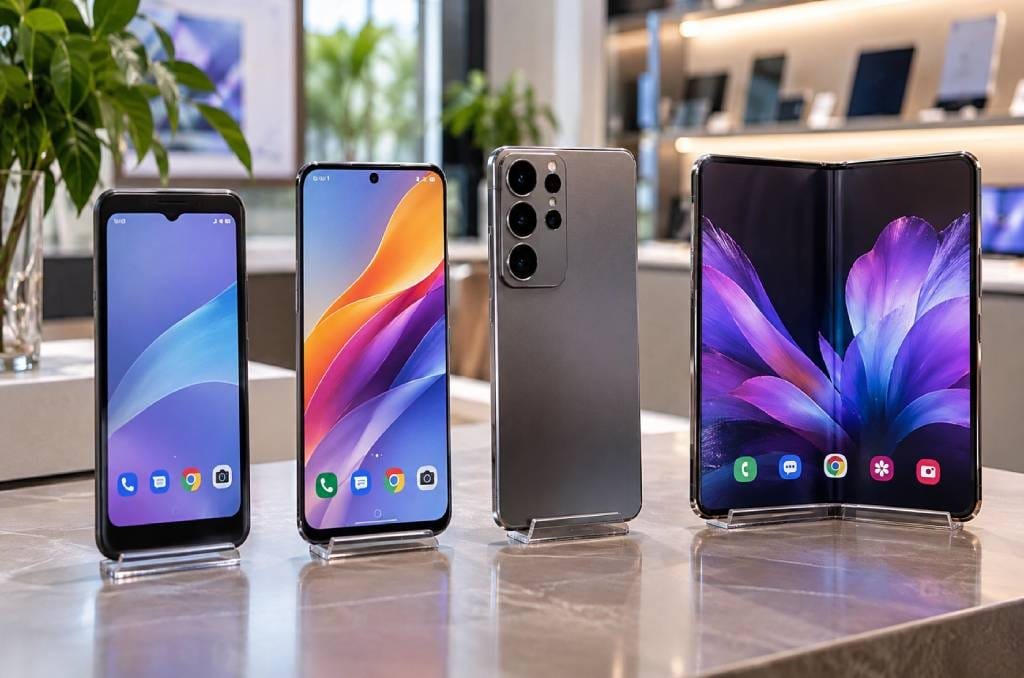
Smartphones fall into four main categories. These are budget, mid-range, flagship, and foldable phones. Each group differs in chipset, screen, camera, and price, so the category helps you match a phone to your needs.
Two phones can list the same RAM and the same camera megapixels. One may still feel smooth for years, while the other starts to lag early. The category usually explains why.
Anyone who checks all phone price in Bangladesh will see this pattern clearly. Prices run from simple keypad phones to premium foldables, and the hardware changes at every step.
This post covers each category, how performance differs, the technology behind it, and the mistakes to avoid.
What Are the Main Smartphone Categories?
Smartphone categories group phones by price and hardware level. The four common groups are budget, mid-range, flagship, and foldable.
Each group serves a different type of user. The table below shows the usual price bands in Bangladesh.
| Category | Typical Price | Best For | Usual Display |
| Budget | Under Tk 20,000 | Calls, chats, video | HD+ LCD |
| Mid-Range | Tk 20,000 to Tk 80,000 | Gaming, photos, daily multitasking | LCD or AMOLED |
| Flagship | Above Tk 80,000 | Top speed and best cameras | AMOLED or OLED |
| Foldable | Above Tk 80,000 | Big screen and multitasking | Foldable AMOLED |
Budget Smartphones Under Tk 20,000
Budget phones cover basic daily needs at the lowest price. They handle calls, messages, social media, and video well.
Most budget models use HD+ LCD screens and entry-level chips such as MediaTek Helio or Unisoc. They usually carry 4GB to 6GB of RAM. Battery life is often strong, but cameras and speed stay basic.
Simple feature phones also sit here for people who only want calls and a long-lasting battery. This group is a safe start for a first smartphone or a phone for a parent.
Mid-Range Smartphones for Balanced Value
Mid-range phones balance speed, screen quality, and price. Most buyers find the best value in this group.
Expect 8GB of RAM and 128GB to 256GB of storage. Chips move up to Snapdragon 6 and 7 series or MediaTek Dimensity. Upper mid-range models add 120Hz AMOLED screens, stronger main cameras, and often 5G. Suppose you play games on weekends and shoot short videos. A mid-range phone with 8GB of RAM handles that well. A phone from this group can serve you for three years or more.
Flagship Smartphones for Top Performance
Flagship phones are a brand’s most advanced models. They offer the fastest chips, the best cameras, and a premium build.
They use top chips such as Snapdragon 8 series or Apple A-series. Cameras often include a telephoto lens for sharp zoom shots. Screens are bright AMOLED or OLED panels with smooth refresh rates.
Brands also add their newest software and AI features here first. Storage upgrades can add a lot to the price, so compare variants carefully. This group suits people who want the best camera and speed, and who keep a phone for many years.
Foldable and Gaming Phones for Special Needs
Foldable and gaming phones serve special needs. Foldables give a tablet-size screen, and gaming phones focus on steady speed.
A foldable bends in the middle. It opens into a large display for reading, video, and multitasking, then closes to fit a pocket. Foldables sit in the top price band, so ask what the warranty covers for the folding screen.
Gaming phones pair a strong chip with a high refresh rate screen, a large battery, and better cooling.
They suit long gaming sessions. Many mid-range and flagship phones also run games well, so check the specs before you pay for a gaming label.
How Performance and Technology Differ by Category
Performance depends on the chipset, RAM, display, and camera working together. A higher category usually improves each part.
The table below compares the three main categories side by side.
| Part | Budget | Mid-Range | Flagship |
| Chipset | Helio or Unisoc | Snapdragon 6 and 7, Dimensity | Snapdragon 8, Apple A-series |
| RAM | 4GB to 6GB | 8GB | 12GB and above |
| Display | HD+ LCD | LCD or 120Hz AMOLED | AMOLED or OLED |
| Camera | Basic | Strong main camera | Multiple lenses with telephoto |
The chipset is the phone’s brain, and RAM decides how many apps stay open smoothly. A 120Hz screen updates 120 times each second, so scrolling feels smoother.
It also uses more battery. Battery size in mAh shows how much charge a phone holds, and charging speed in watts shows how fast it refills. Check both numbers.
Common Mistakes Buyers Make When Choosing a Phone
Most buyers overspend or underbuy because they focus on one number. Looking at the full picture avoids both problems.
- Chasing megapixels. A bigger camera number does not guarantee better photos. Sensor quality and image processing matter more.
- Paying for 5G without coverage. A 5G phone gives faster data only where your operator offers 5G. Elsewhere it runs on 4G.
- Ignoring warranty and region. Some listings name another market, and warranty terms can differ. Ask which warranty applies before you order.
- Skipping memory checks. Versions of one phone with different memory carry different prices. Compare the same RAM and storage between shops.
Smart Buying Checklist
A short checklist keeps your choice clear. Follow these steps before you pay.
- Set a price band first. Pick one of the four bands, and your options shrink fast.
- Match RAM to your use. For most people, 6GB to 8GB of RAM with 128GB of storage is enough. Choose 12GB of RAM and 256GB of storage for heavy gaming or video.
- Check the screen type. AMOLED gives deeper blacks, while LCD keeps the cost low.
- Verify the IMEI. Dial *#06# to see the number, then check it on the BTRC NEIR portal.
- Compare battery and charging. Look at both the mAh and the watts on the spec sheet.
Quick Picks to Match Your Daily Needs
The right category depends on how you use your phone every day. Match your habits to one group and you will not overpay.
Choose budget if you mostly call, chat, and watch videos. Choose mid-range if you want smooth gaming, good photos, and long use.
Choose flagship if you want the best camera and top speed. Choose foldable if you want a tablet-size screen in your pocket.
Author

khizarnisar367@gmail.com
Related Posts

How to Resolve Telegram Download, Installation, and Update Problems
- 0
- 1,248 word
The process of downloading from Telegram is simple, but sometimes users face some problems while downloading and updating the app. The problem...
Read out all
Which Foldable Phone with a Telephoto Camera Is Best?
- 0
- 1,603 word
Choosing a foldable phone for photography means looking beyond the main camera. If you often capture distant landmarks, performers, or candid portraits,...
Read out all
Understanding Generator Fueling and Its Importance in Maintaining Reliable Backup Power Systems
- 0
- 2,679 words
Reliable electricity is essential for residential properties, commercial businesses, industrial facilities, and organizations that depend on electrical equipment to perform their daily...
Read out all
The Benefits of Professional Tree Care for Cleaner and Safer Surroundings
- 0
- 2,993 words
Maintaining a clean, safe, and attractive outdoor environment requires regular attention to trees, plants, lawns, and other landscape features. Trees contribute shade,...
Read out all
Ebike with Torque Sensor: Torque Sensor vs Cadence Sensor Explained
- 0
- 1,650 word
Many riders struggle to choose the best e-bike for their needs. Different sensor technologies, like those found in an ebike with torque...
Read out all
How to Choose the Right Rackmount Hardware for Enterprise IT Environments
- 0
- 1,549 word
Enterprise IT environments depend on hardware that fits their infrastructure, supports reliable operation and simplifies day-to-day maintenance. From server rooms and data...
Read out all