
×
Altar vs Alter: Meaning, Differences & Examples Explained
In

The confusion between altar vs alter is more common than you might think. These two words sound exactly the same, but they have completely different meanings and uses in English. If you’ve ever paused while writing, wondering which one is correct, you’re not alone.

Understanding is important for clear communication, especially in writing, exams, and professional content. In this guide, we’ll break down their meanings, usage, examples, and simple memory tricks so you never mix them up again.

What Does Altar vs Alter Mean?

To understand, you first need to know that they belong to different categories of language.

What is an Altar?

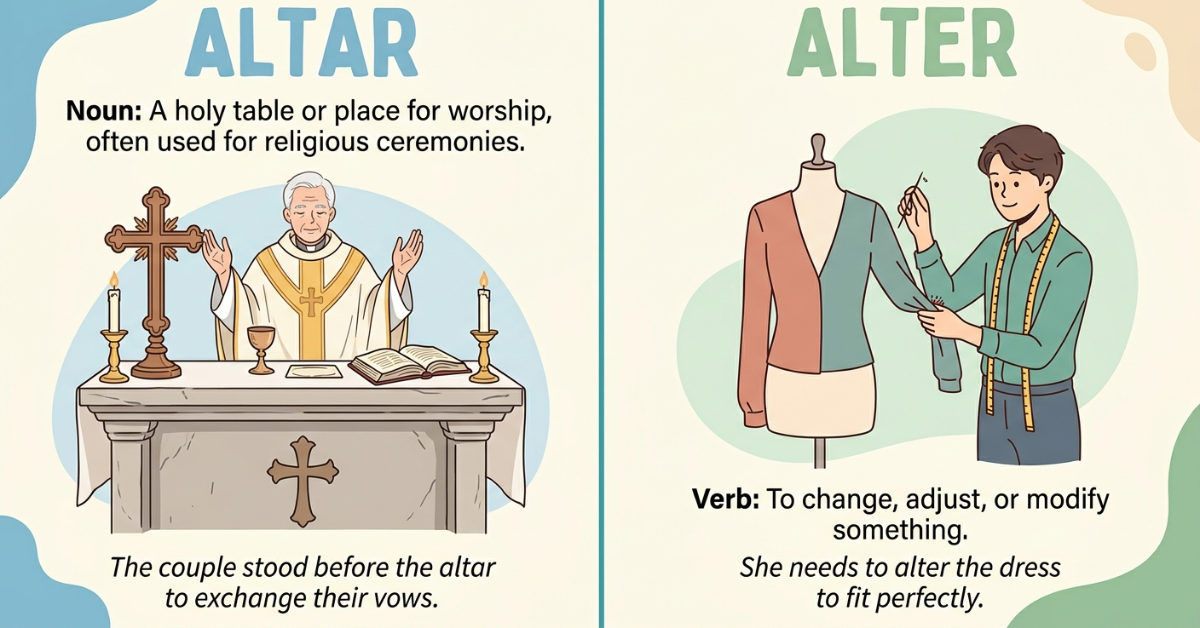
An altar is a noun. It refers to a special structure or table used in religious or spiritual ceremonies.

Examples of altar:

  • A wedding ceremony takes place in front of an altar.
  • Candles were placed on the church altar.
  • People pray at the altar during worship.

In simple terms, an altar is a physical place used for rituals or prayers.

What does Alter mean?

Alter is a verb. It means to change or modify something.

Examples of alter:

  • She decided to alter her dress for the party.
  • The weather may alter our travel plans.
  • He altered his attitude after the discussion.

So, while one is a place, the other is an action.

Altar vs Alter: Key Differences Explained

The main difference between the two lies in meaning and usage.

Feature Altar Alter
Part of Speech Noun Verb
Meaning Sacred table/place To change or modify
Usage Religion, ceremonies Everyday actions, adjustments

Understanding becomes easier when you remember this simple rule:

  • Altar = Place (noun)
  • Alter = Change (verb)

Common Mistakes in Altar vs Alter

Many learners confuse because they sound identical when spoken. However, writing them incorrectly can change the entire meaning of a sentence.

Examples of mistakes:

  • Incorrect: She went to the alter to pray.
    Correct: She went to the altar to pray.
  • Incorrect: He will altar the plan.
    Correct: He will alter the plan.

Always double-check spelling when writing these words.

Easy Memory Tricks to Remember Altar vs Alter

Here are some simple tricks to help you remember:

1. Altar = “A” for “Angel” or “Area”

Think of an altar as a sacred area used in religious places.

2. Alter = “E” for “Edit”

Alter means to edit or change something.

3. Quick Visual Trick

  • Altar → imagine a church
  • Alter → imagine editing a document

These mental images make it easier to distinguish instantly.

Why People Confuse Altar vs Alter

The confusion mainly happens due to:

  • Same pronunciation (homophones)
  • Similar spelling patterns
  • Lack of context while writing or speaking

Once you understand the meaning, the confusion disappears quickly.

FAQs About Altar vs Alter

1. What is the main difference between altar vs alter?

The main difference is that altar is a noun referring to a sacred place, while alter is a verb meaning to change something.

2. Can altar vs alter be used in the same sentence?

Yes, but rarely. For example: “They decided to alter the decorations near the altar.”

3. Is altar always related to religion?

Mostly yes, but it can also refer to ceremonial or symbolic structures in general.

4. What is a simple way to remember altar vs alter?

Remember: altar is a place (noun), and alter means to change (verb).

Conclusion

Understanding is simple once you break it down into meaning and usage. One refers to a sacred place used in ceremonies, while the other describes the action of changing something. The confusion is natural, but with practice and memory tricks, you can easily master both words.

Next time you write, pause for a second and think: are you talking about a place or a change? That small step will help you use altar vs alter correctly every time.

Leave a Reply

Your email address will not be published. Required fields are marked *

Author

britsx85@gmail.com

Related Posts

Aura vs Ora: Key Differences, Meaning & Easy Guide
In

Aura vs Ora: Key Differences, Meaning & Easy Guide

When people come across Aura vs Ora, it’s easy to get confused. These two words sound similar, but their meanings, usage, and...

Read out all
Arcade vs Arcane: Meaning, Differences & Uses Explained
In

Arcade vs Arcane: Meaning, Differences & Uses Explained

The confusion between Arcade vs Arcane is more common than you might think, especially because the words look and sound somewhat similar...

Read out all
Aisle vs Isle: Meaning, Difference & Examples Explained
In

Aisle vs Isle: Meaning, Difference & Examples Explained

Ever found yourself stuck between two words Aisle vs Isle that look or sound similar but mean completely different things? That’s exactly...

Read out all
On the Other Hand Transition Words: Meaning & Usage Guide
In

On the Other Hand Transition Words: Meaning & Usage Guide

Writing becomes much clearer when ideas are connected smoothly, and that’s exactly where on the other hand transition words come in. These...

Read out all
Thank You As Always – Meaning, Usage & Examples
In

Thank You As Always – Meaning, Usage & Examples

In everyday communication, small phrases can carry a lot of meaning. One such expression is “thank you as always”, a polite and...

Read out all
Another Word for Asset to the Team: Best Alternatives
In

Another Word for Asset to the Team: Best Alternatives

In professional communication, finding the right words can make a big difference in how your message is received. One commonly used phrase...

Read out all