
- 0
- 1,078 word
Looking for first aid training in Brampton? Pick a course that is hands-on, taught by a certified instructor, and accepted by your workplace. Then check the location, schedule, and certificate details. A few simple questions will help you compare classes and book with confidence.
Maybe your employer asked for a certificate. Maybe you’re a new parent, a lifeguard, or a team lead who just inherited the safety file. Whatever the reason, typing First Aid training near me into a search bar brings up dozens of results. So how do you pick the right one? Let’s walk through it.
Why Does First Aid Training Matter?
Emergencies don’t send a warning. A coworker chokes at lunch. A child stops breathing at the pool. A neighbour collapses on the driveway.
In moments like these, the first few minutes matter most. Paramedics are fast, but they can’t be everywhere at once. A trained bystander can start CPR, control bleeding, or use an AED while help is on the way. That’s a powerful skill to carry around.
Which Course Is Right for You?
Course names changed in June 2026. Ontario providers updated them to match the CSA Z1210:24 standard. Here’s the short version:
- Basic First Aid with CPR: The old “Emergency” course. It covers the essentials, like choking, bleeding, and CPR, in a shorter class.
- Intermediate First Aid with CPR: The old “Standard” course. It goes deeper and is the usual pick for workplaces.
- BLS (Basic Life Support): Built for nurses, paramedic students, and other health care providers.
Not sure which one you need? Ask your employer or school first. They often name the exact course on their checklist.
What Happens in a First Aid Class?
If you’ve never taken one, the idea can feel a bit scary. It shouldn’t. Classes are friendly, practical, and paced for beginners.
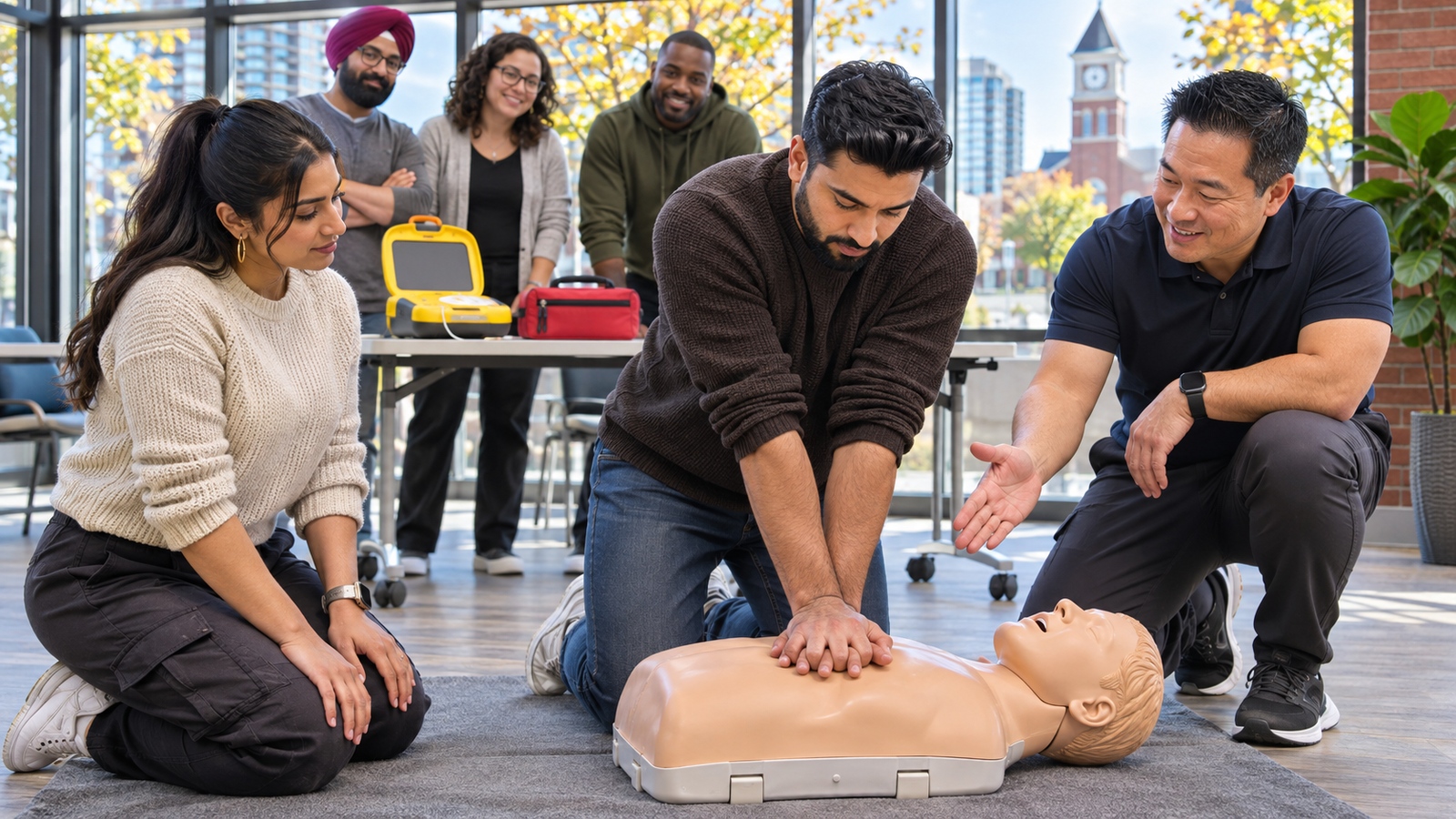
Expect a mix of short talks and hands-on practice. You’ll learn how to check a scene for danger, call for help, and care for someone until paramedics arrive. You’ll practise CPR on adult, child, and infant manikins. You’ll also learn how to use an AED, treat choking, and manage serious bleeding.
Most courses end with a skills check and a short written test. Don’t stress about it. Instructors want you to succeed, and they’ll coach you through anything that feels shaky. By the end, you’ll know what to do when someone needs you.
What Do Ontario Workplace Rules Say?
If you manage a team, this part matters. Under WSIB Regulation 1101, workplaces covered by WSIB must have trained first aiders and stocked first aid kits. The numbers depend on how many workers are on shift.
The Ontario Occupational Health and Safety Act (OHSA) adds a broader duty. Employers must take every reasonable precaution to protect workers. Training staff is one of the clearest ways to show you’ve done that.
So before you book, ask one direct question: is this course WSIB-compliant? A good provider will answer without hesitation.
Also, mark your calendar. Most first aid and CPR certificates last three years. BLS certificates last one year. A missed renewal can leave a team uncovered overnight.
What Should You Look for in a Training Provider?
Not every class is built the same. Use this quick checklist:
- Hands-on practice. You should spend most of the class on the floor with manikins, not just watching slides.
- Certified instructors. Ask who teaches the course and how they’re qualified.
- Clear certificate details. Find out how soon you’ll receive it and how long it stays valid.
- Flexible dates. Evenings and weekends help if you work shifts.
- Honest answers. If a provider dodges questions about compliance, move on.
Here’s a simple test. Call and ask what happens if you miss a session. A confident provider has a clear answer.
Does Location Really Matter?
More than you’d think. A class across the city turns into a long drive after a full workday. That’s often when people cancel.
Brampton is spread out, and getting around at rush hour takes planning. Choosing a training site close to home or work saves time. It also makes it easier to bring a few coworkers along.
Some courses are blended. You finish the theory online, then visit a training centre for the hands-on skills. This can cut your time in the classroom. Just make sure the practical session is in person. You can’t learn chest compressions from a screen.
How Can You Get the Most Out of Your Class?
A little prep goes a long way:
- Wear comfy clothes. You’ll be kneeling and moving.
- Ask questions. If a skill feels awkward, say so. Instructors love this.
- Practise out loud. Say the steps to a friend. It helps them stick.
- Set a renewal reminder. Put the expiry date in your phone the day you pass.
- Bring someone. Skills fade faster when you’re the only one who remembers them.
Ready to Take the Next Step?
You don’t need a medical background. You just need a few hours and a willingness to help. Compare a few providers, ask the questions above, and pick the class that fits your life.
Then book it. The best time to learn first aid is before you need it.
If you are looking for first aid training near Brampton East, Kennedy Road South, Queen Street East, or other areas close to our facility, then you may reach out to Coast2Coast First Aid & Aquatics in that area.
Frequently Asked Questions
1. How long does a first aid course take?
It depends on the level. Basic courses are shorter, while Intermediate and BLS classes run longer. Blended formats move the theory online, which cuts your time in the room.
2. Do I need experience before I sign up?
No. Beginner classes assume no prior knowledge, and instructors teach each skill step by step.
3. How long does a first aid certificate last?
Most first aid and CPR certificates are valid for three years. BLS certificates are valid for one year, so renew early.
4. Can I take the whole course online?
Not if you want a certificate that counts for most workplaces. CPR and first aid need hands-on practice, so choose a course with an in-person skills session.
5. How do I know if a course meets Ontario workplace rules?
Ask the provider whether it’s WSIB-compliant, and check your employer’s requirements under WSIB Regulation 1101 and the Ontario OHSA.
Author

khizarnisar367@gmail.com
Related Posts

AllValorant.gg: A Complete Guide to Valorant News, Gaming Strategies, Updates, and Esports
- 0
- 2,310 words
Introduction The gaming industry continues to grow, and competitive first-person shooter games have become an important part of modern entertainment. Among the...
Read out all
Swiss Chems: A Complete Guide to Its Products, Research Focus, Reputation, and Safety Considerations
- 0
- 2,799 words
Introduction The name Swiss Chems has attracted attention in the online research chemical market, particularly among people interested in performance science, laboratory...
Read out all
EntrepreneursBreak.com: Exploring a Digital Platform for Business, Technology, Careers, and Everyday Knowledge
- 0
- 2,901 words
The internet has transformed the way people discover information, learn new skills, and stay connected with developments around the world. Today, readers...
Read out all
Ask for the Demo With Your Own Lots: A Buyer’s Checklist for Food Software Projects
- 0
- 1,455 word
Every software demo looks wonderful. The screens are clean, the sample data behaves, and the scanner beeps at exactly the right moment....
Read out all
Poieno: Exploring the Meaning, Features, Uses, and Growing Curiosity Around Poieno
- 0
- 2,360 words
Introduction The internet is constantly introducing new words, concepts, platforms, and expressions that capture people’s attention. Some terms become popular because of...
Read out all
Bropu: Meaning, Uses, Origins, and Everything You Should Know About This Unusual Term
- 0
- 2,381 words
The internet constantly introduces unfamiliar words, names, and expressions that make people curious. Some become popular through social media, while others appear...
Read out all