
- 0
- 2,799 words
Introduction
The name Swiss Chems has attracted attention in the online research chemical market, particularly among people interested in performance science, laboratory research, peptides, and selective androgen receptor modulators (SARMs). As interest in fitness, muscle development, scientific innovation, and experimental compounds continues to grow, specialized online suppliers have become increasingly visible.
Swiss Chems is one of the names associated with this developing market. The company is particularly known for its selection of research-related compounds and products associated with sports science and experimental research. Its product categories have expanded beyond its original association with SARMs to include peptides, nootropics, metabolic compounds, and other research chemicals.
However, understanding a company like Swiss Chems requires more than simply looking at its product catalogue. Consumers and researchers should also consider product quality, laboratory documentation, regulatory requirements, transparency, and potential health risks.
This article explores Swiss Chems, its background, product categories, reputation, quality considerations, and the importance of responsible research.
What Is Swiss Chems?
Swiss Chems is an online supplier operating in the research chemical market. According to its company information, the business dates back to 2018 and initially became recognized for products associated with SARMs and performance-related research.
The company operates in a specialized industry where scientific curiosity and interest in emerging compounds have created demand for different types of research materials. Its catalogue has expanded over time, making the brand recognizable among people researching peptides, nootropics, and other experimental substances.
Unlike traditional health and fitness retailers, research chemical suppliers operate in a different market. Their products may be marketed for laboratory research rather than approved medical treatment or ordinary consumer use.
This distinction is important because a product being available online does not automatically mean it has been evaluated for safety, approved for human consumption, or proven effective for a particular purpose.
Swiss Chems has developed an online presence around this specialized market, but potential customers should independently evaluate its claims and documentation before making assumptions about product quality.
The Background and Development of Swiss Chems
The development of Swiss Chems reflects the broader growth of the research chemical industry. During the past several years, online interest in experimental compounds has increased considerably.
Researchers, fitness enthusiasts, and people interested in biotechnology frequently discuss substances that are being investigated for their possible biological effects. SARMs and peptides have become particularly visible topics in online communities.
Swiss Chems entered this environment by offering products connected with these areas of interest. Over time, its catalogue expanded to cover additional research categories.
The growth of the business also illustrates how digital commerce has changed the way specialized research materials are marketed. Instead of relying entirely on traditional laboratory suppliers, some online businesses now use dedicated websites to present product information and documentation.
Nevertheless, a company’s history and online visibility should not be confused with independent scientific validation. A supplier’s experience does not guarantee that every product meets consistent quality standards.
Understanding the Main Product Categories
Swiss Chems is associated with several categories of research compounds. Each category has different scientific characteristics, potential applications, and regulatory considerations.
1. Selective Androgen Receptor Modulators (SARMs)
SARMs are among the best-known categories associated with Swiss Chems.
Selective androgen receptor modulators are experimental compounds designed to interact with androgen receptors in the body. Researchers have investigated their potential biological effects because androgen receptors are involved in processes associated with muscle tissue, bone development, and other physiological functions.
Their selective activity has attracted scientific interest. However, the idea that a compound is selective does not mean that it is completely safe or free from unwanted effects.
Several SARMs remain investigational substances rather than approved medicines. Questions surrounding their long-term safety, effectiveness, and possible effects on hormone regulation remain important.
The United States Food and Drug Administration has warned about the risks associated with SARMs marketed as bodybuilding products. These warnings make it essential to distinguish scientific research from unsupported marketing claims.
2. Peptides
Peptides represent another major category associated with Swiss Chems.
Peptides are short chains of amino acids that perform numerous biological functions. They participate in cellular communication, hormone signaling, and other processes throughout the body.
Scientists study different peptides to understand their potential roles in biological systems. Some peptides have established medical applications, while others remain experimental.
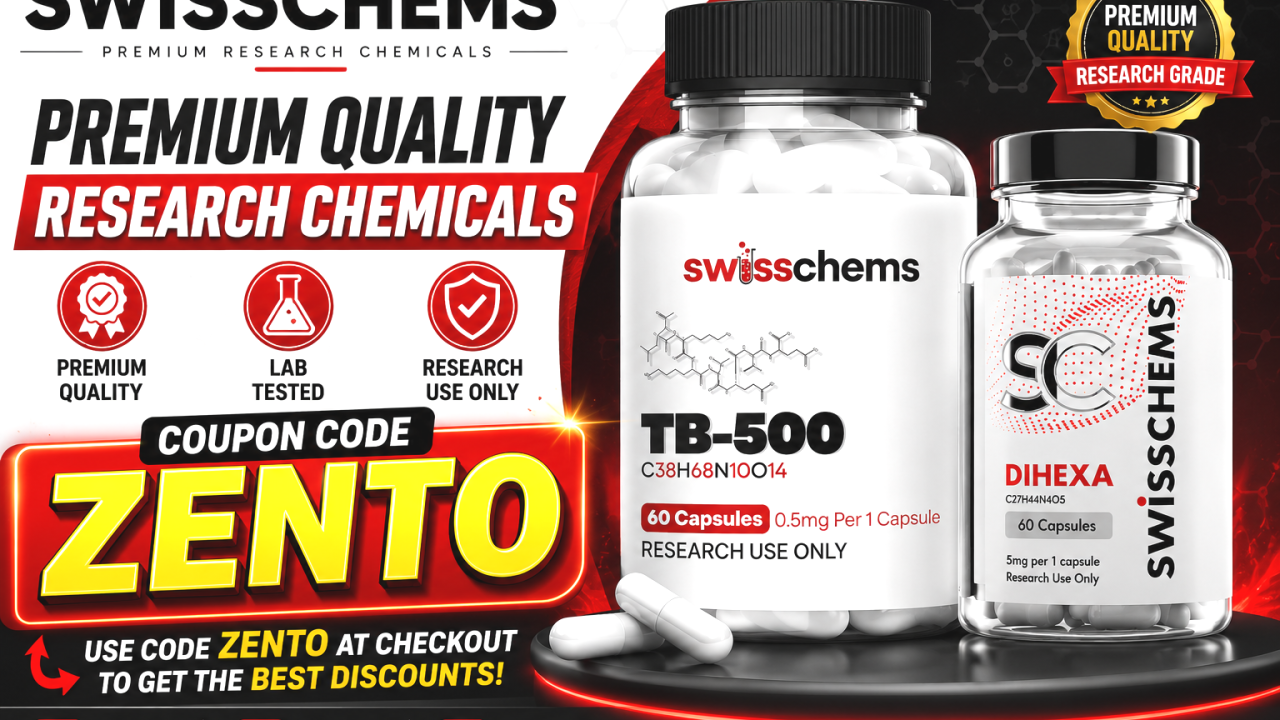
Products commonly discussed in the research peptide market include BPC-157, TB-500, CJC-1295, and ipamorelin.
However, these substances do not all have the same scientific evidence or regulatory status. Many popular research peptides lack sufficient high-quality human clinical evidence to establish their safety and effectiveness.
This is particularly important when products are marketed with claims involving recovery, tissue repair, athletic performance, or longevity.
3. Nootropics
Nootropics are substances discussed in connection with cognitive function and neurological research.
The category includes compounds that researchers investigate for their possible relationships with memory, attention, learning, and other brain-related processes.
Interest in nootropics has increased alongside discussions about productivity, mental performance, and cognitive science.
However, the term nootropic covers a broad range of substances with different evidence profiles. Some have established medical applications, while others have limited research supporting their advertised benefits.
Consumers should be cautious about assuming that a product marketed for cognitive enhancement will necessarily improve concentration or memory.
4. Metabolic Research Compounds
Metabolic compounds are another area of interest within the broader research chemical market.
Metabolism involves the chemical processes through which the body produces and uses energy. It includes complex interactions involving hormones, enzymes, glucose regulation, and cellular activity.
Scientists investigate different compounds to understand these biological pathways and their possible relevance to metabolic disorders.
However, experimental metabolic substances should not be confused with approved treatments. A compound’s appearance in scientific research does not establish that it is suitable for self-treatment or general consumption.
5. Other Research Materials
Depending on the available catalogue, Swiss Chems has also been associated with additional categories, including bioregulators, longevity-related compounds, and post-cycle products.
These categories reflect growing interest in biological regulation, aging research, and hormonal science.
Nevertheless, each compound requires individual evaluation. Scientific evidence, product identity, purity, manufacturing conditions, and regulatory status can differ significantly.
Why Swiss Chems Attracts Attention
There are several reasons why Swiss Chems has become a recognizable name in the research chemical market.
Growing interest in scientific research: Advances in biotechnology and molecular biology have encouraged more people to explore emerging scientific topics. Compounds that once received attention mainly in specialized research environments are now frequently discussed online.
A broad product catalogue: Swiss Chems is associated with multiple research categories. This variety has helped the brand attract attention from people exploring different areas of experimental science.
Online accessibility: Digital platforms have made it easier for specialized suppliers to present their catalogues and company information to a wider audience.
Interest in performance science: Discussions about muscle physiology, hormonal regulation, recovery, and cognitive function have contributed to the popularity of research-related compounds.
Although these factors help explain the company’s visibility, popularity should never be treated as proof of safety, effectiveness, or product authenticity.
Swiss Chems and Product Quality
Product quality is one of the most important considerations in the research chemical industry.
Research compounds require appropriate identification, purity assessment, and quality-control procedures. Even small differences in chemical composition can influence experimental results.
Swiss Chems has published laboratory reports and product-testing information through its online platform. Such documentation can provide useful information, but it must be examined carefully.
A certificate of analysis, commonly called a COA, should ideally identify several important details:
- The exact compound being tested.
- The batch or lot number.
- The laboratory responsible for testing.
- The testing methods used.
- The measured purity or concentration.
- The date of analysis.
- The relationship between the tested sample and the product being sold.
A certificate is most useful when it comes from a qualified independent laboratory and clearly corresponds to the exact product batch.
It is also important to distinguish between testing arranged by a supplier and independent testing performed without the supplier controlling the process. Both can provide information, but they do not offer identical levels of assurance.
According to a vendor assessment published in October 2026, Swiss Chems has a substantial collection of laboratory reports, although questions have been raised about the identification of certain clients on some reports and the consistency of independent testing results. These concerns demonstrate why documentation should be examined rather than accepted at face value.
Regulatory Considerations and the FDA Warning
An important part of understanding Swiss Chems involves its regulatory history.
In December 2024, the United States Food and Drug Administration issued a warning letter concerning Swiss Chems’ marketing of certain weight-loss compounds, including semaglutide and retatrutide.
The FDA’s position was that the products were being marketed in ways that established intended human use, despite research-use-only disclaimers. The agency identified regulatory concerns involving unapproved new drugs.
This situation highlights an important distinction: labeling a substance as a research chemical does not automatically make every form of marketing or distribution legally acceptable.
The regulatory status of a compound depends on applicable laws, its intended use, its marketing, and other relevant circumstances.
Anyone researching Swiss Chems should therefore consider the company’s regulatory history instead of relying exclusively on promotional descriptions or product listings.
The warning also illustrates why research chemical suppliers must maintain clear boundaries between laboratory research and medical claims.
Understanding the Risks of Research Chemicals
Research chemicals can involve significant risks, especially when substances are used without appropriate medical supervision or outside legitimate research environments.
One major concern is the limited availability of reliable human safety data for many experimental compounds.
A substance may produce interesting results in laboratory experiments or animal studies without demonstrating the same effects in humans.
Other concerns include:
Uncertain purity: A product may contain impurities or a different concentration than expected.
Incorrect labeling: Inaccurate product identification can create problems for researchers and compromise experimental findings.
Unknown long-term effects: Some experimental compounds have not undergone sufficient long-term clinical investigation.
Unexpected biological reactions: Compounds affecting hormonal, metabolic, or neurological pathways may produce unintended effects.
Contamination: Poor manufacturing or storage conditions can introduce unwanted substances into research materials.
Injectable research products deserve particular caution because contamination can create serious infection risks.
The safest approach is to avoid treating experimental research products as substitutes for approved medicines. Anyone considering a medical treatment should consult a qualified healthcare professional and use appropriately authorized medical products.
How to Evaluate Swiss Chems Before Forming an Opinion
People researching Swiss Chems should use a structured approach rather than depending on advertisements, social media discussions, or individual testimonials.
1. Examine Independent Laboratory Documentation
Look for laboratory reports that identify the testing organization, product batch, testing date, and analytical methods.
A report without a clearly identifiable connection to the product being evaluated offers limited reassurance.
2. Check Regulatory Information
Regulatory warnings and official agency announcements can provide important information about a company’s activities.
The FDA’s December 2024 warning letter is an example of information worth considering when examining Swiss Chems.
3. Look Beyond Customer Testimonials
Customer reviews can describe experiences involving delivery, communication, and website usability.
However, a positive customer review cannot establish chemical purity or medical safety.
Similarly, a negative review may identify a problem without necessarily proving that every product has the same issue.
4. Consider Company Transparency
Reliable businesses should provide understandable information about their identity, policies, testing procedures, and customer support.
Clear communication makes it easier to evaluate a supplier’s claims and understand the limitations of its products.
5. Understand Applicable Laws
Research chemical regulations vary between countries.
A substance available through an international website may still be restricted or subject to specific import requirements in the buyer’s country.
Anyone researching these products should understand the relevant local regulations rather than assuming that online availability establishes legality.
Swiss Chems and the Importance of Scientific Research
The wider research chemical industry reflects an important aspect of modern science: researchers continuously investigate biological compounds to understand how the human body works.
Research involving receptors, cellular signaling, metabolic pathways, and amino acid sequences can contribute to scientific knowledge.
However, scientific progress requires more than discovering potentially interesting substances.
Researchers need reproducible experiments, appropriate controls, reliable analytical techniques, ethical standards, and independent verification.
A promising laboratory observation is only an early step in a much longer scientific process. Before an experimental compound becomes an approved medical treatment, it generally needs extensive evaluation involving safety, dosage, effectiveness, and manufacturing quality.
This process protects patients and helps distinguish genuine scientific progress from unsupported commercial promises.
Swiss Chems operates in a market shaped by these scientific interests, making it important to approach its products and claims with an evidence-based perspective.
Online Reputation and Customer Experiences
Online reputation is another subject frequently discussed in connection with Swiss Chems.
Research chemical suppliers often receive attention in online forums, review platforms, and specialized communities. Discussions may involve product availability, shipping experiences, customer support, packaging, and laboratory documentation.
These conversations can help readers understand the different experiences people report.
However, online reviews should be interpreted carefully. Some reviews may be influenced by affiliate arrangements, promotional incentives, personal disagreements, or incomplete information.
For example, an individual may report a satisfactory delivery experience without having independently verified the contents of the package.
Likewise, another customer may report dissatisfaction because of a delayed shipment or communication issue.
A balanced assessment should consider several independent sources and distinguish between customer service, product quality, and scientific evidence.
The most reliable conclusions come from verifiable documentation rather than isolated online opinions.
The Future of Swiss Chems and the Research Chemical Market
The research chemical industry will likely continue changing as scientific understanding, regulatory requirements, and consumer awareness develop.
Interest in peptides, molecular biology, and metabolic research has created opportunities for specialized businesses. At the same time, regulatory authorities are paying closer attention to products marketed with medical or performance-related claims.
For companies operating in this environment, transparency and quality control will remain important.
Independent laboratory testing, accurate product identification, clear documentation, and responsible communication can help establish greater accountability.
Customers and researchers are also becoming more interested in understanding where products originate and whether their advertised characteristics can be independently verified.
Swiss Chems will be evaluated within this changing environment. Its long-standing online presence and broad product categories provide context, but its future reputation will depend on the quality of its documentation, regulatory compliance, and ability to address concerns about product consistency.
Ultimately, scientific credibility requires evidence that can be independently examined.
Frequently Asked Questions About Swiss Chems
1. What is Swiss Chems?
Swiss Chems is an online supplier associated with research chemicals, including SARMs, peptides, nootropics, and other experimental compounds. The business states that it has operated since 2018.
2. What products is Swiss Chems known for?
The company is particularly associated with SARMs and has expanded into research peptides, nootropics, metabolic compounds, and other specialized product categories.
3. Does Swiss Chems sell peptides?
Yes. Peptides are among the research categories associated with its catalogue. However, individual peptides have different evidence profiles and regulatory statuses.
4. Are Swiss Chems products approved medicines?
Research-use-only products should not automatically be considered approved medicines. Many compounds in this market have not received authorization for human medical use.
5. Why is laboratory testing important?
Laboratory testing helps establish a product’s identity, purity, and concentration. Independent testing can also provide additional confidence when the results clearly correspond to the specific batch being evaluated.
6. Has Swiss Chems faced regulatory concerns?
Yes. The FDA issued a warning letter in December 2024 concerning the marketing of certain unapproved weight-loss compounds. This history is an important consideration when evaluating the company.
7. Are customer reviews enough to establish product quality?
No. Customer reviews can provide information about purchasing experiences, but they cannot replace independent laboratory analysis or clinical safety evidence.
8. What should people consider before researching Swiss Chems?
Important considerations include product documentation, independent testing, regulatory status, company transparency, local laws, and the scientific evidence available for individual compounds.
Conclusion
Swiss Chems is a recognizable name in the online research chemical industry, with a history dating back to 2018 and a catalogue associated with SARMs, peptides, nootropics, and other experimental compounds.
Its development reflects increasing interest in biotechnology, performance science, and emerging research materials. Nevertheless, its products and business reputation deserve careful evaluation.
Laboratory documentation, independent testing, regulatory compliance, and transparent business practices are essential when assessing any research chemical supplier. The company’s regulatory history and questions surrounding some independent testing results also demonstrate why buyers and researchers should avoid relying entirely on marketing claims.
Ultimately, Swiss Chems represents a company operating in a specialized and evolving industry. Understanding its background, products, limitations, and regulatory considerations provides a more balanced perspective than simply judging it by its online popularity.
The most important principle is to prioritize scientific evidence, product transparency, and safety over promotional promises. Research chemicals should remain within appropriate research and regulatory boundaries, and experimental substances should never be assumed to be safe for personal use.
Author

blowouttaper.co.uk@gmail.com
Related Posts

AllValorant.gg: A Complete Guide to Valorant News, Gaming Strategies, Updates, and Esports
- 0
- 2,310 words
Introduction The gaming industry continues to grow, and competitive first-person shooter games have become an important part of modern entertainment. Among the...
Read out all
EntrepreneursBreak.com: Exploring a Digital Platform for Business, Technology, Careers, and Everyday Knowledge
- 0
- 2,901 words
The internet has transformed the way people discover information, learn new skills, and stay connected with developments around the world. Today, readers...
Read out all
How to Find First Aid Training Near You in Brampton
- 0
- 1,078 word
Looking for first aid training in Brampton? Pick a course that is hands-on, taught by a certified instructor, and accepted by your...
Read out all
Ask for the Demo With Your Own Lots: A Buyer’s Checklist for Food Software Projects
- 0
- 1,455 word
Every software demo looks wonderful. The screens are clean, the sample data behaves, and the scanner beeps at exactly the right moment....
Read out all
Poieno: Exploring the Meaning, Features, Uses, and Growing Curiosity Around Poieno
- 0
- 2,360 words
Introduction The internet is constantly introducing new words, concepts, platforms, and expressions that capture people’s attention. Some terms become popular because of...
Read out all
Bropu: Meaning, Uses, Origins, and Everything You Should Know About This Unusual Term
- 0
- 2,381 words
The internet constantly introduces unfamiliar words, names, and expressions that make people curious. Some become popular through social media, while others appear...
Read out all