
- 0
- 2,218 words
Have you ever come across a word that looks exactly the same when you read it forward and backward? Words like “level,” “madam,” and “radar” are fascinating examples of a special language pattern known as a palindrome. These words are easy to recognize once you understand the concept, and they reveal an interesting side of language, mathematics, and creative writing.
If you have ever wondered what is a palindrome, the answer is simple: a palindrome is a word, phrase, number, or sequence that reads the same forward and backward, usually ignoring spaces, punctuation, and capitalization. Palindromes appear in everyday language, puzzles, literature, mathematics, and even computer programming.
In this article, we will explore the meaning of a palindrome, discover popular examples, learn about different types, and understand why these patterns continue to attract the attention of language lovers and puzzle enthusiasts.
What Is a Palindrome?
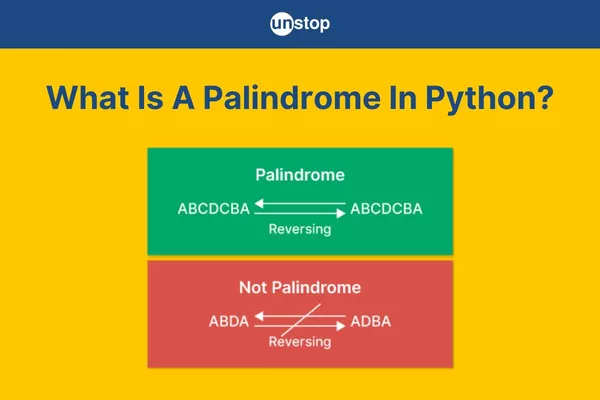
A what is a palindrome is a word, phrase, number, or sequence of characters that remains the same when its order is reversed. In ordinary language, this means reading the sequence from left to right produces the same result as reading it from right to left.
For example, the word “level” is a palindrome. When you read it backward, it still spells “level.” The same is true of “radar,” “civic,” and “refer.”
Palindromes do not always consist of individual words. A complete sentence can also be a palindrome if its letters follow the same pattern in both directions. One famous example is “Never odd or even.” When spaces are removed and capitalization is ignored, the sentence reads identically backward.
The important feature of a palindrome is symmetry. The letters or characters on one side correspond to those on the other side in reverse order. This creates a balanced structure that makes palindromes interesting and memorable.
In most English examples, spaces, punctuation marks, and capital letters are ignored when checking whether a phrase is a palindrome. However, some mathematical and computer applications use stricter rules that consider every character.
Simple Examples of Palindromes
The easiest way to understand palindromes is to examine a few familiar examples. Some are short words, while others are numbers or complete phrases.
1. Palindrome Words
Many English words are palindromes. They can be short and simple or slightly longer.
Common examples include:
- Level: The word reads the same in both directions.
- Madam: Reversing the letters produces the same word.
- Radar: This word is identical when read backward.
- Civic: The letters form a symmetrical pattern.
- Refer: The first and last letters match, as do the second and fourth letters.
- Tenet: The arrangement of letters remains unchanged when reversed.
- Rotator: A longer example that preserves its spelling backward.
- Noon: A short, familiar word that works in both directions.
These examples show that palindromes are not limited to unusual vocabulary. Several are ordinary English words that people use in everyday conversations.
2. Palindrome Phrases
A palindrome can also be a phrase or sentence. These examples are more challenging because the words must be arranged so that the individual letters create a symmetrical sequence.
Here are some popular examples:
- “Never odd or even.”
- “Was it a car or a cat I saw?”
- “A man, a plan, a canal: Panama!”
- “No lemon, no melon.”
- “Do geese see God?”
To check these phrases, remove the spaces and punctuation marks and convert the letters to a consistent case. Then compare the resulting sequence with its reverse.
For example, “Never odd or even” becomes “neveroddoreven.” Reading those letters backward produces the same sequence.
Creating a sentence palindrome is much harder than finding a palindrome word. Writers must arrange words naturally while maintaining the required letter pattern.
3. Palindrome Numbers
Palindromes are also common in mathematics. A palindrome number has digits that remain unchanged when reversed.
Examples include:
- 11
- 22
- 121
- 131
- 1331
- 1221
- 12321
- 45654
Consider the number 12321. If you reverse its digits, you obtain 12321 again. Therefore, it is a palindrome number.
However, 12345 is not a palindrome because reversing its digits produces 54321.
Palindrome numbers can contain two digits, three digits, or many more. They are useful in mathematical puzzles, number games, and programming exercises.
Different Types of Palindromes
Although the basic principle remains the same, palindromes can appear in several forms. Understanding these categories helps explain how the concept extends beyond ordinary words.
1. Word Palindromes
Word palindromes are the most familiar type. They consist of a single word that reads identically forward and backward.
Examples include “level,” “radar,” “madam,” and “rotator.”
These words are often used in language lessons because they demonstrate symmetry in spelling. They are also popular in word games because their structure is easy to test.
Some word palindromes have practical meanings, while others are uncommon or specialized. Regardless of their meaning, their defining characteristic is the same arrangement of letters in both directions.
2. Sentence Palindromes
Sentence palindromes use several words to form a symmetrical sequence of letters. They are often humorous, clever, or surprising.
For example, “Was it a car or a cat I saw?” is a classic sentence palindrome. The sentence makes sense when read normally, and its letters form the same sequence backward when spaces and punctuation are ignored.
Sentence palindromes require more planning than single-word examples. A writer must balance the meaning of the sentence with the restrictions imposed by the letter sequence.
This makes them a creative challenge for poets, writers, teachers, and puzzle enthusiasts.
3. Numeric Palindromes
Numeric palindromes are numbers whose digits remain the same when reversed. They are easy to identify because the first digit must match the last, the second must match the second-to-last, and so on.
For example, 7447 is a palindrome because reversing it produces 7447.
Numbers such as 12321 and 98789 follow the same rule. Numeric palindromes are especially useful in mathematics lessons because they help students understand patterns, symmetry, and digit placement.
4. Date Palindromes
Certain dates can form palindromic patterns when written in a particular numerical format. Whether a date qualifies depends on how the date is arranged and which separators are ignored.
For instance, the date 02/02/2020 can be written as 02022020. This sequence is not a palindrome because its reverse is 02022020? In fact, reversing the digits gives 02022020, so it is a palindrome.
Date palindromes attract attention because they combine calendar patterns with numerical symmetry. Their appearance depends on the date format being used, such as day-month-year or month-day-year.
5. Biological Palindromes
The concept of palindromic sequences also appears in biology, particularly in genetics. Certain DNA sequences exhibit a form of symmetry when their complementary strands are considered.
These sequences are important in molecular biology because some enzymes recognize specific DNA patterns. Restriction enzymes, for example, often recognize palindromic DNA sequences and cut the DNA at or near those recognition sites.
Biological palindromes do not always work exactly like ordinary English words. Their symmetry is based on the structure and complementary relationships of DNA strands rather than simply reading the same letters backward on a single line.
This example demonstrates how a concept associated with language can also be useful in scientific research.
How to Identify a Palindrome
Identifying a palindrome is straightforward once you know what to look for. You can check a word, phrase, or number manually by following a few simple steps.
Step 1: Write the sequence clearly.
Start with the word, phrase, or number you want to test. For example, use “radar.”
Step 2: Remove spaces and punctuation if necessary.
For phrases, remove spaces, commas, apostrophes, and other punctuation marks when using the common linguistic definition.
Step 3: Standardize capitalization.
Convert all letters to lowercase so that uppercase and lowercase differences do not affect the result.
Step 4: Reverse the sequence.
Read the characters from the last position to the first.
Step 5: Compare both versions.
If the original normalized sequence and the reversed sequence are identical, the sequence is a palindrome.
For example, “radar” becomes “radar” when reversed, so it qualifies. The word “house” becomes “esuoh,” so it does not.
For a phrase such as “No lemon, no melon,” removing spaces and punctuation produces “nolemonnomelon.” Reversing that sequence produces the same result.
These steps work for most everyday palindrome challenges.
Why Are Palindromes Interesting?
Palindromes are more than amusing word tricks. They demonstrate how patterns can emerge from the structure of language and numbers.
They Develop Language Skills
Learning about palindromes encourages readers to pay attention to spelling, letter order, and word structure. Children can use them to practice reading and recognize relationships between letters.
Teachers often introduce palindromes as a playful way to improve vocabulary and spelling awareness. Because many examples are short, students can experiment with them without needing advanced language skills.
They Encourage Logical Thinking
Finding a palindrome requires comparing two sequences and identifying symmetrical relationships. This process encourages logical thinking and attention to detail.
Number palindromes are particularly useful for mathematical activities. Students can examine how digits relate to one another and create their own patterns.
They Inspire Creativity
Writers enjoy palindromes because they impose unusual restrictions on sentence construction. Creating a meaningful sentence that reads identically backward is a demanding exercise in word choice and arrangement.
Some palindrome sentences are funny, while others are designed mainly to demonstrate linguistic skill. Either way, they show how creative people can work within strict rules.
They Make Learning Enjoyable
Palindromes are well suited to quizzes, classroom games, spelling competitions, and family activities. People can challenge one another to find the longest palindrome word or invent a palindrome phrase.
Their simplicity makes them accessible to beginners, while the difficulty of constructing longer examples keeps experienced word enthusiasts interested.
Palindromes in Mathematics and Computer Science
Palindromes are also important in technical subjects. In mathematics, they help illustrate symmetry and number patterns. In computer science, checking whether a sequence is a palindrome is a common introductory programming problem.
A computer program can determine whether a word is a palindrome by comparing its characters from opposite ends. If all corresponding characters match, the sequence qualifies. If a mismatch appears, it does not.
Another approach is to reverse the entire sequence and compare the result with the original. This method is easy to understand and works well for simple examples.
For instance, a program could test “civic” by reversing it. Because the reversed word remains “civic,” the program identifies it as a palindrome.
More advanced applications may require decisions about spaces, punctuation, Unicode characters, or letter case. These details matter because different systems may define which characters count as part of the sequence differently.
Palindrome detection is therefore a useful exercise for learning about strings, loops, comparisons, and basic algorithms.
Common Misconceptions About Palindromes
Several misunderstandings can make palindromes seem more complicated than they really are.
Misconception 1: Every palindrome must be a word.
This is incorrect. Palindromes can be words, phrases, sentences, numbers, and other sequences. The concept applies whenever a sequence remains unchanged when reversed under the relevant rules.
Misconception 2: Palindromes must have an even number of characters.
Palindromes can contain either an even or an odd number of characters. The word “noon” has four letters, while “level” has five. Both are palindromes.
Misconception 3: Spaces and punctuation always matter.
In ordinary phrase palindromes, spaces and punctuation are usually ignored. However, in some computer programs or formal definitions, every character may count. The rules should be clear before testing a sequence.
Misconception 4: Palindromes must have a special meaning.
A palindrome does not need a hidden message or unusual significance. Its defining feature is its symmetrical sequence, not the meaning of the word or phrase.
Misconception 5: Every reversed word is a palindrome.
Reversing a word does not automatically make it a palindrome. A sequence qualifies only when the reversed version matches the original under the chosen rules.
Fun Palindrome Activities to Try
If you want to explore palindromes further, you can turn the concept into a few simple games.
First, choose five ordinary words and reverse each one. Identify which words remain unchanged. This is a quick way to learn the difference between palindromes and ordinary words.
Next, try finding palindrome numbers between 10 and 200. You will discover examples such as 11, 22, 33, 101, 111, 121, and 131.
You can also challenge yourself to create a sentence palindrome. Begin with a familiar example and study how the letters fit together. Once you understand the pattern, try building a short phrase of your own.
Another activity is to ask friends or family members to identify whether different words and numbers are palindromes. Give one point for each correct answer and an extra point for anyone who discovers a new example.
These activities make palindromes an entertaining way to practice spelling, mathematics, and problem-solving.
Conclusion
Understanding what is a palindrome opens the door to a fascinating pattern found in language, mathematics, science, and computer programming. A palindrome is a word, phrase, number, or sequence that reads the same forward and backward, usually with spaces, punctuation, and capitalization ignored when dealing with phrases.
Familiar examples such as “level,” “radar,” “madam,” and “12321” demonstrate the basic principle. More complex sentence palindromes show how creativity and careful planning can produce impressive results.
Palindromes are valuable because they combine simplicity with challenge. They can help children develop language skills, encourage mathematical thinking, inspire creative writing, and introduce beginners to programming concepts.
The next time you see a word or number, try reading it backward. You might discover a palindrome hiding in an ordinary sequence. Whether you enjoy language puzzles, number games, or creative writing, palindromes offer a simple and enjoyable way to explore the beauty of patterns.
Author

blowouttaper.co.uk@gmail.com
Related Posts
Damnit or Dammit: Which Spelling Is Correct and When Should You Use It?
- 0
- 2,614 words
English contains many words and expressions that people use every day without thinking much about their spelling. However, some words create confusion...
Read out all
Reevaluation: Meaning, Importance, Benefits, and How to Reevaluate Decisions Effectively
- 0
- 2,568 words
Introduction to Reevaluation Reevaluation is an important process that involves examining something again to determine whether it is still accurate, effective, valuable,...
Read out all
City vs Town: Understanding the Key Differences Between a City and a Town
- 0
- 3,042 words
When people compare a city vs town, they often think about population size, buildings, transportation, and lifestyle. Although cities and towns are...
Read out all
Apposed: Meaning, Definition, Usage, and Examples in English
- 0
- 2,403 words
The English language contains many words that look unfamiliar but have clear and useful meanings once they are explained. One such word...
Read out all
UploadBlog Post: A Complete Guide to Creating, Publishing, and Managing Quality Blog Content
- 0
- 2,854 words
Introduction to UploadBlog Post In the digital world, blogging has become an effective way to share knowledge, express ideas, build an online...
Read out all
fintechzoom.io: A Complete Guide to Financial News, Market Insights, and Digital Finance
- 0
- 2,322 words
Introduction to fintechzoom.io The financial world is changing rapidly as technology transforms the way people save, invest, trade, and manage their money....
Read out all