
- 0
- 625 words
Language can be tricky, especially when two words sound almost identical but mean completely different things. One such confusing pair is Bale vs Bawl.
If you’ve ever paused while writing or reading and wondered which word fits where, you’re not alone. In this guide, we’ll break down the difference between bale vs bawl in a simple, human-friendly way so you never mix them up again.
What Does “Bale” Mean?
The word bale has multiple meanings depending on context, but it is mostly used as a noun.
Common meanings of bale:
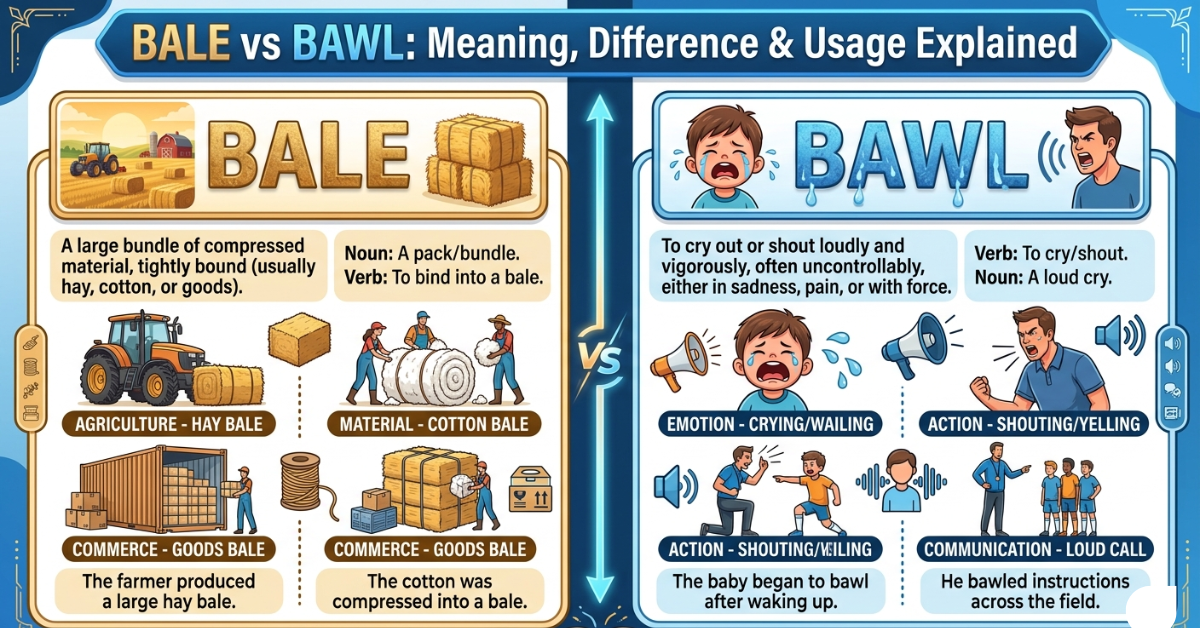
- A large, tightly bound bundle of material (like hay, cotton, or paper)
- Used in agriculture and shipping
- Sometimes used as a verb meaning to bundle something tightly
Example sentences:
- The farmer stacked a bale of hay in the barn.
- Cotton bales were loaded onto the truck.
So, when you think of bale vs bawl, remember: bale is about bundles or packaging.
What Does “Bawl” Mean?
Now let’s talk about the second word in bale vs bawl—and this one is all about sound and emotion.
Meaning of bawl:
- To cry loudly and uncontrollably
- To shout or yell in a loud voice
Example sentences:
- The baby started to bawl loudly.
- He began to bawl at his friend during the argument.
So unlike bale, bawl is emotional and vocal.
Bale vs Bawl: Key Differences
To make things crystal clear, here’s a simple breakdown:
| Feature | Bale | Bawl |
| Part of Speech | Noun / Verb | Verb |
| Meaning | Bundle of material | Loud crying or shouting |
| Usage Context | Agriculture, packaging | Emotions, communication |
| Example | A bale of hay | The child began to bawl |
This table makes the difference easy to remember at a glance.
Why Do People Confuse Bale and Bawl?
There are a few reasons why it gets confusing:
- They are homophones (sound similar)
- Spelling differs by only one letter
- Both are short, simple words
- Autocorrect doesn’t always catch the mistake
A quick memory trick:
- Bale = Bundle
- Bawl = Burst of crying
Easy Tips to Remember Bale vs Bawl
Here are some simple tricks to avoid confusion:
- Think of “A” in Bale = Agriculture (bundles, hay, cotton)
- Think of “W” in Bawl = Water (tears, crying)
- Associate bawl with babies or emotional scenes
- Associate bale with farms or storage units
With practice, distinguishing becomes effortless.
Common Mistakes People Make
Even fluent English speakers sometimes mix them up. Here are examples of incorrect usage:
- The baby started to bale loudly.
- The farmer stacked a bawl of hay.
Correct versions:
- The baby started to bawl loudly.
- The farmer stacked a bale of hay.
FAQs About Bale vs Bawl
1. Are bale and bawl pronounced the same?
Yes, they are pronounced the same, which is why bale vs bawl is confusing for many learners.
2. What is the main difference between bale and bawl?
Bale refers to a bundle of material, while bawl means to cry or shout loudly.
3. Is bawl always negative?
Not always. It usually refers to loud crying, but it can also mean shouting in anger or excitement.
4. Can bale be used as a verb?
Yes, bale can also mean to bundle or package materials tightly.
5. Why is bale vs bawl important to learn?
Understanding can improves spelling accuracy, writing clarity, and overall communication skills.
Conclusion
To wrap it up, the difference between bale vs bawl is simple once you understand their meanings. One is related to bundles and packaging, while the other is related to crying or shouting loudly.
Even though they sound identical, their usage is completely different, making them a classic example of confusing English homophones.
Mastering small distinctions like bale vs bawl not only improves your vocabulary but also makes your writing more precise and professional. Keep practicing with examples, and you’ll never mix them up again.
Author

linguaezone.com@gmail.com
Related Posts
Kill Two Birds With One Stone Alternative: 50 Better Options
- 0
- 1,569 word
Have you ever paused before saying “kill two birds with one stone” because it sounded too violent or simply didn’t fit the...
Read out all
Happy Sabbath Meaning: A Complete Guide to Its Significance
- 0
- 1,632 word
Have you ever received the message “Happy Sabbath” and wondered what it truly means? Is it simply another way of saying “have...
Read out all
I’m So Proud of You in Other Words: 120+ Heartfelt Alternatives
- 0
- 1,562 word
Have you ever wanted to tell someone you’re proud of them but felt like saying “I’m so proud of you” sounded repetitive?...
Read out all
How Do You Spell Happy Anniversary? Correct Spelling Guide
- 0
- 1,221 word
Have you ever paused before writing an anniversary card and wondered, “How do you spell happy anniversary?” You’re not alone. Whether you’re...
Read out all
Waiting for Your Response Email: Best Examples & Tips
- 0
- 1,483 word
Have you ever sent an important email and found yourself wondering whether you should follow up or simply wait? Whether you’re communicating...
Read out all
Great Asset to the Team: Meaning, Examples & Tips
- 0
- 1,494 word
Have you ever wanted to compliment a coworker but struggled to find words that sound professional and sincere? One of the most...
Read out all