
- 0
- 3,054 words
A dated kitchen can lead to three very different projects. Its cabinet doors stick, its counters show years of wear, and the refrigerator blocks a busy passage. Under the vinyl flooring, original wooden boards might still survive. The room needs attention, but deciding what kind of attention comes before choosing a contractor.
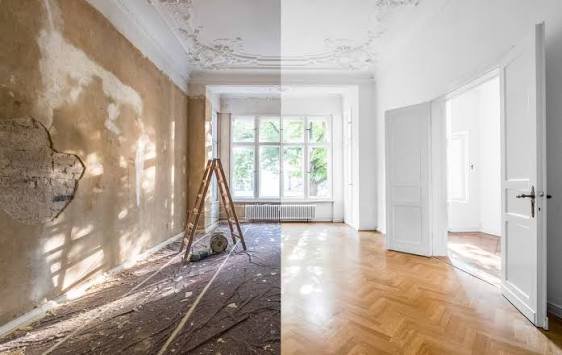
One homeowner wants a cleaner, newer version of the same kitchen. She replaces the counters, repairs the cabinets, upgrades the lighting, and keeps the appliances in their current positions. She describes the work as a renovation because her main purpose is to renew a space that already serves its intended function.
Another homeowner wants to change how the kitchen works. He moves the refrigerator, removes a partition after professional assessment, and replaces a narrow doorway with a wider opening. His project is a remodel because the arrangement changes. New counters might form part of the job, but the layout drives the decision.
A third homeowner values the kitchen’s surviving original features. She repairs the old cabinet doors, uncovers the wooden floor, and looks for hardware that matches documented earlier fittings. Restoration describes her goal: recovering an earlier condition rather than introducing a different design simply because newer products are available.
These examples provide a useful starting point, but ordinary language allows overlap. Renovation can include extensive rebuilding, remodeling can include repairs, and restoration can happen within a larger renovation. A homeowner who uses two terms for one project may be describing the work accurately rather than misunderstanding the vocabulary.
The practical distinction rests on intention. Renovation asks how to improve what exists. Remodeling asks what should change about its form or arrangement. Restoration asks what earlier condition should return. Those questions help organize decisions even when a contractor, property listing, or neighbor uses the words more loosely.
The right word also helps identify the problem worth solving. Worn cabinet finishes need a different response from an inconvenient layout. Original features require different decisions from replaceable fixtures. Before selecting materials, decide whether the room needs renewal, reconfiguration, recovery, or a combination of all three.
A project description becomes useful when it moves beyond its label. “Renovate the kitchen” starts a conversation; “retain the layout, repair the cabinets, and replace the damaged counters” gives that conversation direction. The vocabulary matters most when it helps you explain what stays, what changes, and why.
What Each Word Actually Tells You
Renovation centers on renewing an existing space or building. Merriam-Webster describes renovating through actions such as cleaning, repairing, or rebuilding to recover a better condition. In home improvement, the word commonly covers updates that make an older or worn property more usable, presentable, or suited to current needs. genui{“citation”:{“ref”:”turn1view0″}}
A bathroom renovation might involve replacing cracked tiles, repairing damaged wall surfaces, fitting a new vanity, and improving ventilation. The bathroom remains a bathroom, and its principal fixtures may stay in place. Its condition improves even though the underlying arrangement remains familiar to anyone who used it before the work.
Renovation does not mean cosmetic work alone. A project can reach behind finished surfaces to replace deteriorated components, address moisture damage, or renew building services. Calling that work a renovation says something about its purpose, but it does not reveal how much demolition, skilled labor, or rebuilding the job requires.
Retaining a layout also does not guarantee a straightforward project. Removing old flooring may reveal an uneven base, and replacing a shower may expose damaged backing. The visible upgrade and the underlying repair belong in the same scope. A neat final appearance can conceal substantial work beneath it.
Remodeling emphasizes changing an existing structure or arrangement. Merriam-Webster defines remodel in terms of altering structure or remaking something. For household projects, a useful application is changing how a space is organized, shaped, or used, rather than concentrating only on renewing its condition. genui{“citation”:{“ref”:”turn1view1″}}
A kitchen remodel might relocate the sink, introduce an island, or combine two previously separate areas. A bedroom remodel might create storage by changing partitions. The defining question concerns the new configuration: what will occupants be able to do differently once the work is complete?
Remodeling does not always mean altering the building’s supporting structure. Rearranging nonstructural partitions or changing fitted cabinetry can reshape a room without changing its load-bearing elements. Conversely, a seemingly modest opening can raise structural questions. The actual construction details determine the technical demands, not the size of the word.
Restoration points toward an earlier condition. In everyday language, restoring something means bringing back what deterioration, damage, or later changes have diminished. Merriam-Webster distinguishes restoration through this sense of return. For a homeowner, the key question becomes which features or condition the project intends to recover. genui{“citation”:{“ref”:”turn1view0″}}
Restoring a staircase could involve repairing its surviving handrail, retaining serviceable treads, and reproducing missing details from evidence. Restoring a fireplace might mean recovering an opening concealed by later alterations. The project draws its direction from what was there, rather than selecting an entirely new appearance.
A vintage appearance alone does not establish restoration. Installing newly designed cabinets with old-fashioned handles may create a period-inspired kitchen, but it does not necessarily recover a previous kitchen. Restoration needs a reference point, whether that comes from surviving material, photographs, drawings, or another reliable record.
Damage recovery gives restoration another familiar meaning. After a leak, a homeowner may describe drying, repairing, and rebuilding the affected room as restoration. Here, the reference condition is usually the room before the damage. The home need not be historic, and its finishes need not have architectural significance.
The three words therefore describe different directions rather than fixed price brackets. Renovation renews; remodeling reworks; restoration recovers. None automatically tells you the project’s cost, duration, quality, or difficulty. A careful window restoration can demand more specialized labor than a small room remodel.
Regional usage can further blur the boundaries. Some contractors use remodeling as an umbrella term for most interior upgrades, while others advertise renovation services that include major layout changes. Ask how the person uses the term, then discuss the proposed work. Shared understanding matters more than correcting someone’s preferred wording.
The simplest comparison follows the homeowner’s priority. If the room works but looks worn, renovation may describe the plan. If its arrangement causes problems, remodeling may fit better. If valued earlier features have been damaged or hidden, restoration becomes relevant. Mixed priorities call for a mixed description.
Where Real Projects Cross the Boundaries
A bathroom with an unchanged layout illustrates why project size cannot settle the terminology. The owner removes every finish, replaces deteriorated plumbing, installs new fixtures, and rebuilds the shower enclosure. The work is extensive, yet renovation remains a reasonable description because renewal, rather than rearrangement, defines the plan.
The same bathroom crosses into remodeling when the owner changes its configuration. Moving the toilet, enlarging the shower into an adjoining cupboard, or repositioning the doorway introduces a different spatial arrangement. Renovation still describes many individual tasks, but remodeling explains the design decision connecting them.
A kitchen wall removal creates a similar overlap. The project changes the relationship between cooking and dining spaces, which makes remodeling the clearest overall description. Repainting walls and replacing worn flooring remain renovation tasks within that remodel. One overall label does not erase the differences between its parts.
A period house can combine all three approaches in neighboring rooms. Its owner might restore original window details, renovate a worn bathroom, and remodel an awkward kitchen. Describing the entire property as restored would hide the new interventions, while describing everything as remodeled would overlook the deliberate recovery of surviving features.
Original floorboards create a useful borderline case. Repairing damaged boards and refinishing the surface renews the floor, so renovation is understandable. If the work deliberately recovers the floor’s documented earlier appearance, restoration may be more specific. The physical tasks can look similar while the intended outcome differs.
Missing details require careful language because new material can serve different purposes. A carpenter might reproduce a lost section of molding to match surviving profiles. That supports a restoration goal. Choosing a different molding because the owner prefers its style instead supports a new decorative scheme, even if both options use traditional craftsmanship.
Furniture shows the same distinction on a smaller scale. Someone converting a former café into a home might restore its surviving restaurant tables and chairs by repairing joints and recovering an earlier finish. Turning those pieces into built-in kitchen seating would instead involve adaptation, with the furniture serving a changed purpose.
A garage-to-bedroom project benefits from a more specific word: conversion. Conversion identifies the change of use, while remodeling describes much of the work needed to achieve it. “Convert the garage into a bedroom” gives a contractor more immediate information than “renovate the garage,” which could simply mean improving vehicle storage.
A room recovered after water damage can also become a remodel. Replacing damaged materials to recover the previous arrangement fits restoration in the damage-recovery sense. Moving fixtures or changing partitions during the rebuilding introduces remodeling. Separating those intentions helps distinguish recovery work from optional design changes.
Repair is often the clearest term for a limited defect. Fixing a leaking tap, patching an isolated damaged surface, or replacing a broken latch does not require a grander label. Those repairs can form part of a renovation, but a small maintenance task need not become a renovation project in everyday conversation.
Refresh suits a modest appearance update. Repainting sound walls, changing curtains, and replacing cabinet handles can refresh a room without substantial construction. The term has no precise technical boundary, but it communicates limited ambition better than language that suggests extensive rebuilding or a complete change of layout.
Rehabilitation introduces another useful distinction when discussing older buildings. In ordinary project descriptions, it often suggests returning a property to useful condition while accommodating present-day needs. Formal preservation programs may define the term more narrowly. When such a program applies, its published definitions take priority over casual usage.
A mixed description can therefore be the most accurate sentence. “Restore the staircase, renovate the bedrooms, and remodel the kitchen” identifies three intentions without forcing them together. It also signals where different skills may be needed and where the owner’s priorities change from one part of the house to another.
What the Words Mean for Quotes, Costs, and Planning
A project label starts a discussion, but a written scope makes the discussion actionable. Contractors need to know which elements remain, which require repair, which will be replaced, and which will move. A shared definition of renovation cannot substitute for those decisions or identify work that neither party has discussed.
A vague request leaves too much room for interpretation. “Restore our bathroom” might mean preserving its original fittings, recovering it after a leak, or simply making it attractive again. Each interpretation leads to different materials, labor, and expectations. Clarifying the reference condition prevents the word from carrying several conflicting instructions.
A specific brief replaces that uncertainty with observable tasks. “Repair the original bathtub, reproduce the damaged wall tiles, replace deteriorated plumbing, and retain the existing layout” describes a mixed project clearly. It identifies preservation priorities alongside renewal work and gives a contractor a basis for discussing feasibility.
A room sketch can support the written brief without becoming a finished design. Mark existing fixtures, doors, windows, and the changes you are considering. Use photographs to identify details that should remain. This gives each contractor the same starting information and helps expose assumptions early. If one person interprets your kitchen renovation as a surface update and another proposes moving appliances, the sketch provides a concrete way to resolve the difference before their estimates head in separate directions.
Comparable quotes require comparable scopes. One contractor might price repairing existing cabinets while another assumes full replacement. Their totals cannot tell you which offers better value until the assumptions match. Ask each bidder to identify included work, exclusions, material allowances, and decisions that remain open.
Renovation is not automatically the cheapest option. Keeping a feature may reduce purchases, but repairing it can require time-consuming labor. Working around retained finishes may also complicate access. Replacing everything can introduce other costs, including removal, disposal, and preparation. Evaluate the actual alternatives rather than ranking the three labels by price.
Remodeling can introduce costs through changed relationships between building elements. Relocating a sink affects more than the visible fixture, and moving a doorway affects surrounding finishes. Depending on the project, several trades may need to coordinate their work. A drawing helps reveal these connections before a quote reduces them to a single total.
Restoration can introduce costs through the need to match existing work. Standard replacement parts may differ from surviving profiles, dimensions, or finishes. A specialist might need to repair an original component or fabricate a matching piece. The value lies in recovering a chosen feature, so define that priority before approving substitutions.
Permit questions require the same attention to actual work. A contractor’s use of renovation or remodeling does not by itself answer whether local approvals are needed. Describe the proposed alterations to the relevant local authority, and ask about the property’s circumstances before treating the project label as an answer.
Apartment projects add another layer of coordination. Changes may involve shared services, neighboring units, or building management requirements. Discuss the specific work with the relevant parties early. A kitchen update confined to surfaces raises different questions from a proposal involving shared drainage, even if both are advertised as renovations.
Historic properties need especially clear agreement about what should survive. Before requesting work, identify the features you value and establish whether any formal protections or approval processes apply. Photographs and drawings can help explain your intentions. “Keep the character” is less useful than naming the windows, trim, flooring, or other details involved.
A condition assessment can reveal whether the chosen goal is realistic. A floor may have limited material available for further refinishing, or a damaged cabinet may need more rebuilding than expected. Ask the appropriate professional to explain the options. Adjusting the scope after inspection is more useful than defending an unsuitable label.
An uncertainty allowance should relate to likely discoveries rather than a universal percentage copied from another project. Discuss inaccessible areas, visible deterioration, and unresolved design decisions with the contractor. Record how newly discovered work will be assessed and approved, so a broad project name does not become permission for unspecified changes.
The order of work can also affect which choices remain practical. For example, decide whether cabinets will stay before selecting counters that must fit them. Discuss any proposed fixture relocation before committing to surrounding finishes. Ask the contractor to explain which decisions depend on earlier inspections and which can wait. Planning these relationships makes the scope easier to follow, particularly when restoration and new construction share the same room. Each task should have a clearly stated purpose and a place in the overall agreed sequence.
A change record keeps the original intention visible as work develops. If the owner decides to relocate a fixture halfway through a renovation, document the revised task, cost, and schedule implications. The project may now include remodeling, but the useful response is a revised agreement rather than a debate over terminology.
Find Your Word by Writing a Better Project Sentence
A clear project sentence begins with the result you want. Finish “I want to improve the existing space by…” when renewal is your priority. Finish “I want to change the arrangement by…” when function or layout drives the work. Finish “I want to recover…” when a particular earlier condition matters.
A bedroom example shows how this test works. Repainting walls, repairing flooring, and replacing worn fitted storage can form a renovation. Taking space from the next room to create a dressing area introduces remodeling. Repairing original shutters and recovering their earlier finish adds restoration to either version of the project.
The verbs following the label should carry most of the information. Retain, repair, replace, relocate, uncover, reproduce, and remove describe decisions that someone can act on. “Renovate the bedroom” remains broad; “repair the floor, retain the shutters, and replace the damaged wardrobe” starts to establish boundaries.
Personal priorities determine which verb deserves attention first. If morning congestion causes the problem, a new wall color will not solve it. If damaged original joinery matters most, replacement cabinets may undermine the goal. Name the problem before choosing the visual result, then connect each proposed task to that problem.
Evidence matters whenever a project claims to recover an earlier appearance. Identify what supports the proposed colors, fittings, or details. If the evidence is incomplete, describe the result as an interpretation or a period-inspired design where appropriate. Clear wording lets everyone distinguish surviving features, matching replacements, and newly chosen additions.
Household needs also deserve a place in the sentence. “Restore the original cabinets while adding lighting for food preparation” explains both preservation and daily use. A restoration goal does not remove the need to discuss present-day comfort. It makes the relationship between retained features and new work more deliberate.
Spelling differences do not create different project categories. American English generally uses remodeling and remodeling, while British English generally uses remodeling and remodeling. Both refer to the same verb. Choose the spelling convention appropriate to your audience and keep it consistent throughout estimates, correspondence, or an article describing the work.
A final read-through should test whether a stranger could understand the scope. Check whether the sentence identifies the room, the intended result, the features to retain, and the main changes. Replace broad claims such as “complete transformation” with concrete details. Any unanswered question can become a discussion point before estimates begin.
The original kitchen now offers a practical choice. Keep its arrangement and renew worn components: renovate. Change the route between appliances and reshape the cooking area: remodel. Recover valued earlier cabinetry or flooring: restore. Combine those intentions when the room needs more than one approach, then describe each part explicitly.
Your best project word is the one supported by the work you actually want. Write down what stays, what improves, what moves, and what returns. That short inventory turns a confusing vocabulary choice into a useful brief, giving the next conversation a clear starting point before anyone orders materials or lifts a tool.
Author

fraz.ashraf@gmail.com
Related Posts

Termite Control: Effective Strategies for Protecting Your Property
- 0
- 2,321 words
Termites are among the most persistent pests that can affect buildings, furniture, landscaping structures, and other wooden materials. Because they often remain...
Read out all
Building Effective Behavioral Support Strategies to Encourage Meaningful Progress and Independence
- 0
- 1,934 word
Applied Behavior Analysis (ABA) is a structured approach used to understand behavior and teach useful skills through individualized strategies and measurable interventions....
Read out all
How to Build an Effective Daily Oral-Hygiene Routine
- 0
- 1,238 word
Why a Consistent Oral-Hygiene Routine Matters Healthy teeth and gums have less to do with finding the perfect product and more to...
Read out all
Self Storage Dubai: Finding Affordable and Reliable Storage Solutions
- 0
- 1,915 word
Self storage dubai has become a practical necessity for a growing proportion of the city’s residential and business population. Dubai’s apartment-dominated housing...
Read out all
Is a VLSI Design Course Worth It for Fresh Graduates and Working Professionals?
- 0
- 890 words
Introduction The field of semiconductors is integral to the technological advancement witnessed in the world today. This is because there are numerous...
Read out all
Trupeek.com: A Complete Guide to Its Features, Purpose, and Online Experience
- 0
- 2,560 words
Introduction to Trupeek.com The internet is full of websites designed to make everyday tasks easier, provide useful information, and help people discover...
Read out all