
- 0
- 1,294 word
When one room stays muggy while another feels like a walk-in cooler, the culprit is usually not a single “bad AC,” but an imbalance among three things: airflow, the refrigerant circuit, and the system’s controls. Gulf Coast heat and humidity expose any weakness here. Before you call a technician, you can use a simple, structured check to narrow what is likely wrong. This article shows how to match specific symptoms to likely causes, what you can safely inspect, and which measurements a professional should take if service is needed. You will also see how choices like filter rating and thermostat placement affect comfort, runtime, and humidity control.
- Match the symptom to the part of the system
Uneven room temperatures often trace back to airflow. Weak supply from one register points to a closed damper, crushed duct, or a blocked return. If temperatures are fine but the air feels sticky, the system may be oversized or short cycling, which reduces runtime and moisture removal. Long runtimes with minimal cooling can indicate low refrigerant mass flow, a dirty condenser coil, or a struggling compressor. Frequent breaker trips or a buzzing outdoor unit point to electrical components such as a weak capacitor or failing contactor. Water around the air handler suggests a clogged condensate drain or a frozen evaporator coil thawing between cycles. Each symptom narrows your focus to ducts and blower, the refrigerant side, or controls and safeties.
Consider two quick scenarios. In a single-story ranch, a bonus room over the garage is hot in the afternoon while nearby rooms are fine. That pattern usually signals duct layout and heat load issues in that zone, not a global refrigerant problem. In a beachside cottage, the thermostat reaches setpoint, but the home stays clammy. Short, frequent cycles and a salt-fouled condenser coil could both reduce dehumidification. If you decide to schedule professional testing or balancing, homeowners can reach the Panama City office for help with appointments.
- Airflow checks you can do safely
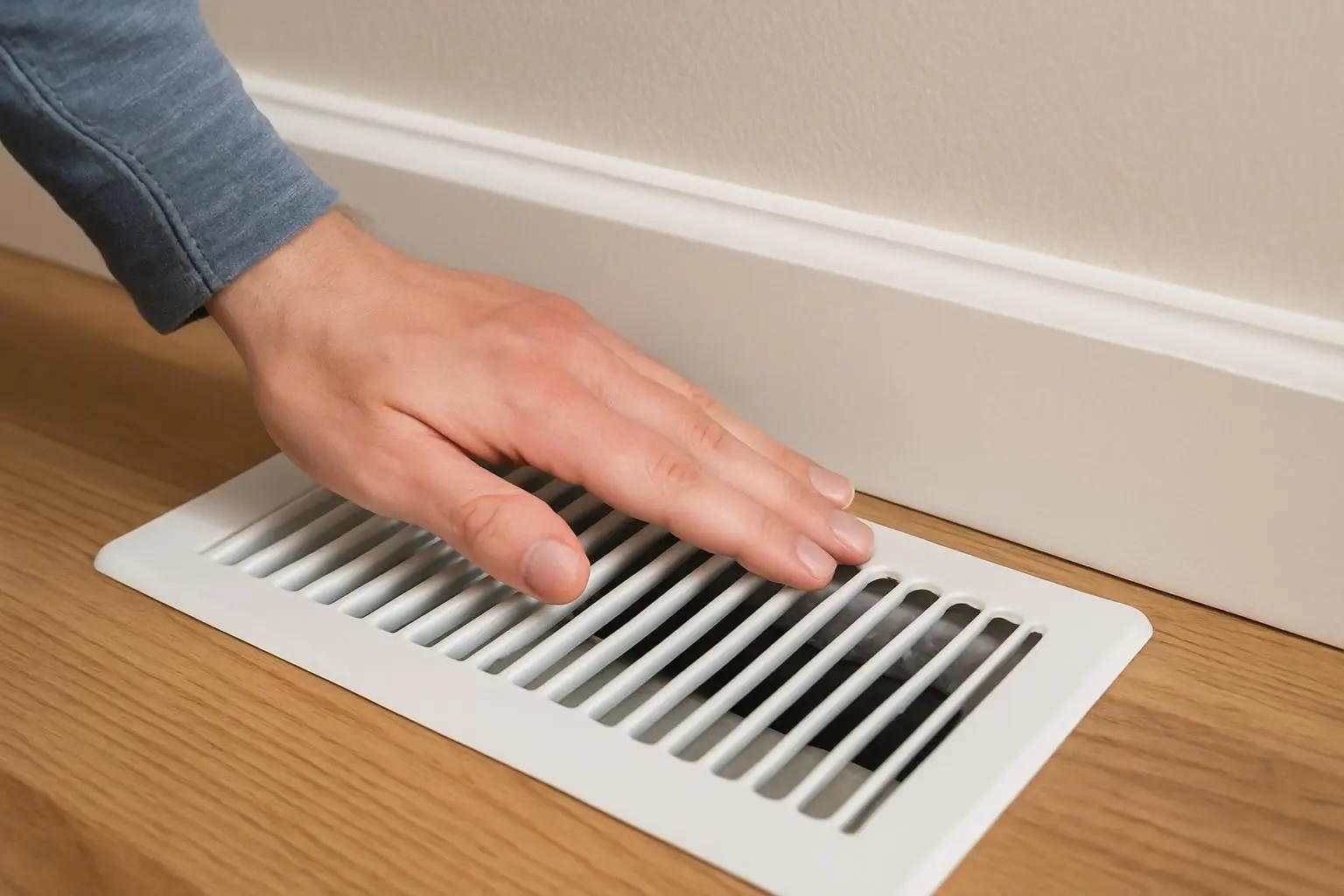
Start with filters and returns. A filter with a very high MERV rating can trap more particulates but can also restrict airflow if the cabinet is small or the filter is dirty. That raises static pressure, reduces supply airflow, and can let the evaporator coil get too cold and ice. Make sure all return grilles are clear of rugs and furniture. Verify supply registers are open and aimed into the room, not against walls. If one room is starved, follow its duct from the plenum and check for kinks or a closed manual damper on that branch. With a simple thermometer, compare intake air near a return to supply air at a nearby register. A healthy system often shows a temperature drop in the neighborhood of 15 to 20 degrees Fahrenheit; a very small drop with plenty of airflow can point to a refrigerant-side issue or a dirty coil, while a very large drop may hint at restricted airflow.
Watch for signs of excessive static pressure. Whistling at grilles, interior doors that pull shut when the blower runs, and dramatic airflow changes when a single door is opened all suggest the blower is fighting the duct system. Closing supply vents to”force more air” to a hot room is a common mistake. It raises pressure, increases bypass leakage, and can risk evaporator icing. In coastal climates, corrosion can slow a blower motor or bind a wheel; you may hear a scraping or rubbing sound from the air handler. These checks do not fix everything, but they tell you if airflow is the first place to focus.
- Refrigerant-side clues without opening the system
You do not need gauges to spot several refrigerant-related red flags. Frost on the suction line at the air handler, a slab of ice on the evaporator coil, or a light “hiss” at the thermostatic expansion valve (TXV) can all appear when refrigerant flow is off, or airflow is restricted. If you see frost, turn the system off and run the blower (fan on) to thaw the coil; then inspect the filter and return path again. Remember that undercharge, overcharge, a restricted metering device, and poor airflow can produce similar symptoms. That is why airflow checks come first.
Step outside and look at the condenser coil and fan. Cottonwood, grass clippings, or salt crust block heat rejection and drive operating pressures up. Gently rinse debris from the coil fins from the inside out after shutting off power at the disconnect; avoid blasting fins flat with high pressure. If the fan runs but the compressor repeatedly hums and stops, a failing run capacitor could be the problem. Do not add refrigerant yourself. Correct charging requires measuring superheat or subcooling and confirming metering device type and indoor conditions; guessing here shortens compressor life.
- Thermostat and control issues that cause short cycling
Control settings and placement can create comfort problems even when mechanical parts are fine. A thermostat installed over a supply register or in direct sun will end cycles early, leaving far rooms warm and humid. If the system is oversized for the home’s heat load, it will hit setpoint quickly and shut off before removing much moisture. That is why short cycling often feels clammy. Two-stage or variable-speed equipment, or a variable-speed air handler paired with a properly sized condenser, runs longer at lower capacity and improves humidity control. The trade-off: higher upfront cost versus steadier temperatures, quieter operation, and fewer swings in indoor humidity.
Intermittent cooling is not always “mystery electronics.” A clogged condensate drain can trip a float switch and shut the system off mid-cycle to prevent overflow. After a pause, the water level drops and cooling resumes, repeating the cycle. Clearing the drain line with a wet-dry vacuum at the exterior port or having a pro treat it with enzyme cleaner is a meaningful maintenance step. Other control components to flag for a technician include the blower delay setting on the air handler board, a pitted contactor in the condenser, and a weak capacitor that causes hard starting or brief runs.
What to ask a technician to measure
If you call for service, request measurements that verify causes rather than guesses. Ask for total external static pressure and compare it to the blower’s rated limit; this, along with blower speed taps or ECM settings, tells you if the fan can deliver required airflow. Request a measured airflow estimate in cubic feet per minute per ton based on temperature rise across an electric heat strip, or with flow hoods if available. Have the tech record superheat and subcooling to confirm proper charge for the metering device, and to separate charge issues from airflow problems.
Duct balancing and tightness matter as much as equipment capacity. A technician can adjust manual dampers at the trunk, add balancing dampers where none exist, and seal accessible leaks at the plenum and takeoffs. For recurring low-charge symptoms, ask for a leak search rather than repeated “top-offs” that mask a larger issue. Local contractors, including Cooler Air Conditioning LLC, routinely perform these tests and can document baseline readings so you know how the system behaves when it is healthy. That record speeds future diagnostics after storms, filter changes, or thermostat upgrades.
Uneven cooling is frustrating, but it is rarely random. By matching symptoms to airflow, refrigerant, or controls, you can rule out red herrings and make smarter decisions. Many issues start with simple constraints like a restrictive filter, a blocked return, or a fouled condenser coil, all of which you can check without opening the refrigerant circuit. When service is needed, asking for objective measurements like static pressure, superheat, and subcooling turns a vague complaint into a testable problem. That approach protects equipment, improves comfort, and keeps humidity in check during the hottest weeks of the year.
Author

linguaezone.com@gmail.com
Related Posts

Why Chicago Businesses Are Pairing Mobile Apps With Generative AI
- 0
- 448 words
Chicago’s economy is one of the most diverse in the country, spanning finance, manufacturing, logistics, healthcare, and a growing startup scene. Across...
Read out all
How to Build a Mobile App: A Step-by-Step Guide for Beginners
- 0
- 1,700 word
You have an app idea. Maybe it solves a problem you face every day, or maybe you have spotted a gap in...
Read out all
How Compact Mechanical Systems Work In Automotive Accessories
- 0
- 739 words
Modern vehicles contain small assemblies that perform useful tasks within limited space. Hinges, brackets, and actuators help accessories move or stay aligned....
Read out all
Dulcoglide: Everything You Need to Know About Its Uses, Features, Benefits, and Safety
- 0
- 2,005 words
Healthcare products often have specific purposes that are not immediately obvious from their names or packaging. Dulcoglide is one such product that...
Read out all
Is Web Scraping Primary or Secondary Data? A Guide to Using Web Data in Market Research
- 0
- 1,628 word
Is web scraping primary or secondary data? In most market research it is secondary. Web scraping is a collection method, not a...
Read out all
Choosing Non Profit Software For Mission-Driven Teams
- 0
- 557 words
Nonprofit organizations often operate with limited budgets, small teams, and ambitious goals that demand careful coordination. From volunteer schedules to fundraising campaigns,...
Read out all