×
What to Say Instead of “This Quote Shows”
In

When writing essays, articles, or literary analysis, many students and writers rely on the phrase “this quote shows” without realizing how repetitive it can sound. If you’ve been searching for what to say instead of this quote shows, you’re already on the right track to improving your writing style and making your analysis sound more natural and professional.

The truth is, strong writing depends on variety and precision. Instead of repeating the same phrase, you can express ideas in more meaningful and academic ways. In this article, you’ll learn practical alternatives, how to use them correctly, and how to elevate your writing instantly with better word choices.

Why Avoid “This Quote Shows” in Writing?

Using the phrase what to say instead of this quote shows often comes up when writers feel stuck or unsure how to explain a quote. However, overusing it can make your writing feel:

  • Repetitive and basic
  • Less analytical
  • Weak in academic tone

Instead, varying your language helps you sound more confident and insightful. It also shows deeper understanding of the text you are analyzing.

Better Alternatives to “This Quote Shows”

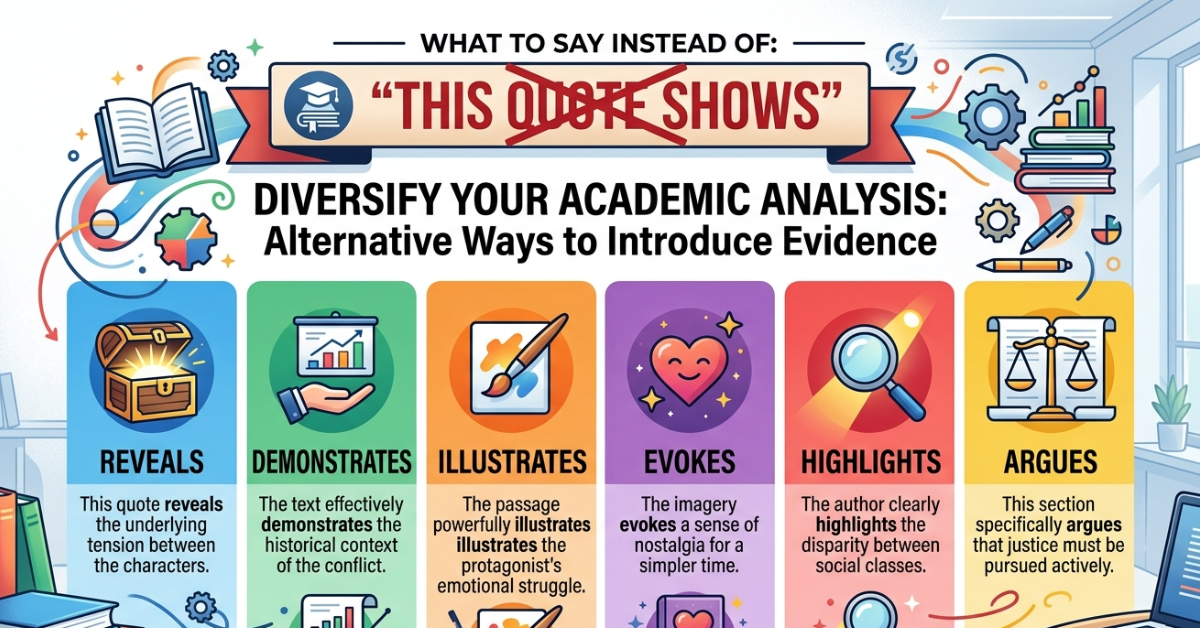
If you’re looking for what to say instead of this quote shows, here are stronger and more natural alternatives you can use depending on context.

1. This quote suggests

Use this when the meaning is implied rather than directly stated.
Example: This quote suggests that the character is struggling with inner conflict.

2. This quote illustrates

Perfect for explaining a clear example or situation.
Example: This quote illustrates the theme of injustice in the story.

3. This line highlights

Use when emphasizing an important idea or theme.
Example: This line highlights the importance of resilience.

4. The author implies

Great for deeper literary analysis.
Example: The author implies that society often ignores individual pain.

5. This passage reveals

Best when a longer excerpt uncovers meaning.
Example: This passage reveals the emotional distance between the characters.

6. It can be inferred from this quote

Ideal for analytical or critical thinking writing.
Example: It can be inferred from this quote that the narrator is unreliable.

How to Choose the Right Alternative

When deciding what to say instead of “this quote shows,” think about the purpose of your analysis. Ask yourself:

  • Am I explaining a clear meaning or a hidden idea?
  • Is the tone formal, academic, or casual?
  • Am I analyzing a character, theme, or emotion?

Quick Guide:

  • Direct meaning → “illustrates” or “shows” alternatives
  • Hidden meaning → “suggests” or “implies”
  • Deep analysis → “reveals” or “can be inferred”

Using the right phrase improves clarity and strengthens your argument.

Common Mistakes to Avoid

Even when learning what to say instead of this quote shows, many writers make small errors like:

  • Overusing the same alternative repeatedly
  • Choosing complex words without understanding them
  • Not matching the phrase with the context
  • Writing overly long analytical sentences

Keep it simple, accurate, and natural.

FAQs

1. Why should I stop using “this quote shows”?

Because it sounds repetitive and doesn’t add depth to your analysis. Using varied expressions improves clarity and professionalism.

2. What is the best alternative to “this quote shows”?

It depends on context, but “this quote suggests” and “this line illustrates” are the most commonly used strong alternatives.

3. Can I still use “shows” in writing?

Yes, but avoid overusing it. Mix it with other expressions for better flow.

4. How can I improve my analytical writing quickly?

Start by expanding your vocabulary for analysis phrases like what to say instead of this quote shows, and practice rewriting sentences in different ways.

5. Are these alternatives suitable for essays?

Yes, all the alternatives listed are suitable for academic writing, including essays and literary analysis.

Conclusion

Learning what to say instead of this quote shows is a simple but powerful step toward improving your writing skills. By replacing repetitive phrases with more precise alternatives like suggests, illustrates, highlights, or implies, your analysis becomes clearer and more engaging.

Good writing isn’t about using complicated words—it’s about choosing the right ones. Practice these alternatives regularly, and you’ll notice your essays sound more confident, structured, and professional in no time.

Leave a Reply

Your email address will not be published. Required fields are marked *

Author

britsx85@gmail.com

Related Posts

Aura vs Ora: Key Differences, Meaning & Easy Guide
In

Aura vs Ora: Key Differences, Meaning & Easy Guide

When people come across Aura vs Ora, it’s easy to get confused. These two words sound similar, but their meanings, usage, and...

Read out all
Arcade vs Arcane: Meaning, Differences & Uses Explained
In

Arcade vs Arcane: Meaning, Differences & Uses Explained

The confusion between Arcade vs Arcane is more common than you might think, especially because the words look and sound somewhat similar...

Read out all
Altar vs Alter: Meaning, Differences & Examples Explained
In

Altar vs Alter: Meaning, Differences & Examples Explained

The confusion between altar vs alter is more common than you might think. These two words sound exactly the same, but they...

Read out all
Aisle vs Isle: Meaning, Difference & Examples Explained
In

Aisle vs Isle: Meaning, Difference & Examples Explained

Ever found yourself stuck between two words Aisle vs Isle that look or sound similar but mean completely different things? That’s exactly...

Read out all
On the Other Hand Transition Words: Meaning & Usage Guide
In

On the Other Hand Transition Words: Meaning & Usage Guide

Writing becomes much clearer when ideas are connected smoothly, and that’s exactly where on the other hand transition words come in. These...

Read out all
Thank You As Always – Meaning, Usage & Examples
In

Thank You As Always – Meaning, Usage & Examples

In everyday communication, small phrases can carry a lot of meaning. One such expression is “thank you as always”, a polite and...

Read out all