
- 0
- 2,725 words
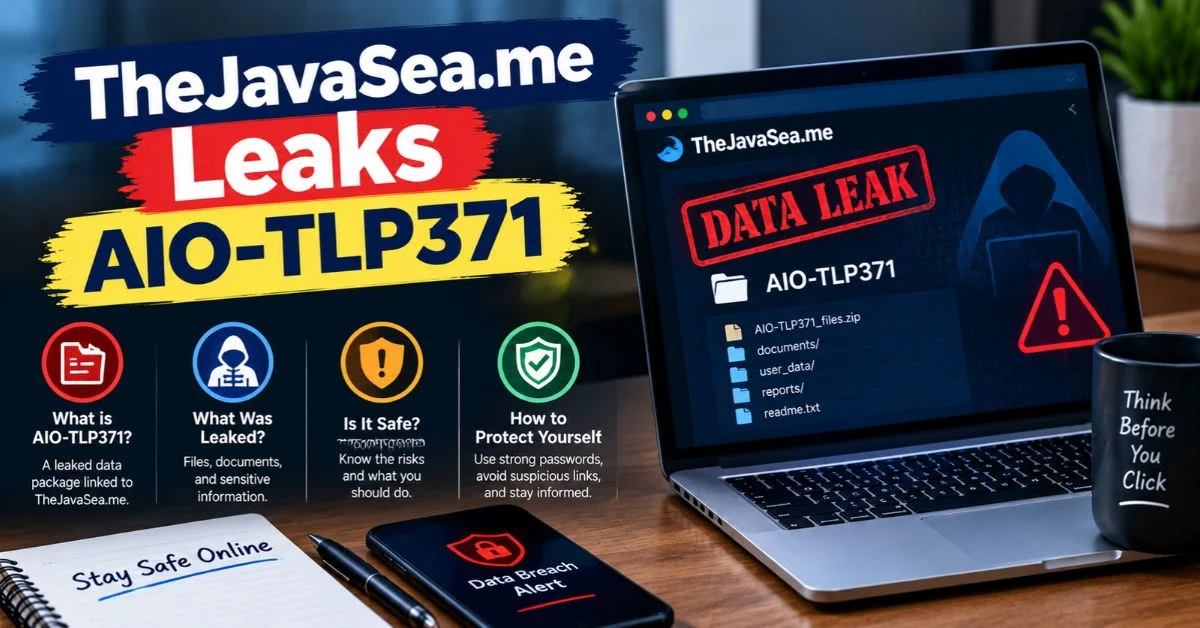
The internet has made information easier to access than ever before. People can find software, digital resources, technical discussions, entertainment, and online communities with just a few searches. However, the same convenience has also created serious challenges involving cybersecurity, data privacy, and unauthorized information sharing. One search phrase that has attracted attention in discussions about online security is thejavasea.me leaks aio-tlp371.
This keyword combines the name of a website with a specific identifier associated with discussions about leaked digital material. Although people may encounter the phrase through search engines, online forums, or social media, understanding what it actually represents requires a closer look at the broader subject of data leaks.
Digital leaks can involve many different types of information, including private documents, software-related files, account information, and other materials that were never intended for public distribution. Such incidents can create risks for individuals, organizations, and ordinary internet users.
This article explores the meaning behind thejavasea.me leaks aio-tlp371, the possible reasons people search for it, the cybersecurity concerns surrounding leaked content, and the precautions internet users should take when encountering unfamiliar websites or suspicious downloads.
What Is Thejavasea.me Leaks AIO-TLP371?
The phrase thejavasea.me leaks aio-tlp371 appears to be a search term connected with discussions about leaked online content. It contains three recognizable elements: a website name, the word “leaks,” and an identifier that may distinguish a particular collection or subject.
However, the exact contents, origin, authenticity, and purpose of the material associated with AIO-TLP371 cannot be established from the keyword alone. It is important not to assume that every online claim about a supposed leak is accurate.
In cybersecurity discussions, identifiers are frequently used to organize files, collections, technical reports, and online conversations. A code such as AIO-TLP371 may help distinguish one subject from another, but the identifier itself does not prove that a particular dataset exists or that its contents are genuine.
For readers, the most useful approach is to distinguish between verified information and unconfirmed claims. A website mentioning a leak does not automatically establish that the material is authentic, legally distributed, or safe to access.
Why Is Thejavasea.me Leaks AIO-TLP371 Getting Attention?
Search interest in leak-related keywords often develops for several reasons. Sometimes users discover a phrase in an online discussion and want to understand its meaning. In other situations, people encounter unfamiliar identifiers while researching cybersecurity or digital privacy.
Thejavasea.me leaks aio-tlp371 may attract attention because it combines a recognizable website-style name with a specific technical-looking identifier.
There are several possible reasons someone might search for this phrase.
Curiosity about online discussions: Internet users frequently investigate unfamiliar terms that appear in forums, social media posts, or search suggestions.
Interest in cybersecurity: People who follow data breaches and digital security may search for unusual identifiers to determine whether they relate to a reported incident.
Questions about authenticity: Some users want to know whether a supposed leak is real, outdated, misleading, or simply a keyword circulating online.
Concerns about personal information: Individuals may search for leak-related terms because they want to understand whether their accounts or private information could be affected.
These reasons demonstrate why context matters. Search popularity should never be treated as proof of a security incident.
What Does AIO-TLP371 Actually Mean?
Understanding the terminology can help readers avoid confusion.
The abbreviation AIO is commonly used online to mean “All-In-One.” It generally describes a collection that brings several items together in one package. In digital communities, this expression can refer to software collections, technical resources, archived files, or other grouped materials.
However, the use of AIO does not establish the exact contents of the alleged collection.
The second part, TLP371, appears to function as an identifier associated with the online discussion. There is an important distinction between this identifier and the official Traffic Light Protocol used by cybersecurity professionals.
The official Traffic Light Protocol, maintained by FIRST, uses four recognized labels:
- TLP:RED: Information restricted to specific recipients.
- TLP:AMBER: Information shared with limited audiences under defined conditions.
- TLP:GREEN: Information that can be shared within a community.
- TLP:CLEAR: Information that can be distributed without restrictions.
TLP371 is not an official category in this classification system. Therefore, readers should not assume that the identifier represents a government security classification or an officially documented cybersecurity release. What Is Actually Known+1
Is TheJavaSea.me AIO-TLP371 a Confirmed Data Breach?
One of the most important questions surrounding this topic concerns authenticity.
A confirmed data breach generally requires evidence that information was accessed, disclosed, or obtained without authorization. Such incidents can be documented through official company statements, cybersecurity investigations, regulatory notifications, or credible technical research.
For AIO-TLP371, publicly available information does not establish a complete and independently verified account of a specific breach.
In particular, several important details remain uncertain:
- The original source of the alleged material.
- Whether the collection represents one incident or multiple sources.
- Whether the material is authentic.
- Whether the information is recent or previously circulated.
- Whether a particular organization or group of individuals was affected.
- The actual size and contents of the alleged collection.
Some online articles describe AIO-TLP371 as an all-in-one data collection, while others emphasize that its contents and origin have not been independently established. These differences make it important to avoid presenting speculation as fact. Aavot+2
The responsible conclusion is that the keyword is circulating online, but its most significant claims require stronger evidence.
Potential Cybersecurity Risks Associated With Leak Collections
Even when the details of a particular leak remain uncertain, downloading files from unfamiliar leak-related websites can create genuine security problems.
Cybercriminals sometimes use popular search terms to attract visitors to suspicious pages. A website may advertise exclusive downloads, private databases, special software, or supposedly valuable digital collections.
Unfortunately, the advertised content may not match what users actually receive.
Understanding these risks is essential for anyone researching thejavasea.me leaks aio-tlp371.
1. Malware and Suspicious Downloads
One major concern is malicious software.
Unknown archives can contain executable files, harmful scripts, infected documents, or other unwanted programs. Opening these files may expose a device to malware.
Some malicious programs operate quietly after installation. They may collect information, monitor activity, modify browser settings, or attempt to access sensitive files.
This is particularly concerning for people who use the same computer for personal communication, online banking, work, and other important activities.
The safest approach is to avoid downloading unknown leak packages altogether.
2. Password Theft and Account Compromise
Another potential danger involves stolen credentials.
Some leaked datasets circulating online may contain usernames, email addresses, and passwords obtained from earlier security incidents. However, the specific presence of these materials in AIO-TLP371 has not been independently established.
Credential theft remains a serious problem because people sometimes reuse passwords across multiple websites.
For example, if someone uses the same password for an email account and an entertainment platform, exposure through one service could increase the risk to the other.
Using unique passwords for every important account significantly reduces this danger.
3. Phishing and Fake Websites
Leak-related search terms can also attract phishing attempts.
A suspicious page may imitate a legitimate login screen or claim that users must enter personal information to access a file. Once submitted, those details may be collected by criminals.
Phishing pages can look convincing because attackers frequently copy website designs, logos, and familiar language.
Users should never provide account credentials simply because an unfamiliar website promises access to exclusive content.
4. Privacy and Identity Theft
Personal information has considerable value in the digital world.
Email addresses, telephone numbers, usernames, and other identifying details can be misused in targeted scams. Criminals may combine information from different sources to create convincing messages.
Identity theft can also involve fraudulent account registrations, impersonation, and unauthorized financial activity.
This is why protecting personal information should remain a priority even when a particular leak claim has not been confirmed.
Why You Should Avoid Downloading Unverified Leak Files
Some internet users may feel tempted to download a file simply to discover what it contains. However, this approach creates unnecessary risks.
First, the source may not be trustworthy. There is no guarantee that a file advertised under the AIO-TLP371 label contains what its description promises.
Second, downloaded material may include malicious software. Even an archive that appears harmless can contain dangerous files.
Third, the collection could include information belonging to other people. Accessing, storing, or redistributing private material without authorization can create ethical and legal problems.
Finally, downloading questionable files rarely provides a reliable way to determine whether personal information has been exposed.
A safer approach is to use established security services and official communication channels rather than interacting with unknown leak sources.
How to Protect Yourself From Possible Data Exposure
Whether someone is researching AIO-TLP371 out of curiosity or worrying about personal information, following basic cybersecurity practices is a sensible decision.
Here are several practical steps that can help protect online accounts and devices.
Use Strong and Unique Passwords
Every important online account should have its own password. Avoid using simple combinations, birthdays, names, or predictable phrases.
A password manager can help generate and securely store complex passwords without requiring users to remember every combination.
If you discover that a password has appeared in a known breach, replace it immediately. Also update any other account where you reused that password.
Enable Multi-Factor Authentication
Multi-factor authentication adds another layer of protection to online accounts.
Instead of relying entirely on a password, the system requests an additional verification step. This may involve an authentication application, security key, or another supported method.
Even if someone obtains a password, additional verification can make unauthorized access more difficult.
Email accounts, financial services, social media profiles, and cloud storage accounts are particularly important places to enable this feature.
Check Your Email for Known Breaches
People do not need to download suspicious files to investigate whether their information has appeared in previously documented breaches.
Services such as Have I Been Pwned allow users to check email addresses against known breach records.
A positive result does not necessarily mean that an account is currently compromised. It indicates that the associated information appeared in a documented exposure.
Users should respond by changing affected passwords and reviewing their account security.
Keep Your Devices Updated
Operating system and application updates frequently include important security improvements.
Ignoring these updates can leave devices exposed to vulnerabilities that attackers may exploit.
Enable automatic updates whenever practical, and download software through official sources.
Also use reputable security software and avoid installing applications from unfamiliar websites.
Watch Out for Suspicious Messages
Unexpected messages about leaked accounts, exclusive downloads, or urgent security warnings deserve extra attention.
Some attackers use fear and curiosity to encourage people to click suspicious links.
Before responding to a security notification, verify that it comes from the actual organization involved. Visit the organization’s official website independently instead of relying on links in unexpected messages.
How to Evaluate Information About TheJavaSea.me Leaks AIO-TLP371
The internet contains a mixture of accurate reporting, personal opinions, speculation, and misleading content. Readers need a practical way to evaluate claims about unfamiliar cybersecurity topics.
The following considerations can help.
Look for independent reporting: A claim becomes more credible when multiple genuinely independent and trustworthy sources provide supporting evidence.
Check publication dates: Older information can be presented as a new incident. Always distinguish the date an article appeared from the date an alleged security incident occurred.
Look for technical evidence: Credible cybersecurity investigations generally explain their findings and identify the limitations of their research.
Avoid exaggerated claims: Headlines promising enormous databases, millions of records, or exclusive private information should be approached carefully when supporting evidence is missing.
Distinguish facts from assumptions: Responsible reporting clearly identifies what has been verified and what remains unknown.
In the case of AIO-TLP371, these principles are particularly relevant because online descriptions do not provide a complete, independently verified account of the alleged material. What Is Actually Known+1
The Importance of Responsible Information Sharing
Data privacy is not simply a technical issue. It is also a matter of respecting individuals and organizations.
Information shared online can have consequences long after its original publication. Private documents, personal photographs, account credentials, and confidential communications may affect people in ways that are difficult to reverse.
Sharing questionable material can increase its distribution and expose additional individuals to harm.
Responsible internet users should avoid reposting private information, distributing unauthorized archives, or encouraging others to access suspicious downloads.
If someone discovers information that appears to belong to another person, the appropriate response is to avoid redistributing it and use legitimate reporting channels.
Organizations can also benefit from clear data-handling policies, regular security assessments, employee awareness programs, and incident-response procedures.
These measures help reduce the impact of unauthorized information exposure.
The Future of Online Data Privacy and Cybersecurity
As more everyday activities move online, protecting digital information will become increasingly important.
People now depend on internet services for communication, shopping, entertainment, education, financial transactions, and professional responsibilities.
This growing dependence creates opportunities for cybercriminals, but it also encourages improvements in security technology.
Passwordless authentication, passkeys, encryption, automated threat detection, and stronger identity verification systems are among the developments helping improve online protection.
However, technology alone cannot eliminate every security risk.
Human behavior remains an important part of cybersecurity. Clicking suspicious links, reusing passwords, ignoring updates, and trusting unfamiliar websites can create opportunities for attackers.
Education is therefore essential.
Topics such as thejavasea.me leaks aio-tlp371 can provide an opportunity to discuss responsible browsing, information verification, and the importance of protecting personal data.
Instead of focusing entirely on an unverified online archive, readers can use the discussion to develop better security habits.
Frequently Asked Questions About TheJavaSea.me Leaks AIO-TLP371
1. What is thejavasea.me leaks aio-tlp371?
Thejavasea.me leaks aio-tlp371 is a search phrase associated with online discussions about an alleged digital collection or leak archive. Its exact contents, origin, and authenticity have not been independently established through reliable public evidence.
2. What does AIO mean in AIO-TLP371?
AIO commonly stands for All-In-One. It is frequently used online to describe a package or collection containing multiple resources. However, this general meaning does not confirm the exact contents of the alleged AIO-TLP371 material.
3. Is AIO-TLP371 an official cybersecurity classification?
No. TLP371 is not an official Traffic Light Protocol classification. The recognized TLP 2.0 labels maintained by FIRST are RED, AMBER, GREEN, and CLEAR.
4. Is downloading files associated with TheJavaSea.me safe?
Downloading unknown files from suspicious websites is not recommended. Such files may contain malware, malicious scripts, or other unwanted content. They may also involve unauthorized private information.
5. Can AIO-TLP371 expose personal information?
The specific contents of AIO-TLP371 have not been independently verified. Nevertheless, users should understand that genuine data leaks can expose personal information and create risks involving phishing, identity theft, and account compromise.
6. How can I check whether my information has been exposed?
Use reputable breach-notification services, review official security notifications, and check your account activity. If a password appears in a known breach, change it and enable multi-factor authentication.
7. Why are people searching for this keyword?
People may be searching for the phrase because they encountered it on websites, discussion forums, social media, or search engines. Others may be interested in understanding online leaks and cybersecurity risks.
8. Should I trust every article discussing AIO-TLP371?
No. Articles can repeat unverified claims without providing independent evidence. Readers should examine the sources, publication dates, technical details, and supporting documentation before accepting specific statements.
Conclusion
Thejavasea.me leaks aio-tlp371 is an interesting example of how unfamiliar digital identifiers can attract attention across the internet. Although several websites discuss the phrase, important questions about the alleged collection remain unanswered, including its precise contents, origin, authenticity, and connection to any documented security incident.
The most important lesson is to approach leak-related information with caution. An unfamiliar archive label does not prove that a major data breach occurred, and repeated online claims should not automatically be considered reliable evidence.
Internet users should avoid suspicious downloads, protect their accounts with strong passwords, enable multi-factor authentication, and use reputable services when checking for known data exposures.
Ultimately, cybersecurity is about more than investigating individual websites or trending keywords. It requires consistent habits, responsible information sharing, and an understanding of the risks associated with digital information.
By focusing on verified facts and practical security measures, readers can better understand topics such as thejavasea.me leaks aio-tlp371 while protecting their privacy and maintaining safer online habits.
Author

blowouttaper.co.uk@gmail.com
Related Posts

How Real Estate Brands Can Build Buyer Trust Through Digital Marketing in Pune
- 0
- 583 words
Buying a property is a process which requires thorough research, planning and many decisions. Home buyers of today do not want just...
Read out all
What Equipment Propane Suppliers Use for Safe Fuel Delivery
- 0
- 721 words
Propane delivery requires specialized equipment to transfer liquefied petroleum gas between storage facilities and customer tanks. Each component serves a specific purpose,...
Read out all
Chief Technical Examiner: Roles, Responsibilities, Qualifications, and Career Opportunities
- 0
- 2,372 words
Introduction The role of a chief technical examiner is important in organizations that depend on technical accuracy, professional standards, quality control, and...
Read out all
Uecht: Exploring Its Meaning, History, Location, and Fascinating Connections
- 0
- 2,422 words
The word Uecht may look unfamiliar to many people, but it has several interesting connections to European geography, language, history, and astronomy....
Read out all
songoftruth.org: A Complete Guide to Its Purpose, Content, Features, and What Visitors Should Know
- 0
- 1,890 word
The internet provides countless websites designed to inform, educate, entertain, and inspire people. However, finding a platform that offers useful information in...
Read out all
Printely: Everything You Need to Know About Its Features, Uses, Benefits, and Growing Popularity
- 0
- 2,036 words
In today’s digital world, printing and design solutions continue to play an important role in personal, educational, and professional activities. From creating...
Read out all