
- 0
- 1,329 word
Have you ever read a line that instantly painted a picture in your mind? That is the power behind a simile image. It helps writers and readers connect an idea to something familiar, making language more vivid, memorable, and emotionally rich.
In this article, you will learn what a simile image means, how it works in literature and everyday language, why it matters in communication, and how to create stronger examples in your own writing.
What Is a Simile Image?
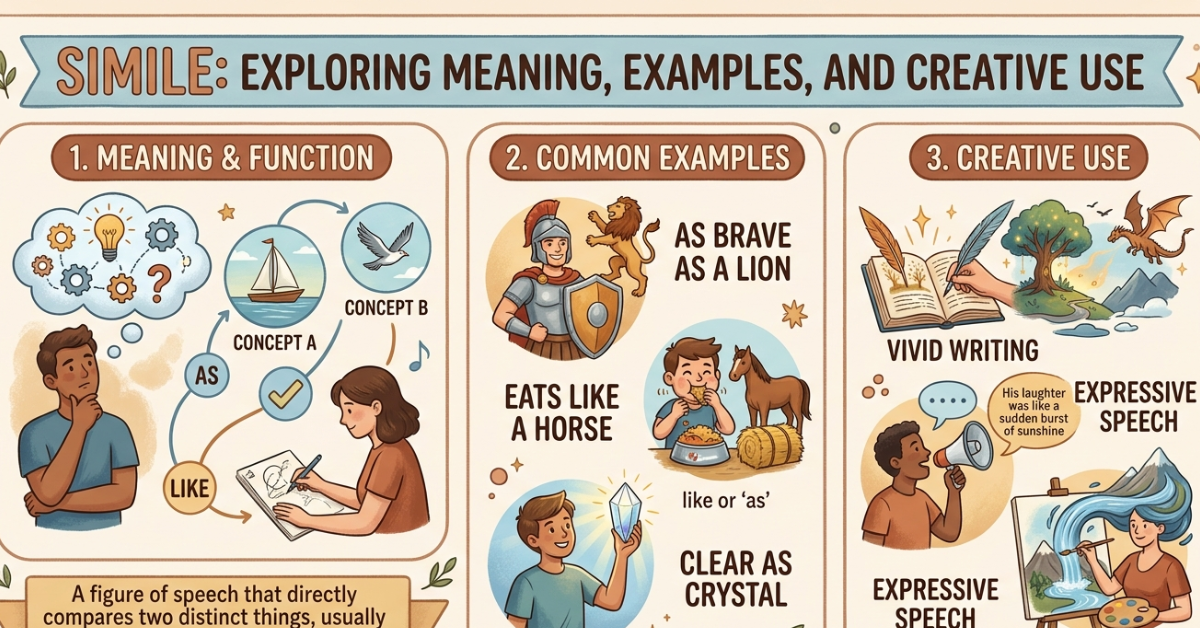
A simile image is a comparison that uses “like” or “as” to create a mental picture. It connects one thing to another in a way that makes the description clearer, stronger, or more imaginative.
For example:
- Her smile was like sunshine.
- The water was as clear as glass.
These comparisons do more than decorate the sentence. They help the reader see, feel, or even sense what the writer is trying to express.
How a Simile Image Works
A simile image works by linking two different things that share one striking quality. The first thing is the subject, and the second is the comparison that gives it shape or emotion.
The basic structure
Most similes follow one of these patterns:
- Like + comparison
Example: He moved like a cat. - As + adjective + as + comparison
Example: She was as brave as a lion.
This style is powerful because it turns abstract ideas into something concrete. Instead of simply saying “the room was quiet,” a writer might say, “the room was as quiet as a library at midnight.” That small change creates a much stronger image.
Why Simile Images Are So Effective
A good simile image does three important things at once:
- It makes meaning easier to understand.
Readers do not have to work hard to imagine the scene. - It adds emotion.
A comparison can make a sentence feel warm, sad, dramatic, funny, or intense. - It improves memorability.
People often remember vivid comparisons long after they forget plain description.
This is why similes appear everywhere: poetry, novels, advertising, speeches, social media captions, and even casual conversation.
Simile Image in Literature and Writing
Writers use simile images to build atmosphere, reveal character, and strengthen storytelling. In fiction and poetry, a comparison can do the work of several plain sentences.
Examples in creative writing
- The clouds drifted across the sky like slow-moving ships.
- His voice was as rough as sandpaper.
- The child’s laughter floated through the room like music.
Each example creates a picture, but also adds mood. The reader does not just understand the sentence—they experience it.
In poetry
Poets use simile image techniques to make their language more musical and emotional. A single comparison can suggest beauty, loneliness, power, or longing without directly explaining it.
Simile Image vs. Metaphor
People often confuse similes and metaphors, but they are not the same.
A simile says one thing is like another.
A metaphor says one thing is another.
Example comparison
- Simile: Her eyes were like stars.
- Metaphor: Her eyes were stars.
A simile image feels a little more direct and easy to follow because it openly shows the comparison. A metaphor is often stronger or more poetic, but it can also be more abstract.
Common Types of Simile Images
There is no single formula for a strong simile image. Still, most fall into a few useful categories.
1. Visual similes
These help the reader see something clearly.
- The dress shone like gold.
- The road stretched out like a ribbon.
2. Emotional similes
These express a feeling through comparison.
- She felt as lonely as an empty hallway.
- He was like a child on his birthday.
3. Action-based similes
These describe movement or behavior.
- He ran like the wind.
- She slipped into the room like a shadow.
4. Sensory similes
These involve sound, texture, taste, or smell.
- The music was as soft as a whisper.
- The fabric felt like silk.
How to Create a Strong Simile Image
If you want your comparisons to feel natural and original, follow these steps:
1. Identify the quality you want to describe
Is it speed, beauty, fear, silence, comfort, or anger?
2. Think of something familiar that shares that quality
Choose an object, animal, place, or experience people already know well.
3. Make sure the comparison is clear
A good comparison should make sense quickly. If it feels forced, the effect is lost.
4. Keep it fresh
Overused comparisons can sound dull. For example, “brave as a lion” is common, so a more original option may feel stronger.
5. Match the tone
A simile should fit the mood of the sentence. A playful scene needs a different comparison than a serious one.
Examples of Strong Simile Images
Here are some useful examples across different tones:
- Soft and beautiful: The sky was like a watercolor painting.
- Fast and energetic: The bicycle raced down the hill like it had wings.
- Dark and eerie: The hallway was as silent as a graveyard.
- Warm and comforting: Her hug felt like a blanket on a cold night.
- Intense and emotional: His anger burst out like a storm.
Notice how each example creates a picture while also giving emotional meaning.
Real-World Uses of Simile Images
A simile image is not just for novels or poems. It shows up in many places.
In advertising
Brands use comparisons to make products more appealing and memorable.
In speeches
Public speakers use similes to make ideas easier to understand and more persuasive.
In education
Teachers use them to explain complex concepts in simple language.
In social media
Creators use short, vivid comparisons because they grab attention quickly.
That is one reason simile images remain useful in modern content writing. They work fast, and they stick.
Practical Tips for Better Similes
Here are a few simple ways to improve your writing:
- Avoid clichés unless you intentionally want a familiar phrase.
- Use comparisons that fit the subject naturally.
- Do not overload a sentence with too many figurative expressions.
- Choose concrete images instead of vague ones.
- Read your line aloud to check whether it feels smooth.
A strong simile image should feel effortless, not overworked.
Key Takeaways
- A simile image uses like or as to create a clear mental picture.
- It makes writing more vivid, emotional, and memorable.
- It is widely used in literature, poetry, advertising, and speech.
- The best comparisons are clear, original, and tone-appropriate.
- Strong similes help readers see and feel the message instantly.
FAQ: Simile Image
What is a simile image in simple words?
A simile image is a comparison that helps create a picture in the reader’s mind. It usually uses words like like or as to connect two things.
What is the difference between a simile image and a metaphor?
A simile image compares two things using like or as, while a metaphor says one thing is another. Similes are usually more direct and easier to understand.
Why do writers use simile images?
Writers use them to make descriptions more vivid, emotional, and memorable. A good comparison can turn a plain sentence into something much more powerful.
Can simile images be used in everyday speech?
Yes, people use them all the time in casual conversation. Phrases like “as busy as a bee” or “like a rock” are everyday examples.
How do I write a good simile image?
Pick one clear quality, find something familiar that shares that quality, and make the comparison feel natural. The best similes are simple, fresh, and easy to visualize.
Is a simile image only used in literature?
No, it appears in speeches, ads, captions, education, and daily conversation too. Anywhere people want to describe something vividly, a simile can help.
Conclusion
A simile image is one of the simplest yet most effective tools in language. It helps transform ordinary descriptions into vivid, emotional, and memorable expressions that readers can instantly understand.
Whether you are writing fiction, poetry, essays, captions, or marketing content, learning how to use similes well can make your words stronger and more engaging. Start noticing them in everyday writing, then try creating your own with clear and original comparisons.
Author

linguaezone.com@gmail.com
Related Posts
Kill Two Birds With One Stone Alternative: 50 Better Options
- 0
- 1,569 word
Have you ever paused before saying “kill two birds with one stone” because it sounded too violent or simply didn’t fit the...
Read out all
Happy Sabbath Meaning: A Complete Guide to Its Significance
- 0
- 1,632 word
Have you ever received the message “Happy Sabbath” and wondered what it truly means? Is it simply another way of saying “have...
Read out all
I’m So Proud of You in Other Words: 120+ Heartfelt Alternatives
- 0
- 1,562 word
Have you ever wanted to tell someone you’re proud of them but felt like saying “I’m so proud of you” sounded repetitive?...
Read out all
How Do You Spell Happy Anniversary? Correct Spelling Guide
- 0
- 1,221 word
Have you ever paused before writing an anniversary card and wondered, “How do you spell happy anniversary?” You’re not alone. Whether you’re...
Read out all
Waiting for Your Response Email: Best Examples & Tips
- 0
- 1,483 word
Have you ever sent an important email and found yourself wondering whether you should follow up or simply wait? Whether you’re communicating...
Read out all
Great Asset to the Team: Meaning, Examples & Tips
- 0
- 1,494 word
Have you ever wanted to compliment a coworker but struggled to find words that sound professional and sincere? One of the most...
Read out all