
- 0
- 577 words
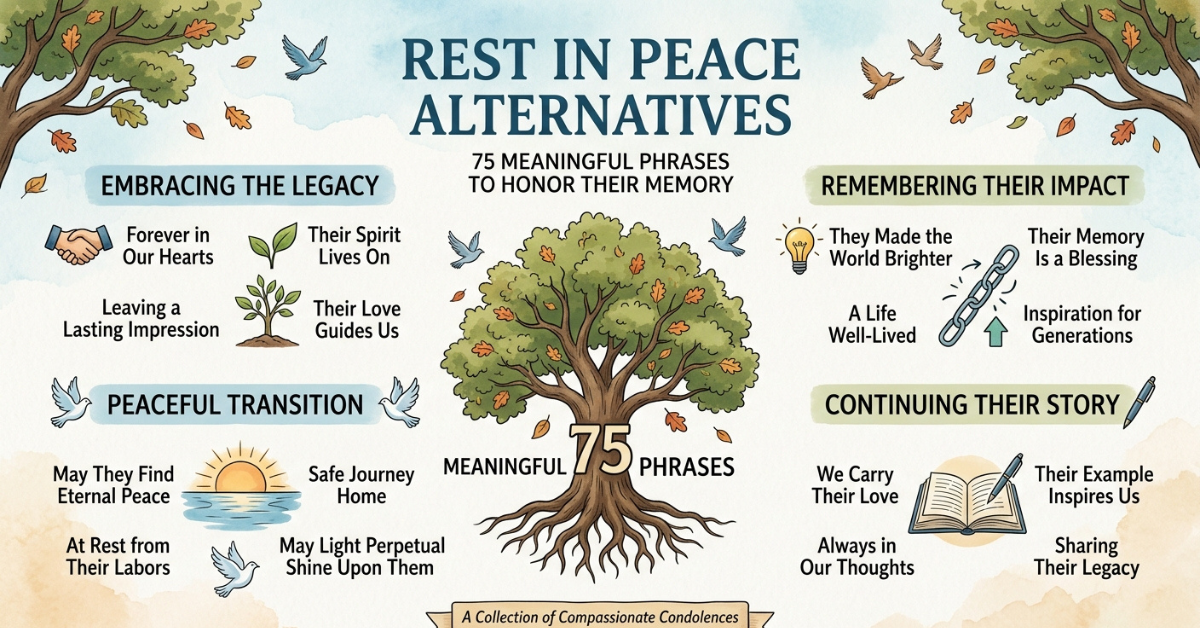
Losing someone is never easy, and finding the right words during such a painful moment can feel overwhelming. While “Rest in Peace” is one of the most common condolences, it doesn’t always reflect every culture, religion, or personal belief. Therefore, if you’re searching for a rest in peace alternative, you’re probably looking for words that feel more personal, comforting, or appropriate for a specific situation.
In this guide, you’ll discover thoughtful alternatives to “Rest in Peace,” learn when to use them, and explore phrases suited for friends, family, professional settings, religious beliefs, and social media tributes. By the end, you’ll know how to express sympathy with warmth and sincerity.
Why Look for a Rest in Peace Alternative?
There are many reasons someone may choose different words instead of “Rest in Peace.” For example, some people want a more personal message, while others prefer wording that reflects specific cultural or religious beliefs. Additionally, many people simply wish to avoid overused expressions.
Some common reasons include:
- Wanting a more personal message
- Respecting different religious beliefs
- Writing to someone who wasn’t religious
- Avoiding overused expressions
- Offering comfort to grieving families
- Creating a unique memorial tribute
Ultimately, the right words often provide more comfort than a familiar phrase.
Religious Alternatives
Many families appreciate condolences that reflect their faith. However, it’s important to consider the family’s beliefs before choosing a religious expression. This way, your message feels respectful and appropriate.
Secular Alternatives
Not every family follows a religious tradition. Instead, many people prefer neutral expressions that focus on remembrance and love. As a result, these phrases can be suitable for a wide range of situations.
Professional Alternatives
When writing to colleagues, clients, or professional contacts, it’s best to keep your language respectful and simple. In addition, avoid overly personal language unless you know the family well.
Alternatives for Friends
Close friendships often deserve warmer, more personal words. After all, friends usually share meaningful memories and experiences. Because of this, a personalized message often feels more sincere.
Alternatives for Family Members
When honoring family, heartfelt words often feel the most meaningful. For instance, you may want to mention shared memories or lasting lessons. Likewise, acknowledging their love and legacy can bring comfort.
Choosing the Right Alternative
Not every phrase fits every situation. Before choosing one, consider your relationship with the deceased, their beliefs, and the tone you want to convey. As a result, your message will feel more genuine and thoughtful.
Common Mistakes to Avoid
When expressing condolences, avoid these common errors. For example, using humor or giving unsolicited advice may unintentionally upset the grieving family. Instead, keep your words simple, kind, and sincere.
Practical Tips
If you’re unsure what to say, keep these tips in mind. First, be sincere rather than poetic. Next, keep your message short and heartfelt. Finally, focus on offering comfort instead of trying to explain the loss.
Conclusion (Improved)
Finding the right words after someone passes away is never easy, but a thoughtful rest in peace alternative can make your message feel more personal, compassionate, and comforting. Whether you choose a religious blessing, a simple expression of remembrance, or a heartfelt tribute, sincerity is what matters most.
In the end, the goal is to honor the person’s life while supporting those who are grieving. Above all, genuine words of kindness can provide lasting comfort and remind others that love and memories continue long after someone is gone.
Author

linguaezone.com@gmail.com
Related Posts

Kill Two Birds With One Stone Alternative: 50 Better Options
- 0
- 1,569 word
Have you ever paused before saying “kill two birds with one stone” because it sounded too violent or simply didn’t fit the...
Read out all
Happy Sabbath Meaning: A Complete Guide to Its Significance
- 0
- 1,632 word
Have you ever received the message “Happy Sabbath” and wondered what it truly means? Is it simply another way of saying “have...
Read out all
I’m So Proud of You in Other Words: 120+ Heartfelt Alternatives
- 0
- 1,562 word
Have you ever wanted to tell someone you’re proud of them but felt like saying “I’m so proud of you” sounded repetitive?...
Read out all
How Do You Spell Happy Anniversary? Correct Spelling Guide
- 0
- 1,221 word
Have you ever paused before writing an anniversary card and wondered, “How do you spell happy anniversary?” You’re not alone. Whether you’re...
Read out all
Waiting for Your Response Email: Best Examples & Tips
- 0
- 1,483 word
Have you ever sent an important email and found yourself wondering whether you should follow up or simply wait? Whether you’re communicating...
Read out all
Great Asset to the Team: Meaning, Examples & Tips
- 0
- 1,494 word
Have you ever wanted to compliment a coworker but struggled to find words that sound professional and sincere? One of the most...
Read out all