
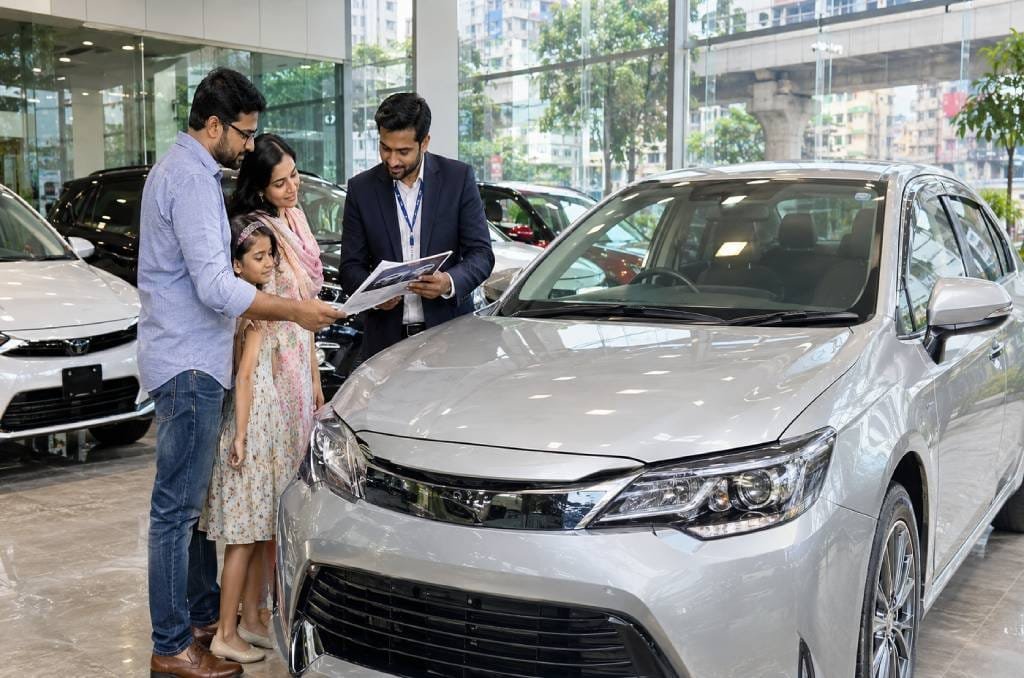
- 0
- 970 words
A reconditioned car price in Bangladesh depends mainly on the car’s age, engine size, auction grade, and current import duty rates.
These four factors combine to set the number on the price tag, more than brand name or showroom location ever do.
Checking the reconditioned car price in Bangladesh before you shop helps you avoid paying more than a car is truly worth.
Most cars sold in Bangladesh are reconditioned, not brand new. Millions of buyers choose this route every year because it offers a recent model at a real cost saving.
This post breaks down exactly what shapes the price, so you can judge a fair deal the moment you see one.
What a Reconditioned Car Actually Means
A reconditioned car is a used vehicle imported from another country, usually Japan, and registered in Bangladesh for the first time.
It is different from a pre-owned car, which was already registered and driven inside the country.
Most reconditioned cars in Bangladesh come from Japanese auctions. Japan has strict inspection rules, so cars leave the country in solid mechanical shape even after several years of use.
Dealers import these units, clear customs, and hand over fresh registration papers to the first Bangladeshi owner.
What Decides the Reconditioned Car Price in Bangladesh
Five factors set the final price tag on a reconditioned car. Understanding each one helps you judge whether a quoted price is fair or inflated.
- Engine size changes the tax bracket. Larger engines face higher duty, so a 2000cc car usually costs noticeably more than a 1500cc model with the same body style.
- Vehicle age affects the duty rate. Cars closer to five years old often cost less because Bangladesh applies a different depreciation allowance based on age.
- Auction grade and mileage set resale value. A car with a higher Japanese auction grade and lower verified mileage holds a stronger price in the local market.
- Exchange rate moves the landed cost. A weaker taka against the yen or dollar raises the total landed cost of every imported unit.
- Duty and depreciation rules set the base price. The National Board of Revenue uses a reference value, known as the yellow book price, then applies a depreciation allowance tied to the car’s age.
Reconditioned vs. Brand New vs. Pre-Owned Prices
Each car type suits a different buyer and budget.
The table below shows how condition changes both the price and what you actually get for it.
| Condition | What It Means | Typical Price Impact |
| Brand new | First owner, first registration in Bangladesh | Highest price, full manufacturer support |
| Reconditioned | Used abroad, imported and registered here for the first time | Mid-range price, a recent model at real savings |
| Pre-owned | Already registered and duty-paid inside Bangladesh | Often the lowest price for the same model |
Typical Price Ranges For Popular Reconditioned Cars
Reconditioned car prices usually sit between 15 lakh and over 3 crore taka, depending on brand and body style.
The table below gives a general sense of where common categories land today.
| Car Category | Typical Reconditioned Price Range (BDT) |
| Compact sedans and hatchbacks | 15 lakh to 30 lakh |
| Mid-size hybrid sedans | 30 lakh to 60 lakh |
| Premium SUVs | 1 crore to 2.5 crore |
| Flagship luxury SUVs and sedans | 2.5 crore and above |
Prices shift with stock, model year, and duty policy changes, so always confirm the current quote with a dealer before you decide.
How Import Duty Changes The Final Number
Import duty makes up a large share of a reconditioned car’s price in Bangladesh. A small change in duty policy can shift the price of the same model by several lakh taka within a single budget cycle.
The government taxes reconditioned cars using a reference value called the yellow book price, not the actual import invoice.
It then allows a depreciation discount based on how many years old the car is. This discount has shrunk in recent years, which is why reconditioned and brand-new prices for some models now sit closer together than before.
The Bangladesh Reconditioned Vehicles Importers and Dealers Association regularly flags these policy shifts, and buyers who track them can time a purchase to get better value.
Common Mistakes Buyers Make When Comparing Prices
Many buyers lose money by comparing the wrong things. These mistakes are easy to avoid once you know what to look for.
- Comparing sticker price alone misleads buyers. A lower listed price often hides a weaker auction grade, higher mileage, or missing features.
- Skipping the auction sheet check is risky. Buyers who never ask for the Japanese auction sheet cannot confirm the real condition behind the price.
- Ignoring total ownership cost adds up fast. Registration, insurance, and early repairs can add lakhs on top of the price first agreed.
- Trusting the dashboard number alone is a mistake. Mileage shown on the display means little without paper proof to back it up.
A Smart Checklist Before You Buy
A short checklist keeps emotion out of a big purchase. Run through these steps before you agree on any final price.
- Ask for the auction sheet or service history. This confirms the real mileage and condition grade behind the asking price.
- Compare at least three listings for the same model. Match the year and engine size before you settle on a number.
- Check the current duty and depreciation rate. Confirm the rate that applies to the car’s exact age bracket.
- Get an independent mechanic’s inspection. Do this before you make any final payment.
- Confirm the registration papers are ready. Make sure the transfer into your name can happen without delay.
The Bottom Line For Buyers
A fair reconditioned car price in Bangladesh always traces back to age, engine size, auction grade, and current duty rules.
Buyers who check these four points rarely overpay. Compare a few listings, ask for real paperwork, and treat a very low price as a reason to look closer, not celebrate. A little homework before you buy protects your money for years after the sale.
Author

khizarnisar367@gmail.com
Related Posts

Why Chicago Businesses Are Pairing Mobile Apps With Generative AI
- 0
- 448 words
Chicago’s economy is one of the most diverse in the country, spanning finance, manufacturing, logistics, healthcare, and a growing startup scene. Across...
Read out all
How to Build a Mobile App: A Step-by-Step Guide for Beginners
- 0
- 1,700 word
You have an app idea. Maybe it solves a problem you face every day, or maybe you have spotted a gap in...
Read out all
How Compact Mechanical Systems Work In Automotive Accessories
- 0
- 739 words
Modern vehicles contain small assemblies that perform useful tasks within limited space. Hinges, brackets, and actuators help accessories move or stay aligned....
Read out all
Dulcoglide: Everything You Need to Know About Its Uses, Features, Benefits, and Safety
- 0
- 2,005 words
Healthcare products often have specific purposes that are not immediately obvious from their names or packaging. Dulcoglide is one such product that...
Read out all
Is Web Scraping Primary or Secondary Data? A Guide to Using Web Data in Market Research
- 0
- 1,628 word
Is web scraping primary or secondary data? In most market research it is secondary. Web scraping is a collection method, not a...
Read out all
Choosing Non Profit Software For Mission-Driven Teams
- 0
- 557 words
Nonprofit organizations often operate with limited budgets, small teams, and ambitious goals that demand careful coordination. From volunteer schedules to fundraising campaigns,...
Read out all