
- 0
- 698 words
English can be tricky, especially when two words sound exactly the same but mean totally different things. One of the most confusing pairs is peace vs piece.
If you’ve ever paused while writing and wondered which spelling is correct, you’re not alone. The confusion between peace vs piece is common among learners, writers, and even native speakers.
In this guide, we’ll break down their meanings, differences, usage examples, and memory tricks so you never mix them up again.
Peace vs Piece: What Do They Mean?
Before comparing them, let’s understand each word separately.
Meaning of Peace
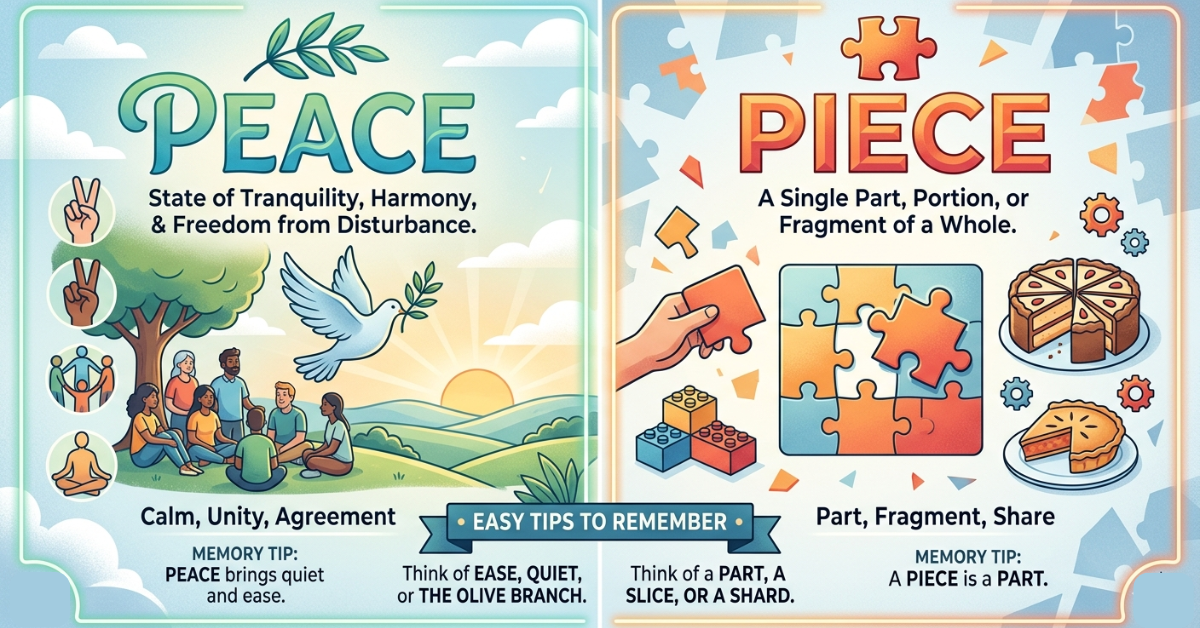
Peace refers to a state of calm, silence, or freedom from conflict. It is often used in emotional, social, or global contexts.
Examples of peace:
- Inner calm or mental relaxation
- Absence of war or violence
- Harmony between people
Example sentence:
She finally found peace after a long stressful week.
Meaning of Piece
Piece means a part or portion of something larger. It is used when talking about objects, ideas, or quantities.
Examples of piece:
- A slice of cake
- A part of a broken object
- A section of writing or art
Example sentence:
Can I have a piece of chocolate?
Peace vs Piece: Key Differences Explained
Understanding peace vs piece becomes easier when you compare them side by side.
1. Meaning Difference
- Peace = calm, harmony, no conflict
- Piece = part of something
2. Usage Difference
- Peace is mostly abstract (feelings, situations)
- Piece is usually physical or measurable
3. Pronunciation Trick
Even though both sound similar, their meanings are completely unrelated.
Simple Tricks to Remember Peace vs Piece
If you often get confused between peace vs piece, here are some easy memory hacks:
1. Think of “ea” in Peace = “Ease”
- Peace brings ease and calm
- Both “peace” and “ease” feel relaxing
2. Think of “ie” in Piece = “Part”
- Piece = part of something
- “ie” reminds you of slicing or dividing
3. Visual Association
- Peace → (peace symbol, calm vibes)
- Piece → (cake slice or broken parts)
Common Usage Examples
Let’s see how peace vs piece works in real sentences.
Examples of Peace:
- The world needs more peace and understanding.
- Meditation helps him find inner peace.
- They signed an agreement to maintain peace.
Examples of Piece:
- I’ll take a piece of pizza.
- She wrote a beautiful piece of poetry.
- The puzzle is missing one piece.
Why Do People Confuse Peace vs Piece?
The confusion happens mainly because:
- They are homophones (sound the same)
- English spelling rules are not always phonetic
- Learners rely on pronunciation instead of meaning
Once you understand the context, peace vs piece becomes much easier to handle.
Quick Comparison Table
| Feature | Peace | Piece |
| Meaning | Calm / harmony | Part of something |
| Type | Abstract noun | Concrete noun |
| Example | world peace | piece of cake |
Tips to Use Them Correctly in Writing
To avoid mistakes in exams or daily writing:
- Read the sentence carefully
- Check if it’s about calm or a part
- Replace the word mentally with “calm” or “part”
- Practice with examples regularly
With time, choosing between peace vs piece will become automatic.
FAQs about Peace vs Piece
1. What is the main difference between peace vs piece?
The main difference is meaning: peace refers to calm or harmony, while piece refers to a part of something.
2. Why do peace and piece sound the same?
They are homophones, meaning they are pronounced the same but have different meanings and spellings.
3. Can peace and piece be used in the same sentence?
Yes. Example: “She found peace after eating a piece of chocolate.”
4. Is peace always related to emotions?
Mostly yes, but it can also refer to political or global harmony, like “world peace.”
5. How can I remember peace vs piece easily?
Remember: peace = ease (calm) and piece = part (something broken or divided).
Conclusion
Understanding peace vs piece is simple once you break it down. One represents calmness and harmony, while the other refers to a part of something larger.
With regular practice and memory tricks, you’ll never confuse them again. Whether you’re writing essays, emails, or social media posts, using the correct word will make your communication clearer and more professional.
If you want to improve your English further, explore more commonly confused word pairs and keep practicing daily.
Author

linguaezone.com@gmail.com
Related Posts
Kill Two Birds With One Stone Alternative: 50 Better Options
- 0
- 1,569 word
Have you ever paused before saying “kill two birds with one stone” because it sounded too violent or simply didn’t fit the...
Read out all
Happy Sabbath Meaning: A Complete Guide to Its Significance
- 0
- 1,632 word
Have you ever received the message “Happy Sabbath” and wondered what it truly means? Is it simply another way of saying “have...
Read out all
I’m So Proud of You in Other Words: 120+ Heartfelt Alternatives
- 0
- 1,562 word
Have you ever wanted to tell someone you’re proud of them but felt like saying “I’m so proud of you” sounded repetitive?...
Read out all
How Do You Spell Happy Anniversary? Correct Spelling Guide
- 0
- 1,221 word
Have you ever paused before writing an anniversary card and wondered, “How do you spell happy anniversary?” You’re not alone. Whether you’re...
Read out all
Waiting for Your Response Email: Best Examples & Tips
- 0
- 1,483 word
Have you ever sent an important email and found yourself wondering whether you should follow up or simply wait? Whether you’re communicating...
Read out all
Great Asset to the Team: Meaning, Examples & Tips
- 0
- 1,494 word
Have you ever wanted to compliment a coworker but struggled to find words that sound professional and sincere? One of the most...
Read out all