
- 0
- 2,732 words
A fireplace can provide warmth, comfort, and a welcoming atmosphere while serving as a valuable feature of a home. However, maintaining a fireplace requires more than removing ashes and keeping the surrounding area tidy. Over time, burning wood and other approved fuels can produce soot, creosote, and other combustion residues that accumulate inside the chimney. These deposits may restrict airflow, reduce heating efficiency, and increase the risk of a chimney fire if they are not properly managed. Regular inspections, appropriate cleaning, and preventive maintenance help homeowners maintain a safer and more reliable heating system. Hiring a qualified chimney sweep can help identify hidden problems, remove hazardous deposits, and ensure that the chimney receives the attention needed for continued performance.
Understanding the Importance of Fireplace Maintenance
A fireplace and chimney work together to provide heat while carrying smoke and combustion gases away from indoor living spaces. The chimney creates a passage through which these byproducts can escape, supporting the airflow needed for proper combustion. When the system is clean and structurally sound, it can operate more effectively and help prevent smoke from entering the home. However, soot, creosote, animal nests, fallen leaves, and other obstructions can interfere with normal operation. Regular maintenance helps identify these concerns and allows homeowners to address problems before they become more serious. Neglecting fireplace maintenance can create several risks that affect both the property and the people living inside it. Creosote is combustible and can ignite under suitable conditions, potentially causing a chimney fire that damages the flue or surrounding building materials. Blockages can interfere with ventilation and allow smoke or dangerous combustion gases to enter occupied rooms. Moisture may also damage masonry, weaken mortar joints, and corrode metal components over time. A consistent maintenance routine helps reduce these risks while supporting dependable fireplace performance and protecting the long-term condition of the chimney.
What a Professional Chimney Sweep Does
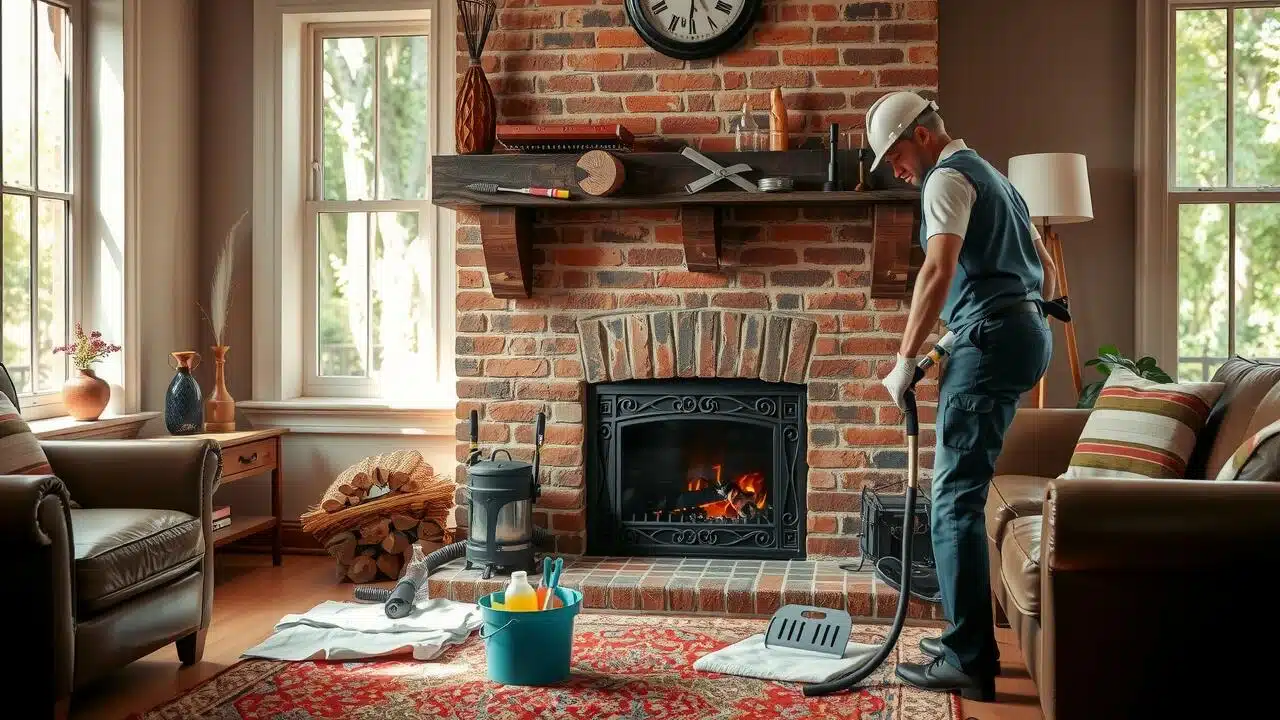
A professional chimney sweep provides services designed to maintain the cleanliness, safety, and functionality of a chimney system. The work typically begins with an inspection of the fireplace, flue, and accessible components to identify soot, creosote, obstructions, and visible damage. The technician evaluates the chimney’s construction and condition before selecting appropriate cleaning tools and methods. Depending on the system, the inspection may include the firebox, damper, chimney cap, flue liner, and accessible exterior masonry. This assessment helps determine whether cleaning is necessary and whether additional repairs should be recommended. The cleaning process generally involves specialized brushes, rods, and suitable vacuum equipment to remove accumulated deposits from the interior surfaces of the flue. Protective coverings may be used around the fireplace opening to prevent soot and dust from spreading into nearby rooms. After the work, the technician may inspect accessible areas again and explain any concerns discovered during the service. Damaged liners, loose masonry, defective flashing, or disconnected components may require separate repairs. Understanding the difference between routine cleaning and structural maintenance helps homeowners make informed decisions and avoid assuming that deposit removal automatically resolves every chimney problem.
Recognizing Warning Signs of Chimney Problems
Several warning signs can indicate that a chimney needs professional attention. A persistent smoky odor, particularly when the fireplace is not in use, may suggest accumulated deposits, moisture, or ventilation problems. Smoke entering the room instead of moving outdoors can indicate a blockage, inadequate draft, or another issue affecting the chimney system. Visible soot around the fireplace opening, unusual smoke behavior, and difficulty maintaining a fire may also justify an inspection. These symptoms can have multiple causes, so homeowners should avoid relying on a single sign to determine the exact nature of the problem. Visible structural changes deserve attention as well because they may indicate deterioration that cannot be corrected through cleaning alone. Crumbling mortar, cracked bricks, rusted metal components, damaged flashing, and pieces of masonry inside the firebox can suggest that repairs are needed. Water stains near the fireplace or white deposits on exterior masonry may point to moisture entering the structure. These conditions can worsen if their underlying causes remain untreated. A qualified professional can examine the affected areas, identify likely sources of damage, and recommend suitable corrective measures before the problems become more expensive to address.
Understanding Soot and Creosote Buildup
Soot is a fine residue created during combustion, while creosote forms when smoke and combustion byproducts cool and condense on the interior surfaces of a chimney. The amount of creosote that accumulates depends on factors such as fuel moisture, combustion temperature, airflow, and how the fireplace is operated. Burning unseasoned wood or allowing fires to smolder for extended periods can encourage greater buildup under certain conditions. Creosote may initially appear as loose deposits but can develop into thick, hard, or glazed layers that are more difficult to remove. Because creosote is combustible, controlling its accumulation is an important part of chimney safety. Different forms of creosote require different removal methods according to their thickness and condition. Loose deposits can often be removed with suitable brushes and professional vacuum equipment, while hardened or glazed material may require specialized treatment. Homeowners should never attempt to burn away creosote by deliberately creating an extremely hot fire because this can trigger a chimney fire and damage the flue. Professional assessment helps determine the appropriate cleaning technique and whether the chimney has sustained damage. Regular inspections, suitable fuel selection, and correct fireplace operation can help reduce future accumulation and support safer heating.
Benefits of Regular Chimney Maintenance
Regular chimney maintenance helps reduce the accumulation of combustible deposits that may contribute to chimney fires. Removing suitable deposits lowers one source of risk, although cleaning alone cannot guarantee complete safety. Inspections performed during maintenance may also reveal animal nests, damaged liners, loose masonry, and other obstructions that could interfere with proper operation. Identifying these concerns early allows homeowners to arrange repairs before they become more extensive. A well-maintained chimney supports safer fireplace use and helps protect the surrounding structure from avoidable damage. Maintenance may also improve fireplace performance when soot, creosote, or obstructions interfere with airflow. A clear, properly functioning flue helps smoke and combustion gases move outdoors under suitable operating conditions. This can reduce smoke spillage and make the fireplace more comfortable to use. However, poor draft can also result from inadequate ventilation, building pressure, chimney design, or other issues unrelated to deposits. A qualified professional can investigate these factors and recommend appropriate solutions. Treating chimney maintenance as part of a broader home safety plan provides better protection than relying on cleaning alone.
How Often Should a Chimney Be Inspected?
The appropriate inspection schedule depends on the type of fireplace, the fuel being burned, how frequently the appliance is used, and the manufacturer’s recommendations. A widely recognized safety guideline is to have fireplaces, chimneys, and vents inspected at least once a year, even when the system has seen limited use. Cleaning should be performed when an inspection identifies significant deposits or another condition that requires removal. Frequently used fireplaces may need additional attention, while rarely used chimneys can still develop moisture damage, animal nests, and other obstructions that affect safe operation. Scheduling an inspection before the main heating season allows homeowners to identify problems before relying on the fireplace regularly. Additional inspections may be appropriate after a chimney fire, severe storm, earthquake, renovation, or sudden change in fireplace performance. Homeowners who purchase a property without reliable maintenance records should consider arranging a professional assessment before using the fireplace. Keeping records of inspections, cleaning, and repairs makes it easier to monitor the system’s condition over time. Following a consistent maintenance schedule helps prevent neglected issues from becoming unexpected safety concerns during periods of frequent use.
Choosing Suitable Cleaning Tools and Methods
Different chimney systems require different tools and cleaning methods. Masonry chimneys may need brushes and flexible rods designed for their dimensions and construction, while metal chimney systems may have specific requirements intended to protect their liners and internal components. Professional equipment can include high-efficiency vacuums, inspection cameras, protective coverings, and specialized tools for reaching difficult areas. Selecting suitable equipment helps remove deposits effectively while reducing the risk of damage to the chimney’s interior surfaces. The correct method depends on the materials, condition, and design of the system. Using an unsuitable brush or an aggressive cleaning technique can damage a delicate liner, loosen deteriorated masonry, or fail to remove hardened deposits. Homeowners should not assume that a single tool or method is appropriate for every chimney. A trained chimney sweep can evaluate the system and choose equipment that suits the specific cleaning requirements. Professionals can also identify situations where cleaning should be delayed until structural damage or another safety concern has been addressed. Appropriate tools, correct techniques, and careful inspection contribute to reliable maintenance and help protect the chimney from avoidable damage.
Preparing Your Fireplace for Maintenance
Preparing the fireplace before a scheduled service visit helps the work proceed efficiently and reduces the risk of household contamination. The fireplace should be completely cool, and all embers must be extinguished before maintenance begins. Homeowners should remove nearby decorative items, furniture, and other belongings that could be affected by dust or accidental contact. Providing clear access to the fireplace and any areas that require inspection also helps the technician work effectively. If access to an attic, roof, or other part of the building is needed, arrangements should be made in advance. Communication is equally important when preparing for a service appointment. Homeowners should explain how frequently the fireplace is used, what type of fuel is burned, and whether unusual odors, noises, or smoke problems have occurred. Information about previous repairs, water leaks, or chimney fires can help the technician focus on areas that require additional attention. If a carbon monoxide alarm has sounded or smoke has repeatedly entered the living space, the issue should be clearly communicated before the fireplace is used again. Thorough preparation helps ensure that maintenance addresses both visible deposits and potential underlying problems.
Preventing Moisture Damage and Structural Deterioration
Moisture is a common cause of chimney deterioration because masonry, metal components, and certain liners can be affected by repeated water exposure. Rain may enter through a damaged chimney cap, defective flashing, cracked crown, or openings in the masonry. Over time, water can weaken mortar joints, corrode metal parts, damage interior materials, and contribute to stains inside the home. In colder conditions, repeated freezing and thawing can worsen existing cracks and surface deterioration. Regular inspections help identify possible entry points and determine whether repairs are necessary to protect the chimney structure. A properly installed chimney cap can help keep rain, leaves, and some animals out of the flue. Flashing protects the joint between the chimney and roof, while a sound crown helps direct water away from vulnerable masonry surfaces. These components should be checked periodically because even small defects can allow moisture to enter and cause gradual damage. Cleaning does not repair cracked masonry, damaged flashing, or defective liners, so structural problems must be addressed separately. A comprehensive maintenance plan considers both the internal condition of the chimney and the exterior features that protect it from weather.
Improving Indoor Air Quality and Ventilation
A properly functioning chimney helps carry smoke and combustion gases outdoors, supporting a healthier indoor environment when the fireplace is operated correctly. If the flue is blocked, damaged, or unable to establish sufficient draft, smoke may enter occupied rooms. Depending on the appliance and circumstances, combustion problems can also create a risk of carbon monoxide exposure. Carbon monoxide is an invisible, odorless gas that can cause serious harm. Homes with fuel-burning appliances should have appropriately installed and maintained carbon monoxide alarms according to manufacturer instructions and applicable safety requirements. Chimney maintenance is only one part of indoor air safety. Homeowners should burn fuels approved for their particular appliance and avoid burning household rubbish, treated wood, or other unsuitable materials. Fireplace operation should follow the manufacturer’s instructions, and ventilation problems should be assessed by a qualified professional. If a carbon monoxide alarm sounds or occupants experience symptoms that could indicate exposure, everyone should leave the building and contact emergency services or the appropriate safety authority. Prompt action is essential because combustion gases can create serious health risks when they enter indoor spaces.
Common Fireplace Maintenance Mistakes to Avoid
One common mistake is assuming that a fireplace does not need attention simply because it has not been used frequently. Even unused chimneys can develop animal nests, moisture damage, falling debris, and deteriorating components. Another mistake is judging the entire chimney’s condition by looking only at visible soot near the fireplace opening. Deposits and defects may exist higher inside the flue, where they cannot be assessed accurately without suitable tools. Professional inspections provide a more complete understanding of the system than a quick visual check from the living room. Homeowners should also avoid using unapproved chemicals, creating unusually hot fires to burn away deposits, or attempting repairs beyond their experience. These practices can damage chimney components and introduce additional hazards. Covering water stains or damaged masonry without correcting the underlying cause may allow deterioration to continue unnoticed. A better approach is to identify the source of the problem and arrange appropriate repairs. Following professional recommendations, using approved fuel, and keeping maintenance records can help prevent recurring problems and support long-term fireplace reliability.
Choosing a Reliable Chimney Service Provider
Selecting a qualified chimney professional is important because the work involves fire safety, combustion gases, structural components, and equipment that may be difficult to access. Homeowners should look for relevant training, appropriate insurance, experience with the specific chimney type, and a clear explanation of the inspection process. A dependable provider should be able to describe the condition of the flue, identify significant deposits or defects, and explain which repairs are necessary. Written estimates and clear service descriptions help homeowners understand what is included before the work begins. It is also useful to ask whether the service includes an inspection, deposit removal, cleanup, and a written summary of findings. Additional repairs, such as liner replacement, masonry work, or flashing repairs, may require separate estimates. Homeowners should be cautious of providers who recommend expensive repairs without explaining the observed problem or documenting the findings. A professional should distinguish between immediate safety concerns and routine maintenance recommendations. Choosing an experienced provider helps homeowners make informed decisions and maintain their fireplace system with greater confidence.
Creating a Long-Term Fireplace Maintenance Plan
A long-term maintenance plan helps homeowners keep their fireplace and chimney in suitable condition throughout the year. In addition to arranging periodic inspections, they should monitor changes in smoke behavior, unusual odors, visible masonry damage, and signs of water intrusion. The surrounding fireplace area should be kept free of combustible clutter, and ashes should be handled carefully in a suitable metal container after they have cooled completely. Other heating equipment should also be maintained according to the manufacturer’s instructions to support safe and reliable operation. Keeping records of service visits, repairs, and changes in fireplace performance can make future maintenance easier to organize. These records help homeowners understand when deposits were last removed and whether recurring problems require further investigation. Renovations, roof repairs, and severe weather events may justify an additional inspection if they could have affected the chimney system. Homeowners should respond promptly to new warning signs rather than waiting until the next scheduled appointment. Consistent attention helps preserve the fireplace’s functionality and reduces the likelihood of unexpected maintenance problems.
Conclusion
Maintaining a fireplace requires attention to soot buildup, creosote deposits, airflow, moisture protection, and the condition of the chimney structure. These factors influence how safely and effectively the system operates. Regular inspections help identify potential hazards, while appropriate cleaning removes deposits that may increase fire risk or interfere with ventilation. Hiring a qualified chimney sweep can help homeowners manage these maintenance needs, identify developing defects, and make informed decisions about necessary repairs. Homeowners can support long-term fireplace performance by following an appropriate inspection schedule, burning approved fuels, maintaining exterior chimney components, and responding promptly to unusual odors or smoke problems. Choosing a reliable professional and keeping records of completed work can also improve maintenance planning and help prevent unnecessary expenses. With consistent care and safe fireplace practices, homeowners can reduce avoidable risks and enjoy a more dependable heating environment. Making fireplace maintenance a regular priority helps protect the property, supports indoor safety, and preserves the usefulness of the fireplace for years to come.
Author

thedailygurdian@gmail.com
Related Posts
Commercial Roof Replacement: A Protecting Your Property and Improving Building Performance
- 0
- 3,701 words
Introduction Maintaining a commercial property requires regular attention to structural conditions, building materials, and essential maintenance systems. Among these responsibilities, the roof...
Read out all
Trenchless Sewer Line Repair: A Modern Solution for Efficient and Long-Lasting Pipe Restoration
- 0
- 3,280 words
Maintaining a properly functioning sewer system is essential for residential, commercial, and industrial properties. Sewer lines transport wastewater away from buildings and...
Read out all
Franchise Resale: A Complete Guide to Buying, Selling, and Maximizing the Value of an Established Franchise Business
- 0
- 3,381 words
Introduction Starting a business from the ground up can be an exciting opportunity, but it also involves considerable planning, financial investment, uncertainty,...
Read out all
Stone Veneer: Enhance Your Property with Elegant, Durable, and Versatile Wall Finishes
- 0
- 3,540 words
Introduction Creating an attractive and welcoming property involves choosing materials that combine visual appeal, durability, and long-term functionality. Exterior and interior walls...
Read out all
Driveway Gate Installation: Enhancing Property Security, Privacy, and Curb Appeal
- 0
- 2,934 words
A driveway gate is an important addition to any residential or commercial property because it provides controlled access, improves security, and creates...
Read out all
Drain Cleaning: Essential Solutions for Maintaining a Clean and Efficient Plumbing System
- 0
- 3,313 words
Introduction A properly functioning drainage system is essential for maintaining a clean, comfortable, and hygienic property. Whether in a residential home, commercial...
Read out all