- 0
- 638 words
Gratitude is one of the most common parts of human communication, and phrases like “i appreciate it” play an important role in expressing it. While it may look simple, this expression carries emotional depth, politeness, and recognition of someone’s effort.
In everyday conversations, people often wonder about its exact meaning, how it differs from “thanks,” and how to respond appropriately. This guide breaks everything down in a clear, practical way so you can use the phrase naturally in real-life situations.
What Does “I Appreciate It” Really Mean?
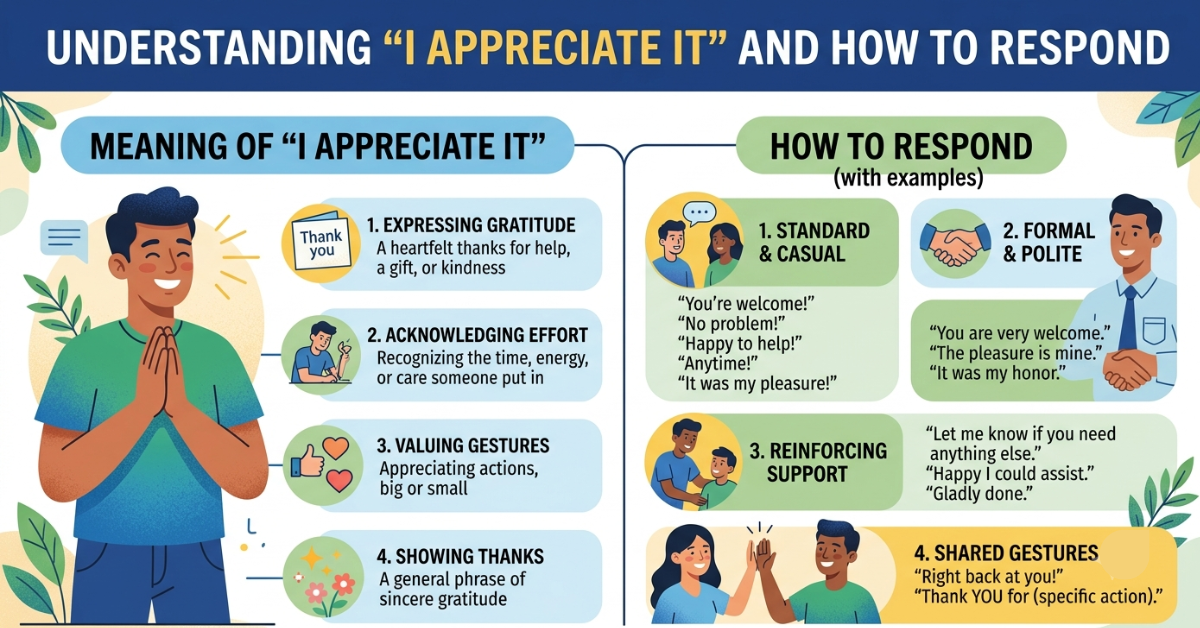
The phrase expresses sincere gratitude for someone’s help, kindness, or effort. It goes a step beyond a basic “thank you” by acknowledging value and intention.
When someone says it, they are essentially communicating:
- “What you did mattered to me.”
- “I recognize your effort.”
- “I’m genuinely grateful.”
It is commonly used in both casual and professional settings, especially when the action has meaningful impact or emotional value.
Why This Expression Feels More Personal Than “Thanks”
While “thanks” is quick and informal, this expression feels more thoughtful and intentional. It is often used when someone wants to sound more sincere without being overly emotional.
Key difference:
- “Thanks” → quick acknowledgment
- This phrase → deeper recognition of effort
Because of this, it is frequently used in emails, messages, and conversations where tone matters.
Common Situations Where It Is Used
You will often hear it in situations like:
- Someone helping you complete a task
- Receiving emotional support
- Getting advice or guidance
- Acts of kindness or generosity
- Professional assistance at work or school
Example usage:
- “Thanks for staying late to help me with this project.”
- “That was really helpful—truly grateful for it.”
How to Respond Naturally
If someone says it to you, your response depends on the tone and setting. The goal is to keep it simple and natural.
Casual responses:
- “You’re welcome.”
- “No problem.”
- “Anytime.”
- “Glad I could help.”
Warmer responses:
- “Happy to help.”
- “That means a lot.”
- “I’m glad it made a difference.”
Professional responses:
- “Of course, happy to support.”
- “Let me know if you need anything else.”
- “Glad I could assist.”
“I Appreciate It” in Spanish
If you want to express the same idea in Spanish, the translation depends on formality:
- Te lo agradezco → common and natural
- Se lo agradezco → formal and polite
- Lo aprecio → more direct but less commonly used in conversation
Example:
- “Thank you, I appreciate it.”
- “Gracias, te lo agradezco.”
Alternative Ways to Say It
Instead of repeating the same phrase, you can use:
- “I’m grateful for that.”
- “That really means a lot.”
- “I value your help.”
- “Thanks for your support.”
- “I truly value what you did.”
- “I’m thankful for your kindness.”
These variations help you sound more natural and expressive.
Common Mistakes People Make
Even though it’s simple, a few mistakes can make it sound unnatural:
- Overusing it in every message
- Using it when a simple “thanks” is enough
- Translating it too literally in other languages
- Making it sound forced or repetitive
The key is sincerity, not frequency.
FAQ
What does this phrase mean?
It expresses genuine gratitude and recognition of someone’s effort or kindness.
Is it better than “thanks”?
Not better—just more expressive. It depends on the situation.
How should I respond to it?
Simple replies like “you’re welcome” or “happy to help” work best.
What is it in Spanish?
Common translations include te lo agradezco and se lo agradezco.
What are some alternatives?
You can say “I’m grateful,” “that means a lot,” or “I truly value it.”
Conclusion
This expression is more than just polite wording—it reflects acknowledgment, sincerity, and emotional awareness. Using it naturally can make your communication warmer and more meaningful.
The key is balance: use it when something truly deserves recognition, and vary your language to keep your communication fresh and authentic.
Author

linguaezone.com@gmail.com
Related Posts
Kill Two Birds With One Stone Alternative: 50 Better Options
- 0
- 1,569 word
Have you ever paused before saying “kill two birds with one stone” because it sounded too violent or simply didn’t fit the...
Read out all
Happy Sabbath Meaning: A Complete Guide to Its Significance
- 0
- 1,632 word
Have you ever received the message “Happy Sabbath” and wondered what it truly means? Is it simply another way of saying “have...
Read out all
I’m So Proud of You in Other Words: 120+ Heartfelt Alternatives
- 0
- 1,562 word
Have you ever wanted to tell someone you’re proud of them but felt like saying “I’m so proud of you” sounded repetitive?...
Read out all
How Do You Spell Happy Anniversary? Correct Spelling Guide
- 0
- 1,221 word
Have you ever paused before writing an anniversary card and wondered, “How do you spell happy anniversary?” You’re not alone. Whether you’re...
Read out all
Waiting for Your Response Email: Best Examples & Tips
- 0
- 1,483 word
Have you ever sent an important email and found yourself wondering whether you should follow up or simply wait? Whether you’re communicating...
Read out all
Great Asset to the Team: Meaning, Examples & Tips
- 0
- 1,494 word
Have you ever wanted to compliment a coworker but struggled to find words that sound professional and sincere? One of the most...
Read out all