Have you ever typed a quick greeting and paused, wondering goodmorning or good morning—which one is actually correct? This small confusion is more common than you think, especially in texting, emails, and casual writing.
In this article, we’ll clear up the confusion around goodmorning or good morning, explain the grammar behind it, and show you how to use it correctly in real-life situations like emails, messages, and formal writing.
Understanding Goodmorning or Good Morning
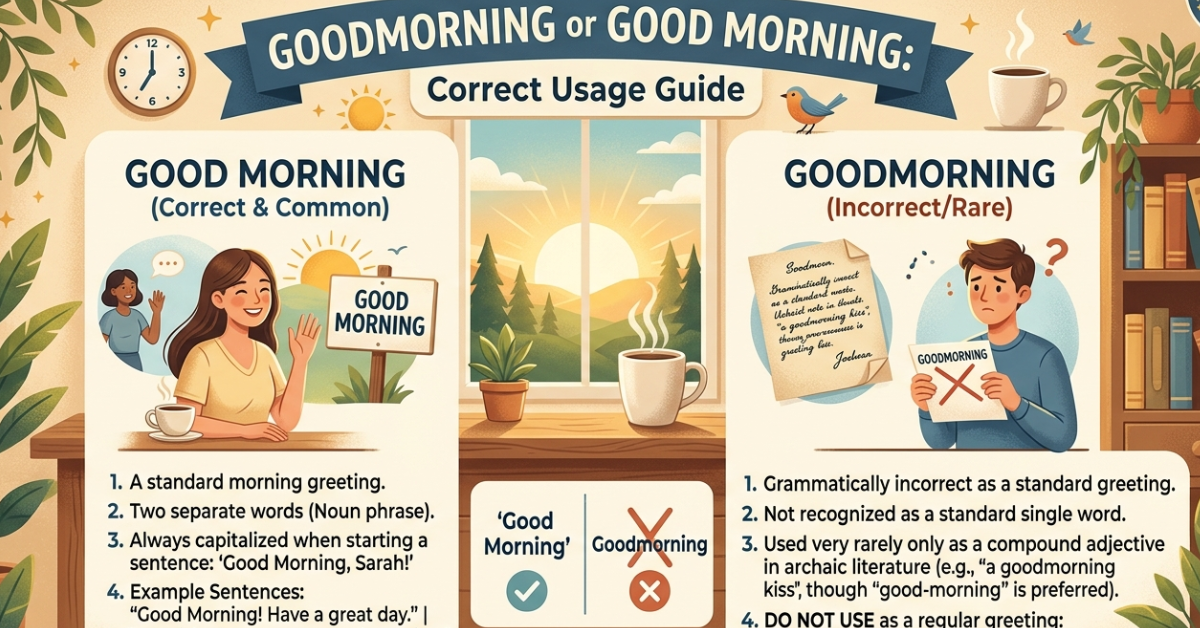
The correct form is “good morning”—written as two separate words.
Why “Good Morning” is Correct
“Good” is an adjective, and “morning” is a noun. In English grammar, adjectives are usually written separately from nouns unless they form a fixed compound word.
So:
- Good morning (correct)
- Goodmorning (incorrect in standard English)
The confusion between goodmorning or good morning mostly comes from fast texting habits and social media typing styles where people merge words for speed.
Is it Goodmorning or Good Morning in Grammar?
If you are still unsure, the answer is simple: always use the correct form in writing.
Always use good morning in both formal and informal writing.
When people mistakenly write “goodmorning”
- Text messages
- Social media captions
- Username or branding styles
- Fast typing habits
However, in proper English grammar, this is not a debate—the correct version is always two words.
Goodmorning or Good Morning in Email Writing
Email communication requires more polished and professional language. That’s why this becomes an important question.
How to use it correctly in emails:
- Good morning, Sir/Madam,
- Good morning Team,
- Good morning, I hope you are doing well.
Why it matters in emails:
- Shows professionalism
- Improves clarity
- Makes your writing more polished and respectful
Using “goodmorning” as one word in emails is considered a spelling mistake in formal communication.
Common Mistakes People Make
Here are some of the frequent errors:
- Writing “goodmorning” in formal emails
- Overusing capital letters (GOOD MORNING) in casual chats
- Forgetting punctuation after greeting
- Mixing formal and informal tone in one message
Simple Rules to Remember
If you want to always get it right, follow these easy rules:
- Always write it as two words
- Use it at the beginning of sentences or greetings
- Capitalize only when starting a sentence or email
- Keep tone formal in professional communication
Why This Confusion Happens
The confusion mainly comes from:
- Speed typing on smartphones
- Influence of social media slang
- Lack of grammar awareness
- Visual similarity of both forms
Even though “goodmorning” looks convenient, it is not grammatically correct in standard English.
FAQs About Goodmorning or Good Morning
1. Is it correct to write goodmorning or good morning?
The correct form is good morning. “Goodmorning” is not standard English.
2. Why do people write goodmorning instead of good morning?
Mostly due to fast typing, texting habits, and informal social media usage.
3. Is goodmorning or good morning acceptable in formal writing?
Only good morning is acceptable in formal writing such as emails, reports, and business communication.
4. Can I use goodmorning or good morning in captions?
Yes, but grammatically it should still be good morning even in captions for correctness.
5. What is the easiest way to remember the correct form?
Just remember: “Good” describes “morning,” so they stay separate.
Conclusion
To wrap it up, the correct usage is simple and clear: good morning is always right, while “goodmorning” is incorrect in standard English. Whether you are writing an email, sending a message, or posting online, understanding goodmorning or good morning helps you communicate more professionally and confidently.
If you’ve been mixing them up, don’t worry—now you know the rule. Keep using the correct form, and your writing will instantly look more polished and credible.