Trama vs Trauma: Meaning, Differences & Common Confusion
- 0
- 816 words
At first glance, Trama vs Trauma may look like a simple spelling mistake, but the difference goes deeper than that. Many people confuse the two words, especially when writing or searching online. While “trauma” is widely used in psychology and medicine, “trama” often appears as a typo—or sometimes as a completely different word in other languages.
In this guide on Trama vs Trauma, we’ll break down their meanings, differences, correct usage, and why this confusion happens so often. By the end, you’ll never mix them up again.
Trama vs Trauma: What Do They Really Mean?
To understand Trama vs Trauma, we first need to define both terms clearly.
Trauma (English Meaning)
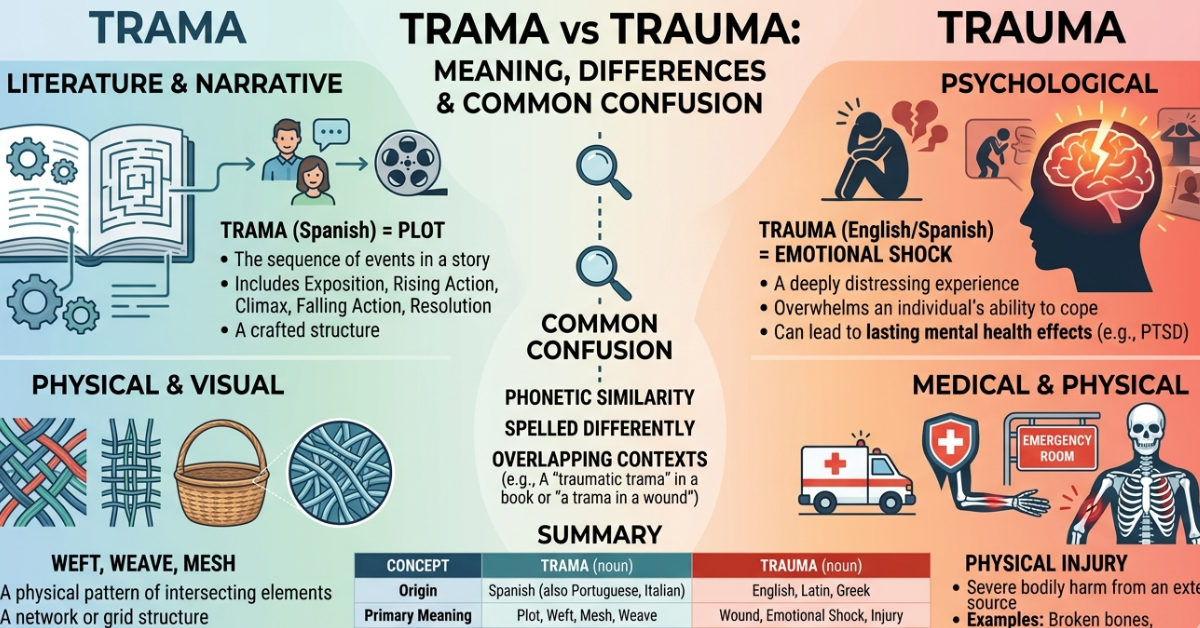
“Trauma” refers to a deeply distressing or disturbing experience that affects a person mentally or physically. It is commonly used in psychology, medicine, and everyday conversation.
Examples include:
- Emotional trauma after a loss
- Physical trauma from an accident
- Childhood trauma affecting behavior later in life
In short, trauma is a serious emotional or physical impact that can last long-term.
Trama (Different Contexts)
“Trama” is not commonly used in English. However, it does exist in other languages like Spanish and Italian, where it can mean:
- Plot or storyline (in literature or films)
- Weaving pattern or structure
So, while trauma relates to health and emotions, trama is more about structure or storytelling in other languages.
Trama vs Trauma: Why People Confuse Them
The confusion in Trama vs Trauma usually happens for simple reasons:
1. Similar spelling
Both words look almost identical, differing by just one letter.
2. Pronunciation overlap
In fast speech or online searches, people often type them interchangeably.
3. Lack of awareness
Many users don’t know that “trama” has different meanings in other languages, so they assume it is a misspelling.
4. Auto-correct errors
Phones and browsers sometimes auto-correct “trauma” into “trama” or vice versa.
Trama vs Trauma in Real-Life Usage
Understanding correct usage helps avoid mistakes in writing and communication.
Correct usage of trauma:
- “She experienced emotional trauma after the accident.”
- “The patient suffered head trauma.”
Incorrect usage:
- “She experienced emotional trama”
This is where Trama vs Trauma becomes important. Using the wrong word can completely change the meaning of a sentence or make it look unprofessional.
Key Differences Between Trama and Trauma
Here’s a simple breakdown:
- Meaning
- Trauma: Psychological or physical injury
- Trama: Plot, structure, or pattern (in other languages)
- Language
- Trauma: English
- Trama: Spanish/Italian usage
- Usage
- Trauma: Medical, emotional, psychological contexts
- Trama: Literature, storytelling, design structure
- Commonality
- Trauma: Very common globally
- Trama: Rare in English context
This comparison clearly shows how different they actually are, despite their similar appearance in Trama vs Trauma discussions.
Psychological Impact of Trauma (Why It Matters)
Since trauma is the widely used term in English, it’s important to understand its impact.
Trauma can affect:
- Mental health (anxiety, PTSD)
- Physical health (sleep issues, stress symptoms)
- Behavior and relationships
Common causes include:
- Accidents or injuries
- Emotional abuse
- Natural disasters
- Sudden loss or grief
Recognizing trauma early can help in seeking proper support and healing.
How to Avoid Confusion Between Trama vs Trauma
If you often mix them up, here are some easy tips:
- Remember: Trauma = Trouble in mind/body
- Think of “U” in trauma as “Unpleasant experience”
- Use spell-check tools carefully
- Read context before using the word
- Practice writing sentences with correct usage
These small habits can eliminate confusion in Trama vs Trauma once and for all.
Common Mistakes People Make
Many users unknowingly misuse the term:
- Writing “trama” instead of trauma in medical discussions
- Assuming both words mean the same thing
- Using them interchangeably in essays or captions
- Not checking dictionary definitions before publishing
Avoiding these mistakes improves clarity and professionalism in writing.
FAQs About Trama vs Trauma
1. Is “trama” a correct English word?
No, “trama” is not commonly used in English. It mainly appears in other languages like Spanish and Italian.
2. What is the correct spelling—trama or trauma?
The correct English word is trauma when referring to emotional or physical distress.
3. Why do people search for Trama vs Trauma?
Because the words look similar, many people get confused and want to understand the difference.
4. Can trauma affect mental health?
Yes, trauma can significantly impact mental health and may lead to conditions like anxiety or PTSD.
5. Are trama and trauma related?
No, they are not related in meaning. Their similarity is only in spelling.
Conclusion
Understanding Trama vs Trauma is important for clear communication and correct writing. While trauma refers to emotional or physical distress, trama has different meanings in other languages like plot or structure.
The confusion is common, but once you know the difference, it becomes easy to avoid mistakes. Whether you’re writing academically, professionally, or casually, using the right term helps you sound more confident and accurate.
If you found this guide helpful, explore more language comparisons to improve your writing skills and avoid common grammar mistakes in the future.
Author
britsx85@gmail.com
Related Posts
Nominee vs Nominator: Key Differences Explained
- 0
- 897 words
The terms Nominee vs Nominator often create confusion, especially when dealing with banking, insurance, elections, or official documentation. At first glance, they...
Read out all
Scraped vs Scrapped: Meaning & Difference Explained
- 0
- 619 words
The confusion between scraped vs scrapped is more common than you might think. These two words look almost identical, but their meanings...
Read out all
Finally or Finaly: Correct Spelling Explained
- 0
- 867 words
Have you ever paused while typing and wondered whether it is finaly or finally? You’re not alone. This is one of the...
Read out all
Breakroom vs Break Room: Meaning & Workplace Guide
- 0
- 687 words
A breakroom or break room is more than just a corner with a coffee machine—it’s the heartbeat of workplace comfort. Whether you...
Read out all
Immaculate or Emaculate: Correct Spelling & Meaning Explained
- 0
- 571 words
If you’ve ever typed immaculate or emaculate and paused, wondering which one is right, you’re not alone. This is one of the...
Read out all
Excelerate or Accelerate: Meaning, Difference & Usage Guide
- 0
- 696 words
The confusion between excelerate or accelerate is very common in English writing, especially when people are unsure about spelling or pronunciation. Many...
Read out all