
- 0
- 574 words
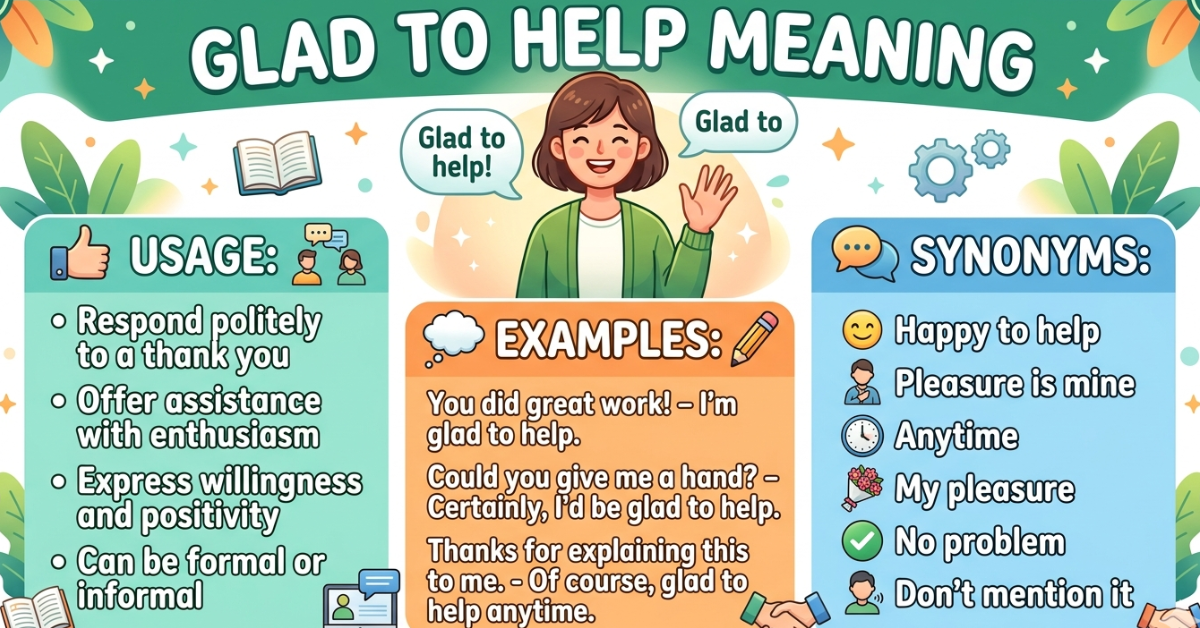
The phrase “glad to help” is a common expression in English used to show kindness and willingness to assist someone. You’ll often hear it in conversations, emails, customer service replies, and casual chats.
In simple terms, it means you are happy to assist or support someone when needed. It’s a polite and friendly way to respond after helping.
Let’s explore how this expression works, when to use it, and what alternatives sound more natural in everyday English.
What “Glad to Help” Means in English
This expression is used when someone wants to show they are happy about helping another person.
Instead of simply saying “you’re welcome,” people often use it to sound more warm and friendly.
Example:
- “Thanks for your support.”
“Glad to help.”
It adds a polite and positive tone to communication.
How People Use It in Daily Life
You will commonly hear this phrase in:
- Workplace conversations
- Customer service responses
- Online chats and emails
- Friendly everyday interactions
It works well in both formal and informal situations, making it a flexible expression in English.
Different Ways to Say It
There are several natural variations people use depending on tone and context.
1. I’m glad to help / I am glad to help
Both are correct, but the shorter form is more common in spoken English.
Example:
- “Thanks for explaining that.”
“I’m glad to help.”
2. Glad to help out
This version is more casual and often used when assisting with tasks or group work.
Example:
- “Can you support us?”
“Sure, glad to help out.”
Better Alternatives You Can Use
If you want to avoid repeating the same expression, try these natural options:
- Happy to help
- My pleasure
- No problem
- Anytime
- Always happy to assist
These phrases keep your communication smooth and friendly.
Which One Sounds Better?
Both “glad to help” and “happy to help” are correct, but in modern English, the second one is slightly more common.
- Glad to help → slightly formal or traditional
- Happy to help → more natural in everyday speech
You can use either depending on the situation.
Online Usage: GIFs and Memes
In digital communication, people also use this phrase in a fun way through GIFs and memes.
It is often seen:
- In humorous replies
- On social media comments
- In light sarcastic responses
This gives conversations a more expressive and playful tone.
Why This Expression Is So Popular
This phrase remains widely used because it:
- Sounds polite and respectful
- Works in both formal and informal contexts
- Helps build positive communication
- Makes responses feel warm and human
Even though it’s simple, it plays an important role in everyday English.
FAQs
1. What does this phrase mean?
It means you are happy and willing to help someone.
2. Is it grammatically correct?
Yes, both “I’m glad to help” and “I am glad to help” are correct.
3. What can I say instead?
You can use “happy to help,” “my pleasure,” or “no problem.”
4. When should I use it?
Use it after helping someone in conversations, emails, or messages.
5. Is “happy to help” more common?
Yes, it is slightly more common in modern English.
Conclusion
This expression is a simple but powerful way to respond politely after helping someone. It adds warmth, respect, and positivity to communication.
By understanding its meaning and variations, you can sound more natural and confident in English conversations. Using alternatives like “happy to help” or “my pleasure” can also make your speech more fluent and engaging.
Author

linguaezone.com@gmail.com
Related Posts

Kill Two Birds With One Stone Alternative: 50 Better Options
- 0
- 1,569 word
Have you ever paused before saying “kill two birds with one stone” because it sounded too violent or simply didn’t fit the...
Read out all
Happy Sabbath Meaning: A Complete Guide to Its Significance
- 0
- 1,632 word
Have you ever received the message “Happy Sabbath” and wondered what it truly means? Is it simply another way of saying “have...
Read out all
I’m So Proud of You in Other Words: 120+ Heartfelt Alternatives
- 0
- 1,562 word
Have you ever wanted to tell someone you’re proud of them but felt like saying “I’m so proud of you” sounded repetitive?...
Read out all
How Do You Spell Happy Anniversary? Correct Spelling Guide
- 0
- 1,221 word
Have you ever paused before writing an anniversary card and wondered, “How do you spell happy anniversary?” You’re not alone. Whether you’re...
Read out all
Waiting for Your Response Email: Best Examples & Tips
- 0
- 1,483 word
Have you ever sent an important email and found yourself wondering whether you should follow up or simply wait? Whether you’re communicating...
Read out all
Great Asset to the Team: Meaning, Examples & Tips
- 0
- 1,494 word
Have you ever wanted to compliment a coworker but struggled to find words that sound professional and sincere? One of the most...
Read out all