
- 0
- 920 words
English is full of words that sound alike but carry completely different meanings. One common example is Gait vs Gate. Since both words are pronounced the same way, many people accidentally mix them up while writing. However, their meanings are entirely different.
Understanding the distinction between these two words can improve your writing, communication, and confidence in English. In this guide, you’ll learn the meanings, pronunciation, examples, grammar usage, memory tricks, and the most common mistakes people make with these confusing words.
By the end of this article, you’ll never confuse them again.
What Does “Gait” Mean?
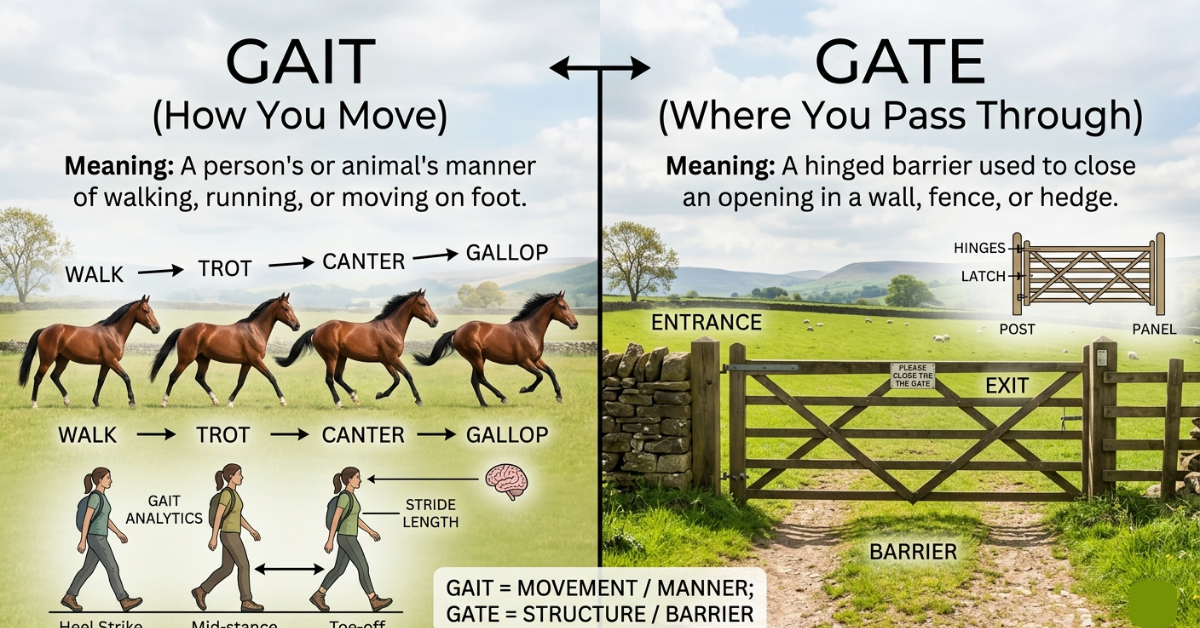
The word gait refers to the manner or style of walking or moving. It is commonly used when describing how humans or animals walk.
Examples of Gait in a Sentence
- The doctor noticed an unusual gait in the patient.
- Horses are trained to improve their gait during competitions.
- His confident gait made him stand out in the crowd.
Common Uses of Gait
The word often appears in:
- Medical discussions
- Sports science
- Animal movement studies
- Physical therapy
- Fitness and posture analysis
Simple Definition
Think of gait as:
“The way someone walks.”
What Does “Gate” Mean?
The word gate refers to a movable barrier used to open or close an entrance. It can also describe entry points in airports, stadiums, farms, or buildings.
Examples of Gate in a Sentence
- Please close the gate before leaving.
- Our flight departs from Gate 12.
- The wooden gate protects the garden entrance.
Common Uses of Gate
This word is often connected with:
- Doors and entrances
- Airports
- Security checkpoints
- Fences
- Stadium entryways
Simple Definition
Think of gate as:
“An entrance or barrier.”
Gait vs Gate: The Main Difference
Although these words sound identical, their meanings are unrelated.
| Word | Meaning | Usage |
| Gait | Style of walking | Movement and posture |
| Gate | Entrance or barrier | Doors, fences, airports |
The easiest way to remember them is:
- Gait = walking
- Gate = entrance
Why Do People Confuse Gait and Gate?
The confusion happens because they are homophones. Homophones are words that sound the same but have different spellings and meanings.
Other examples include:
- Their vs There
- Brake vs Break
- Flour vs Flower
Since pronunciation does not help distinguish them, context becomes extremely important.
Pronunciation of Gait and Gate
Interestingly, both words are pronounced exactly the same.
Pronunciation:
/ɡeɪt/
Because they share identical pronunciation, spelling is the only clue when writing.
Memory Tricks to Remember the Difference
Learning small memory tricks can help you avoid mistakes.
Remember “Gait”
The word gait relates to movement and walking.
Think:
- “AI” in gait = active movement
Remember “Gate”
A gate is something you open or close.
Think:
- A gate keeps people “in” or “out”
These associations make the meanings easier to remember quickly.
Common Mistakes People Make
Here are some incorrect and corrected examples.
Incorrect:
- The horse jumped over the gait.
Correct:
- The horse jumped over the gate.
Incorrect:
- The therapist examined her walking gate.
Correct:
- The therapist examined her walking gait.
These small spelling errors can completely change the meaning of a sentence.
When Is “Gait” Commonly Used?
You will usually see this word in professional or technical discussions.
Medical Context
Doctors often analyze a patient’s gait to identify injuries or neurological conditions.
Sports and Fitness
Athletes improve their gait for better performance and reduced injury risk.
Animal Training
Horse trainers carefully study gait patterns during competitions.
When Is “Gate” Commonly Used?
This word appears frequently in everyday life.
Airports
Passengers wait at boarding gates before flights.
Homes and Gardens
People install gates for security and privacy.
Security Areas
Many buildings use electronic gates for controlled access.
Quick Comparison Examples
Here are side-by-side examples for clarity.
| Sentence | Correct Word |
| The child opened the ___ quietly. | Gate |
| The therapist studied his walking ___. | Gait |
| We arrived late at the airport ___. | Gate |
| Her elegant ___ impressed everyone. | Gait |
Tips to Avoid Spelling Confusion
Here are a few practical tips:
- Read the sentence carefully.
- Ask yourself if the topic is movement or entrance.
- Use spell-check tools when writing professionally.
- Practice using both words in sentences.
- Memorize their meanings with visual associations.
The more you use them correctly, the easier they become to remember.
Are Gait and Gate Interchangeable?
No, these words are never interchangeable because their meanings are completely different.
Using the wrong spelling can confuse readers and make writing appear careless. While the mistake is common, understanding the context makes it easy to choose the correct word.
Frequently Asked Questions
Is gait related to walking?
Yes. Gait specifically refers to the style or manner of walking or moving.
What does gate mean in airports?
In airports, a gate is the designated boarding area for passengers before departure.
Why do gait and gate sound the same?
They are homophones, meaning they share the same pronunciation but have different meanings and spellings.
How can I remember the difference quickly?
Remember:
- Gait = movement
- Gate = entrance
Is gait used only for humans?
No. The term can also describe how animals walk or move.
Conclusion
Understanding Gait vs Gate is easier once you focus on their meanings and context. While they sound exactly alike, one relates to walking and movement, while the other refers to entrances or barriers.
Small spelling differences can greatly affect the meaning of your writing, so learning commonly confused words like these helps improve both accuracy and confidence in English. Practice using each word in everyday sentences, and soon the distinction will become natural.
If you enjoyed this guide, explore other commonly confused English word pairs to strengthen your grammar and writing skills even further.
Author

linguaezone.com@gmail.com
Related Posts

Kill Two Birds With One Stone Alternative: 50 Better Options
- 0
- 1,569 word
Have you ever paused before saying “kill two birds with one stone” because it sounded too violent or simply didn’t fit the...
Read out all
Happy Sabbath Meaning: A Complete Guide to Its Significance
- 0
- 1,632 word
Have you ever received the message “Happy Sabbath” and wondered what it truly means? Is it simply another way of saying “have...
Read out all
I’m So Proud of You in Other Words: 120+ Heartfelt Alternatives
- 0
- 1,562 word
Have you ever wanted to tell someone you’re proud of them but felt like saying “I’m so proud of you” sounded repetitive?...
Read out all
How Do You Spell Happy Anniversary? Correct Spelling Guide
- 0
- 1,221 word
Have you ever paused before writing an anniversary card and wondered, “How do you spell happy anniversary?” You’re not alone. Whether you’re...
Read out all
Waiting for Your Response Email: Best Examples & Tips
- 0
- 1,483 word
Have you ever sent an important email and found yourself wondering whether you should follow up or simply wait? Whether you’re communicating...
Read out all
Great Asset to the Team: Meaning, Examples & Tips
- 0
- 1,494 word
Have you ever wanted to compliment a coworker but struggled to find words that sound professional and sincere? One of the most...
Read out all