
- 0
- 1,136 word
Shipping containers look simple: a steel box with doors at one end. Lifting one safely is less simple, and the language around it can confuse newcomers. Rigging crews, site managers, buyers and logistics staff all use a shared vocabulary of fittings, ratings and techniques. When everyone means the same thing by the same word, lifts are planned faster and mistakes are less likely.
Here’s a plain-language guide to the terms that come up most often when containers are lifted by crane.
Corner Castings
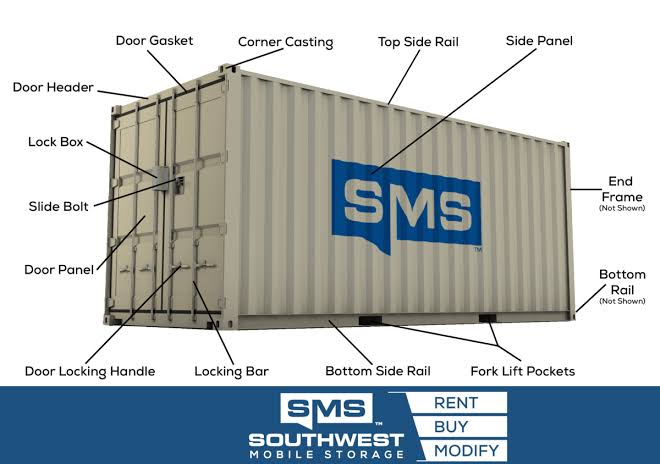
Every standard container has eight corner castings, one at each corner. These are heavy steel blocks with openings that lifting gear and securing hardware attach to. They’re the strongest points on the box, and they’re the intended points for lifting.
The top castings have openings on the upper face, which suit vertical lifting from above. The bottom castings have openings on their sides, which allow slings or hooks to connect from the side for lifting from below. Attaching lifting gear anywhere else, such as to the side walls or roof rails, risks bending the structure.
Tare, Payload And Gross Weight
Three weights matter for every lift. Tare weight is the empty container. Payload is the cargo inside. Gross weight is the two combined, and it’s the figure that lifting gear has to handle.
Containers usually have their maximum gross weight marked on the doors. That number is a limit, not the actual weight of a particular load. Crews should use documented weights wherever possible, because a container that looks half empty can carry dense, heavy cargo.
Working Load Limit
The working load limit, often shortened to WLL, is the maximum load a piece of lifting equipment is rated to carry in normal service. Every sling, beam, shackle and hook has one, and the lowest-rated part sets the limit for the whole assembly.
Many container slings are rated to cover the full maximum gross weight of a standard loaded container, but not all are. Some lighter assemblies carry lower ratings and are meant for lighter loads or empty boxes. Checking the marked rating against the actual gross weight is one of the simplest and most important steps in any lift.
Top Lift And Bottom Lift
These terms describe where the lifting gear connects.
Top lift uses the top corner castings. It’s often done with a frame or beam that lowers onto the container and connects at all four top corners, keeping the lifting forces vertical.
Bottom lift uses the bottom corner castings. Sling legs run from a beam above the container down the sides to the bottom corners. This approach is common when a dedicated top-lift frame isn’t available, or when the setup suits the crane and site better.
In both cases, the aim is to keep forces where the container is designed to take them. Angled slings pulling inward on the top corners can damage the fittings and the roof structure, so crews should follow the container owner’s and equipment maker’s guidance on approved lifting methods.
Spreader Beam
A spreader beam sits between the crane hook and the sling legs, holding the legs apart. In bottom lifting, this keeps the slings from pressing against the container’s sides and roof edges as they run down to the lower corners.
The beam also changes how forces act. Angled top slings pull the ends of the beam inward, so the beam works mainly in compression. Holding the lower legs apart lets them hang at a better angle, which reduces side loading on the container.
Headroom
Headroom is the vertical space needed between the top of the container and the crane hook for the rigging to fit. It matters in warehouses, ships’ holds, workshops and anywhere overhead clearance is tight.
Standard sling assemblies with a beam above can take up a lot of height. Low-profile slings and low-lift frames are designed to shrink that gap, with some setups needing only a couple of feet above the container. When planning a lift indoors or under structures, crews should confirm the full height of the rigging, not just the container.
Load Leveling
Cargo rarely sits perfectly centered. When the weight inside a container is concentrated toward one end, the box tilts as it leaves the ground. A tilting container can swing, shift its cargo or overload some sling legs while others carry little.
Load leveling describes equipment that lets crews correct for this. Some beams have several attachment holes along the top so the crane hook can be placed over the true center of gravity. Some sling assemblies include adjustable legs or leg shorteners so individual legs can be lengthened or shortened. Both approaches help keep the container level throughout the lift.
Wire Rope And Chain
Container slings are commonly made of either wire rope or alloy chain. Each has its place in shipping container rigging. Wire rope is often lighter and can be more economical for many applications. Chain is very durable and tolerates rough handling and harsh environments, and chain legs are often easier to shorten or adjust. The right choice depends on the load, how often the gear is used and the conditions it works in.
Whichever material is used, it must be rated for the job, properly marked and matched to compatible hooks and fittings.
Specialty Containers
Not every container is a standard 20-foot or 40-foot box. Some are wider, some are taller, and some are built for specific uses such as equipment shelters or modular units. Lifting gear sized for standard containers may not fit these correctly. Wider containers, for example, need sling and beam configurations designed for their dimensions. When in doubt, measure the box and confirm the equipment matches.
Center Of Gravity
The center of gravity is the point where a load’s weight effectively balances. For a container, it depends on how the cargo was packed. A safe lift places the crane hook directly above it. Lifting a few inches off the ground and pausing is a simple way to check balance before committing to the full lift.
Inspection And Certification
Lifting equipment needs regular checks. Operators should inspect gear before each use for damage, wear, cracks and missing markings. Periodic thorough examinations by a competent person, along with records of those checks, are required in many regions. Certification paperwork and clear markings show the equipment’s rating and make it easier to confirm the right gear is being used.
Shared Language, Safer Lifts
Knowing these terms won’t make anyone a qualified rigger, but it does make conversations clearer between the people who plan lifts, buy equipment and carry out the work. When everyone understands what corner castings, working load limits, headroom and load leveling mean, it’s easier to choose the right gear, spot problems early and move containers safely.
Author

IQnewswire@gmail.com
Related Posts

Top 10 Anime to Watch on Anoboy Right Now
- 0
- 1,444 word
Every anime fan knows the feeling: you finish a great series, and suddenly you have no idea what to watch next. The...
Read out all
JustClickSky.com: Exploring Its Features, Online Experience, Benefits, and Digital Potential
- 0
- 2,372 words
The internet is full of websites designed to make everyday online activities easier, faster, and more convenient. From entertainment and information to...
Read out all
The Borgen Project: Mission, History, Global Impact, and Its Fight Against Extreme Poverty
- 0
- 2,739 words
Global poverty remains one of the most significant challenges facing humanity. Millions of people around the world struggle to access nutritious food,...
Read out all
Crackstube: Understanding the Platform, Its Features, Online Presence, and Digital Publishing Opportunities
- 0
- 2,508 words
The internet is full of websites that introduce new ways to discover information, explore digital trends, and connect with online communities. Among...
Read out all
Messonde: Exploring the Meaning, Features, Uses, and Growing Interest in Messonde
- 0
- 2,143 words
In today’s rapidly changing digital world, new words, names, platforms, and concepts frequently attract attention. One term that may leave people curious...
Read out all
Emsella: How the Emsella Chair Helps With Bladder Leaks
- 0
- 1,171 word
You laugh at a joke, you sneeze, you pick up your child — and you feel a small leak. You tell yourself...
Read out all