
- 0
- 2,941 words
Language is full of expressions that people use in everyday conversations without always understanding their complete meaning. One common expression is bad rep. You might hear someone say that a person has a bad rep at school, a company has a bad rep among customers, or a particular neighborhood has a bad rep because of its reputation. Although the phrase is informal, it communicates an important idea about how people are perceived by others.
Understanding the meaning of bad rep can help you communicate more naturally in conversations, social media posts, professional discussions, and everyday writing. It can also help you distinguish this expression from similar phrases, such as bad reputation, bad rap, and poor public image.
In this article, we will explore what bad rep means, where the expression comes from, how to use it in sentences, and why reputation matters in personal and professional life.
What Does Bad Rep Mean?
The expression bad rep is an informal abbreviation of bad reputation. It describes a negative opinion or unfavorable image that a person, organization, product, place, or group has developed among others.
When someone has a bad rep, people may believe that the person is dishonest, unreliable, difficult to work with, unfriendly, or associated with undesirable behavior. Similarly, a business with a bad rep might be known for poor customer service, low-quality products, or failing to keep its promises.
For example, imagine a restaurant that frequently delivers cold food and responds poorly to customer complaints. Over time, customers may begin warning their friends about the restaurant. Eventually, the restaurant develops a bad rep in the community.
The expression does not necessarily mean that every negative opinion is accurate. Sometimes, a person or business receives an unfair reputation because of rumors, misunderstandings, outdated information, or the actions of a few individuals.
In simple terms, bad rep means that someone or something is generally viewed negatively by other people.
Is Bad Rep Slang?
Yes, bad rep is an informal expression commonly used in casual English. The word rep is short for reputation, and people frequently use it in everyday speech, online discussions, text messages, and social media conversations.
For instance, someone might say, “That store has a bad rep for selling damaged products.” This sentence communicates that customers generally associate the store with an unfavorable experience.
Although the expression is widely understandable, it is usually more appropriate for informal communication than for formal academic writing or official business documents.
In professional situations, alternatives such as negative reputation, poor public image, or unfavorable reputation may sound more polished.
However, bad rep is not necessarily inappropriate in a workplace conversation. Colleagues might use it naturally when discussing a company, a service provider, or a person’s professional standing.
The best choice depends on your audience, the situation, and the level of formality you want to maintain.
The Difference Between Bad Rep and Bad Rap
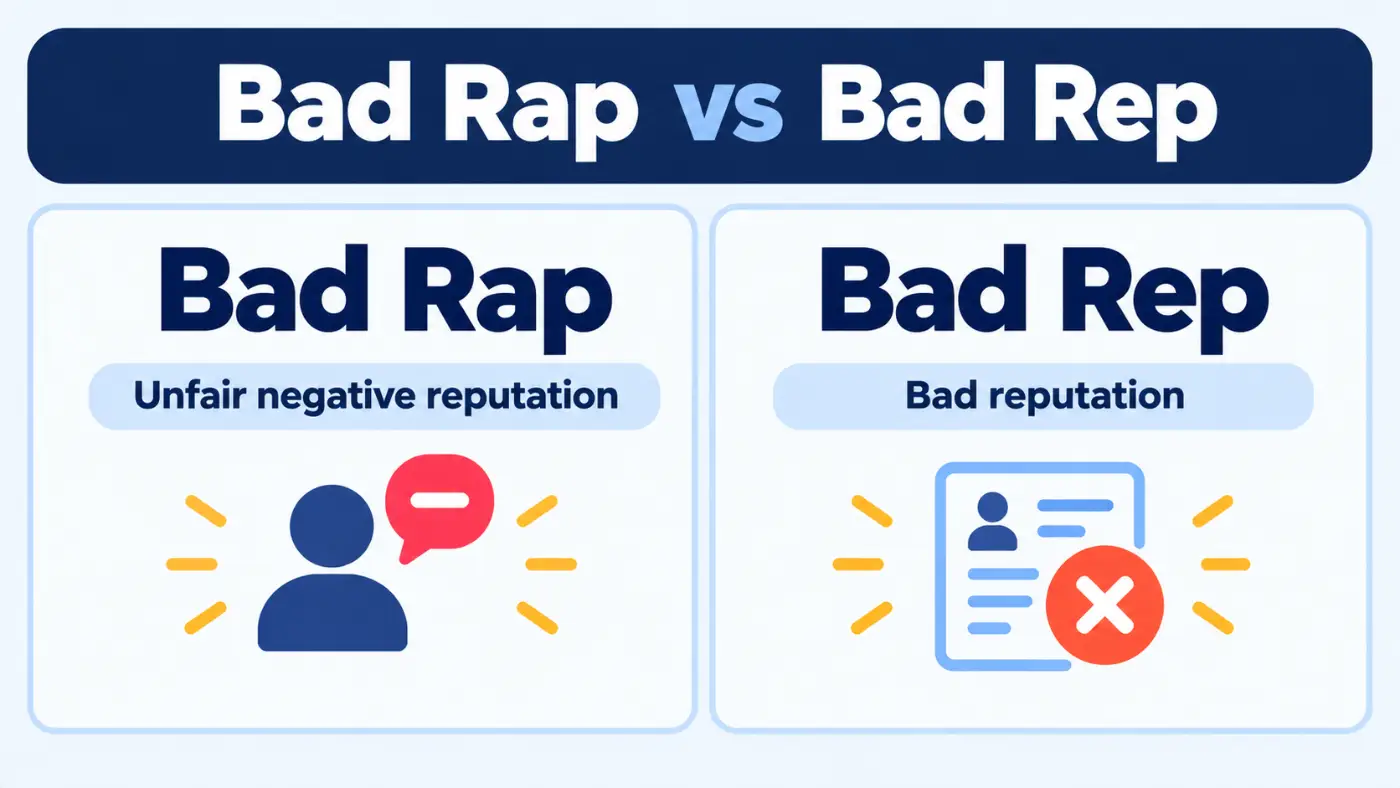
One of the most interesting aspects of this expression is its relationship with the phrase bad rap. Many English speakers wonder whether bad rep or bad rap is the correct expression.
Both expressions are used in English, but they have different histories and patterns of usage.
Understanding Bad Rep
Bad rep is a shortened form of bad reputation. It directly refers to a negative reputation that someone or something has acquired.
For example:
- The new employee has a bad rep because he frequently misses deadlines.
- The company developed a bad rep after several customer complaints.
- That neighborhood has a bad rep, although many residents enjoy living there.
In each example, rep clearly refers to reputation.
Understanding Bad Rap
Bad rap is an established expression that generally means an unfairly negative reputation, accusation, or judgment. It is often used when someone believes that another person or group has been criticized unfairly.
For example:
- The young actor gets a bad rap because people misunderstand his personality.
- The neighborhood gets a bad rap, even though most residents are friendly.
- The product has received a bad rap despite improvements in its quality.
Bad rap can emphasize the idea that someone or something has been judged unfairly, although the exact meaning depends on the context.
Which Expression Should You Use?
If you simply want to describe a negative reputation, bad rep is a clear and understandable choice. Bad reputation is the most explicit alternative.
If you want to express the idea that someone has been unfairly criticized or misunderstood, bad rap may be especially suitable.
Both expressions appear in modern English, and neither should automatically be treated as incorrect in every context. However, the intended meaning can influence which phrase sounds most natural.
Origin and Development of the Expression Bad Rep
The word reputation has been part of the English language for centuries. It refers to the beliefs, judgments, and opinions that people develop about someone or something based on behavior, experience, information, or public perception.
Over time, speakers began shortening reputation to rep in informal language. This type of abbreviation is common in English because people often prefer brief expressions that are easy to say and understand.
Words such as reputation, representative, and repetition can be shortened differently depending on the context, but in the expression bad rep, the intended meaning is reputation.
As informal communication became increasingly common through text messaging, online forums, and social media, shortened expressions gained even more visibility. Bad rep fits naturally into these settings because it conveys a familiar idea in only two words.
It is important to distinguish the word’s general history from the specific origin of the complete phrase. The exact point at which bad rep became popular is difficult to establish without reliable historical evidence. Nevertheless, its meaning is straightforward because it uses an established abbreviation for reputation.
Today, the expression can be heard in conversations about friendships, schools, workplaces, businesses, entertainment, online communities, and public figures.
Examples of Bad Rep in Everyday Sentences
The easiest way to understand bad rep is to examine how people use it in different situations.
Here are several examples that demonstrate its meaning.
1. Bad Rep in Personal Relationships
“Mark has a bad rep for canceling plans at the last minute.”
This sentence suggests that Mark has developed a reputation for being unreliable. His friends may hesitate to make plans with him because they expect him to cancel.
2. Bad Rep at School
“The school has a bad rep for having strict rules.”
This example means that people associate the school with an unfavorable image because of its strict policies. However, strict rules do not necessarily mean the school provides a poor education.
3. Bad Rep in Business
“The company earned a bad rep after ignoring customer complaints.”
Here, the company has developed a negative reputation because customers believe their concerns are not being taken seriously.
4. Bad Rep on Social Media
“That influencer has a bad rep for promoting products without explaining their drawbacks.”
This sentence describes a negative public image that may result from perceived dishonesty or incomplete information.
5. Bad Rep in a Community
“The neighborhood has a bad rep, but many people who live there say it is a welcoming place.”
This example shows that a reputation can differ from the experiences of individuals who know a place firsthand.
6. Bad Rep in the Workplace
“His bad rep made it difficult for him to gain the team’s trust.”
The sentence means that other employees already had a negative impression of him, making professional relationships more challenging.
These examples demonstrate that bad rep can describe almost any situation in which public perception has become unfavorable.
Why Do People Develop a Bad Rep?
A negative reputation rarely appears without some explanation, although the reasons behind it can vary considerably. Sometimes, it develops through repeated behavior. In other cases, misunderstandings or inaccurate information contribute to an unfair public image.
Repeated Negative Behavior
One of the most common reasons for a bad rep is repeated behavior that disappoints other people.
Someone who regularly breaks promises, arrives late, or refuses to accept responsibility may gradually lose the trust of friends, coworkers, or family members.
Similarly, a business that repeatedly delivers poor service may develop a negative reputation among customers.
Consistency matters because people often use past experiences to predict future behavior.
Poor Communication
Miscommunication can also damage someone’s reputation. A person who communicates unclearly, ignores messages, or responds rudely may appear careless or disrespectful, even when that was not the original intention.
Businesses can face similar problems when they fail to explain policies, respond to customer questions, or communicate changes effectively.
Improving communication can prevent unnecessary misunderstandings and help preserve trust.
Rumors and False Information
Not every bad rep is deserved. Rumors can spread quickly, especially in schools, workplaces, online communities, and small social circles.
A person might be criticized because of an inaccurate story, a misunderstanding, or information taken out of context.
Once a rumor becomes widely accepted, correcting it may be difficult. Even when reliable evidence contradicts the original claim, some people may continue believing it.
This is why it is important to evaluate information carefully before forming an opinion about someone.
Negative Online Reviews
Online reviews can significantly influence a business’s reputation. A few detailed negative reviews may discourage potential customers from trying a product or service.
However, reviews do not always represent the complete picture. Some customers may describe genuine problems, while others may have unusual expectations or misunderstand a company’s policies.
Businesses should examine feedback objectively and look for recurring issues instead of reacting emotionally to every criticism.
Association With Other People
Sometimes, people develop a bad rep because of the individuals they associate with. Others may judge someone based on their friends, colleagues, or social group rather than their personal actions.
Although social associations can influence public perception, they do not automatically prove that an individual shares another person’s behavior or values.
Fair judgment requires looking at the person’s own conduct and circumstances.
How a Bad Rep Can Affect Your Life
Reputation can influence many aspects of everyday life. Although it does not determine everything about a person’s future, it can affect how others respond to them.
Personal Relationships
Trust is an important part of healthy relationships. When someone develops a bad rep for dishonesty, unreliability, or disrespect, friends and acquaintances may become more cautious.
They might hesitate to share personal information, depend on that person, or include them in important plans.
Rebuilding trust generally requires consistent behavior over time rather than promises alone.
Career Opportunities
Professional reputation can affect hiring decisions, workplace relationships, promotions, and business partnerships.
An individual known for meeting deadlines, communicating honestly, and treating colleagues respectfully may find it easier to establish productive working relationships.
On the other hand, someone with a reputation for poor performance or unprofessional behavior may need to demonstrate improvement before others feel comfortable relying on them.
This does not mean that a person’s past mistakes should define their entire career. People can learn, improve, and develop stronger professional habits.
Business Success
For businesses, reputation can influence customer loyalty and purchasing decisions. People often prefer companies they believe are trustworthy and responsive.
A business with a bad rep may experience fewer returning customers, more complaints, and greater difficulty attracting new clients.
In contrast, companies that consistently deliver quality products and treat customers fairly can build positive reputations over time.
Online Image
Digital information can remain accessible long after an original discussion has ended. A controversial post, negative review, or public disagreement may continue influencing how people perceive an individual or organization.
Because online content can spread quickly, it is wise to communicate thoughtfully and avoid sharing unverified claims about others.
At the same time, online criticism should be considered in context rather than automatically accepted as fact.
How to Improve a Bad Rep
Having a bad rep does not mean that a person or business must remain negatively perceived forever. Reputation can change when people observe genuine improvement.
The process may take time, but several practical steps can help.
1. Identify the Cause
The first step is to understand why the negative reputation developed.
Consider whether the problem resulted from repeated mistakes, poor communication, unmet expectations, or inaccurate information.
Ask for specific feedback when appropriate. Concrete examples are more useful than vague statements that someone has a bad impression of you.
2. Accept Responsibility
If your actions contributed to the problem, acknowledge them honestly.
Avoid making excuses or blaming everyone else. Taking responsibility demonstrates maturity and creates an opportunity to rebuild trust.
An apology can be helpful when it recognizes the harm caused and is followed by meaningful change.
3. Demonstrate Consistent Improvement
People are more likely to believe in change when they can observe it.
If you have been unreliable, begin meeting commitments and communicating early when problems arise. If you have been dismissive, make a genuine effort to listen to others.
For businesses, this may involve improving customer service, correcting product defects, or making policies more transparent.
Repeated positive actions can gradually replace negative expectations.
4. Communicate Clearly
Sometimes, a bad rep develops because people misunderstand what happened.
When appropriate, explain your perspective calmly and provide relevant facts. Avoid turning every disagreement into an argument or attempting to convince everyone immediately.
Clear communication can correct misunderstandings, but it works best when supported by credible evidence and consistent behavior.
5. Give the Process Time
Reputation usually develops through multiple experiences, so it may not change after one apology or one successful interaction.
Some people will notice improvements quickly, while others may remain skeptical.
Focus on actions you can control instead of demanding immediate approval. Over time, reliable behavior can create new experiences that influence how others perceive you.
6. Address False Claims Responsibly
If your bad rep comes from inaccurate information, consider correcting the record with clear, verifiable facts.
Avoid spreading counter-rumors or responding with personal attacks, as these actions can create additional problems.
For serious reputational harm, particularly involving false public allegations or professional consequences, appropriate advice from a qualified professional may be helpful.
Is Having a Bad Rep Always a Bad Thing?
Generally, a bad rep is undesirable because it suggests that others hold negative opinions about a person or organization. However, reputation is not always an accurate measure of character, quality, or truth.
Some people receive criticism because they challenge popular opinions, enforce unpopular rules, or refuse to participate in behavior they consider inappropriate.
A business might also receive negative feedback for maintaining a necessary policy that some customers dislike.
In these situations, an unfavorable reputation does not automatically mean that the person or organization has acted wrongly.
It is therefore important to distinguish between justified criticism and unfair judgment. Repeated, well-supported complaints deserve attention, while vague rumors and unsupported accusations should be evaluated cautiously.
Rather than focusing exclusively on whether others approve of you, consider whether your actions reflect your values, responsibilities, and commitments.
A good reputation can be valuable, but honesty, accountability, and responsible behavior are more meaningful than simply trying to please everyone.
Bad Rep vs. Good Rep
Bad rep and good rep describe opposite perceptions.
A person with a bad rep may be viewed as unreliable, dishonest, careless, or difficult to work with. A person with a good rep is more likely to be associated with positive qualities such as honesty, dependability, fairness, and competence.
Similarly, a business with a good rep may attract customers because people trust its products, service, and communication.
However, a good reputation does not guarantee perfection, just as a bad reputation does not prove that every criticism is justified.
The most reliable approach is to consider actual behavior, available evidence, and repeated experiences rather than relying entirely on public opinion.
Common Mistakes When Using Bad Rep
Although bad rep is a simple expression, several common mistakes can create confusion.
Confusing rep with reputation in formal writing: Rep is informal. In academic essays, official reports, and formal business communication, reputation may be a better choice.
Assuming a bad rep is always deserved: A negative reputation can result from real behavior, but it can also arise from misinformation, prejudice, or misunderstandings.
Using bad rep when you mean a single mistake: One mistake does not automatically establish a lasting reputation. The phrase is more suitable when a negative perception exists among other people.
Confusing bad rep with bad rap: Both phrases are used in English, but bad rap often emphasizes unfair criticism or an unfavorable judgment.
Treating rumors as facts: Hearing that someone has a bad rep is not sufficient evidence to conclude that the person has behaved badly.
Understanding these distinctions helps you use the phrase accurately and interpret it more thoughtfully when other people use it.
Conclusion
The expression bad rep is a common informal way of describing a bad reputation. It refers to the negative image that a person, business, organization, product, or place may develop among others.
The phrase appears in everyday conversations, online discussions, workplace communication, and social media. It is easy to understand because rep is a shortened form of reputation.
A bad rep can develop through repeated negative behavior, poor communication, customer dissatisfaction, rumors, or unfair judgments. It may affect relationships, career opportunities, business success, and online image.
However, reputation is not always a perfect reflection of reality. Some negative perceptions are justified, while others result from incomplete information or misunderstandings.
If you or your business has developed a bad rep, the most effective response is to identify the underlying problem, take responsibility where necessary, communicate honestly, and demonstrate consistent improvement.
Ultimately, a reputation is shaped by what people believe about you, but your actions determine what you can do to build trust, correct mistakes, and create a better impression over time.
Author

blowouttaper.co.uk@gmail.com
Related Posts
Re-Evalue: Meaning, Correct Spelling, Examples, and How to Use It Properly
- 0
- 2,589 words
Language is constantly evolving, and people often encounter unfamiliar words while writing emails, reading articles, preparing assignments, or communicating online. One term...
Read out all
Unorganized or Disorganized: Understanding the Difference and How to Use Each Word Correctly
- 0
- 2,624 words
English contains many words that appear to have the same meaning but differ slightly in their usage, tone, and context. One common...
Read out all
Too Early or To Early: Which Spelling Is Correct?
- 0
- 2,707 words
English can be confusing, especially when two expressions sound exactly the same but have different meanings and uses. One common example is...
Read out all
Dry Snitching: Meaning, Examples, Signs, and How to Handle It
- 0
- 2,804 words
Introduction Language plays an important role in how people communicate, build relationships, and maintain trust. In everyday conversations, slang terms often describe...
Read out all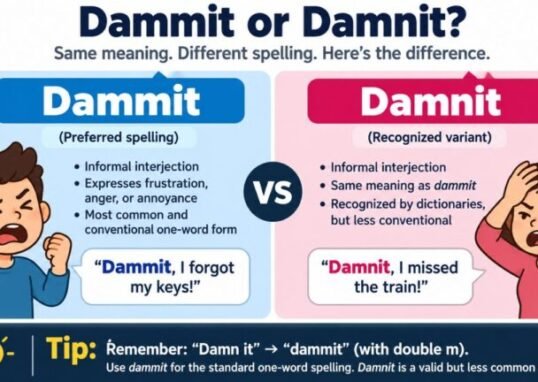
Damnit or Dammit: Which Spelling Is Correct and When Should You Use It?
- 0
- 2,614 words
English contains many words and expressions that people use every day without thinking much about their spelling. However, some words create confusion...
Read out all
Reevaluation: Meaning, Importance, Benefits, and How to Reevaluate Decisions Effectively
- 0
- 2,568 words
Introduction to Reevaluation Reevaluation is an important process that involves examining something again to determine whether it is still accurate, effective, valuable,...
Read out all