
- 0
- 963 words
Have you ever paused while typing and wondered whether it should be ammount or amount? You are not alone. This is one of those small spelling mistakes that shows up in emails, reports, invoices, and even search queries more often than people realize.
In this guide, we will clear up the confusion around ammount, explain the correct spelling, show how to use amount properly, and break down what people usually mean when they search for terms like amount or ammount and ytd ammount.
What Is the Correct Spelling?
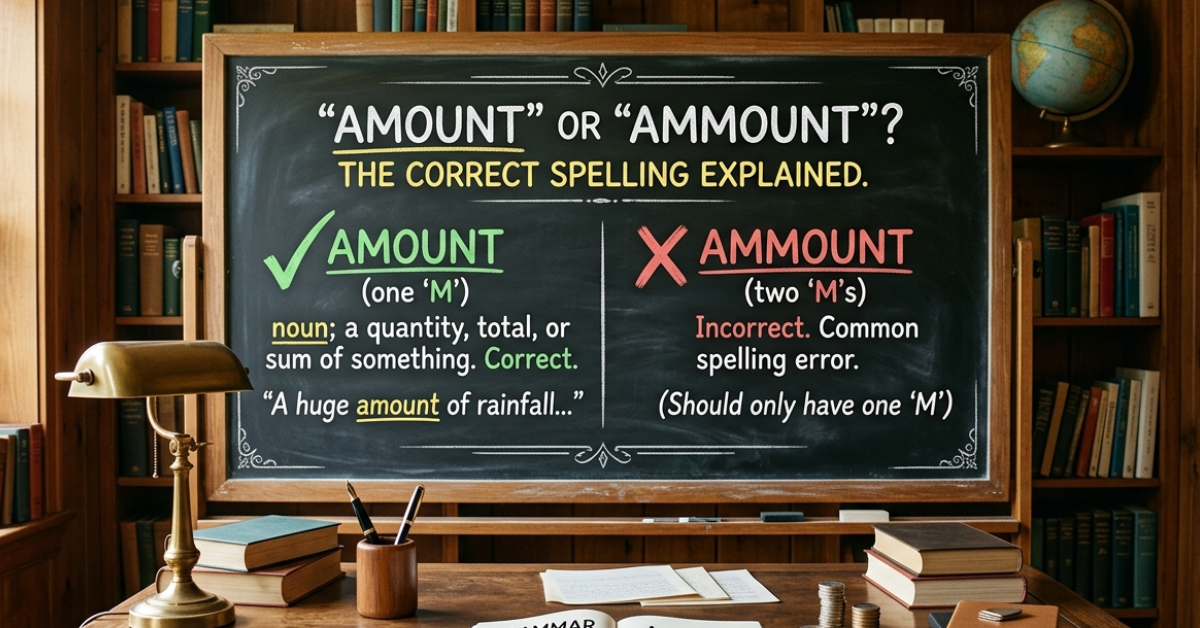
The correct spelling is amount.
Ammount is a common misspelling. It looks believable because many English words double consonants, but in this case, the extra m does not belong there.
Why this mistake happens
People often write ammount because:
- The word sounds like it could have a doubled consonant
- Typing quickly leads to extra letters
- Spellcheck may not always catch it in casual writing
- The pattern feels similar to words like “account” or “summon,” which can be confusing at a glance
The key thing to remember is simple: amount has one m in the middle.
Meaning of “Amount”
The word amount refers to a quantity or total.
It can be used in many contexts, such as:
- Money: “The amount due is $50.”
- Measurement: “A small amount of sugar is enough.”
- Time or effort: “That took a large amount of work.”
- Business records: “The invoice amount is pending.”
So when someone searches for ammount or amount, they are usually trying to confirm both the spelling and the meaning.
Ammount or Amount in Everyday Writing
This spelling mistake can affect more than just casual messages. It can appear in:
- Office emails
- Academic assignments
- Business reports
- Financial statements
- Product descriptions
- Search engine queries
Even though it may seem minor, using the correct spelling makes your writing look more polished and trustworthy.
Example comparison
Incorrect: “Please pay the ammount before Friday.”
Correct: “Please pay the amount before Friday.”
Incorrect: “The total ammount was updated.”
Correct: “The total amount was updated.”
How to Remember the Right Spelling
A simple memory trick is this:
- Amount = a + mount
- Think of it as “a quantity placed on a mount,” with only one m
Another easy method is to remember that the word starts with a and ends with t, with just one m inside.
If you ever hesitate, break the word into sound and shape:
- a-mount
- not a-mmount
That tiny difference helps avoid the mistake.
Common Related Queries People Search
Search engines often show similar phrases because users type them the way they think them:
- ammount or amount
- amount or ammount
- ytd ammount
- what is amount
- correct spelling of amount
These queries all point to the same main concern: spelling confidence. In most cases, the answer is simply that amount is correct, while ammount is incorrect.
What Does “YTD Amount” Mean?
YTD stands for year-to-date.
So YTD amount means the total amount recorded from the beginning of the year up to the current date.
It is widely used in:
- Accounting
- Payroll
- Sales reporting
- Budget tracking
- Financial dashboards
Example
If a company earned $20,000 in January, $15,000 in February, and $10,000 in March, the YTD amount by March would be $45,000.
That is why people sometimes search for ytd ammount when they actually mean YTD amount. The spelling issue is the same: the correct form is amount.
Why Correct Spelling Matters in Professional Writing
Using the right spelling is not just about grammar. It also affects how your message is received.
In business, correct spelling helps you:
- Look more credible
- Avoid confusion
- Communicate clearly
- Present a professional image
- Reduce editing time later
When a client, teacher, or manager sees a typo like ammount, they may notice it immediately, even if the rest of the message is strong.
Practical Tips to Avoid the Error
Here are a few simple ways to stop making this mistake:
- Use spellcheck carefully
Don’t rely on memory alone. Let your writing tool catch the error. - Read the word slowly
Say “a-mount” in your head to avoid adding an extra m. - Search for the correct form once
The correct spelling tends to stick after you verify it. - Proofread financial or formal text twice
Spelling errors in numbers and totals can make documents look careless.
Quick Summary
Here is the simplest way to remember everything:
- Amount is correct
- Ammount is incorrect
- YTD amount means year-to-date total
- The mistake usually comes from fast typing or uncertainty
- Using the right spelling improves clarity and professionalism
FAQs
1. Is it ammount or amount?
The correct spelling is amount. Ammount is a misspelling and should be avoided in formal and informal writing.
2. Why do people write ammount instead of amount?
Most people make the mistake because the word sounds like it could have two m letters. Fast typing and memory errors also cause it.
3. What does amount mean in finance?
In finance, amount usually means a total sum of money, such as an invoice amount, payment amount, or balance amount.
4. What is the correct spelling of YTD amount?
The correct spelling is YTD amount, not ytd ammount. YTD means year-to-date and refers to the total so far in the current year.
5. Is ammount a real word?
No, ammount is not the correct English spelling. The standard word is amount.
6. How can I remember amount spelling?
Think of it as a-mount with one m. That simple pattern helps prevent the extra letter from slipping in.
Conclusion
The difference between ammount or amount may look small, but it matters in writing, business communication, and search intent. The correct spelling is always amount, and the same rule applies when you see phrases like amount or ammount and ytd ammount.
Once you remember that amount has only one m, the confusion disappears. Use the correct spelling consistently, and your writing will look clearer, more professional, and easier to trust.
Author

linguaezone.com@gmail.com
Related Posts

Kill Two Birds With One Stone Alternative: 50 Better Options
- 0
- 1,569 word
Have you ever paused before saying “kill two birds with one stone” because it sounded too violent or simply didn’t fit the...
Read out all
Happy Sabbath Meaning: A Complete Guide to Its Significance
- 0
- 1,632 word
Have you ever received the message “Happy Sabbath” and wondered what it truly means? Is it simply another way of saying “have...
Read out all
I’m So Proud of You in Other Words: 120+ Heartfelt Alternatives
- 0
- 1,562 word
Have you ever wanted to tell someone you’re proud of them but felt like saying “I’m so proud of you” sounded repetitive?...
Read out all
How Do You Spell Happy Anniversary? Correct Spelling Guide
- 0
- 1,221 word
Have you ever paused before writing an anniversary card and wondered, “How do you spell happy anniversary?” You’re not alone. Whether you’re...
Read out all
Waiting for Your Response Email: Best Examples & Tips
- 0
- 1,483 word
Have you ever sent an important email and found yourself wondering whether you should follow up or simply wait? Whether you’re communicating...
Read out all
Great Asset to the Team: Meaning, Examples & Tips
- 0
- 1,494 word
Have you ever wanted to compliment a coworker but struggled to find words that sound professional and sincere? One of the most...
Read out all