
- 0
- 1,333 word
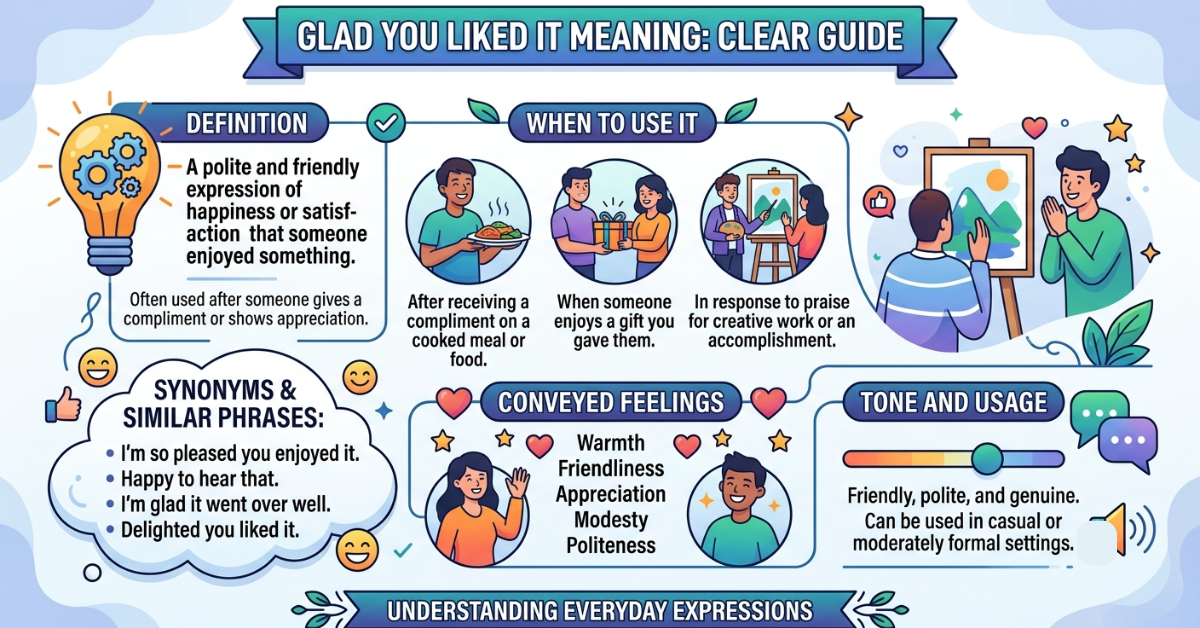
Have you ever sent something to someone and they replied, “Glad you liked it”? It sounds simple, but it can feel a little vague if you are not used to casual English. The phrase glad you liked it meaning is basically about expressing happiness that someone enjoyed, approved of, or appreciated something you shared, gave, or did.
In this guide, we will break down the meaning in plain English, show you how it is used in real conversations, explain the tone behind it, and share similar phrases you can use naturally.
What Does “Glad You Liked It” Mean?
“Glad you liked it” means “I am happy that you enjoyed it” or “I am pleased that it was useful, nice, or appreciated.”
It is a warm, friendly response when someone compliments:
- a gift
- a message
- a meal
- a design
- a photo
- a recommendation
- a service or favor
For example, if you bake cookies for a friend and they say, “These are amazing,” you might reply, “Glad you liked it.” That shows appreciation without sounding too formal.
“I Am Glad You Liked It” Meaning in Simple Words
The phrase i am glad you liked it meaning is almost identical, but a little more complete and slightly warmer. It means:
- I am happy you enjoyed it.
- I feel good that my effort was appreciated.
- I am pleased the result was positive.
This phrase is commonly used in everyday English because it is polite, natural, and easy to say. It works in text messages, face-to-face conversations, emails, and social media replies.
Example:
- Person A: The dinner was delicious.
- Person B: I am glad you liked it.
Here, Person B is expressing happiness that the other person enjoyed the meal.
When Do People Say “Glad You Liked It”?
This phrase is used in many everyday situations. It usually appears after someone gives positive feedback.
Common situations include:
- After giving a gift
“Glad you liked it” shows you are happy the other person appreciated your present. - After sharing food or hospitality
If someone enjoys your cooking, this response feels natural and kind. - After helping someone
It can be used when your advice, support, or effort helped another person. - After sharing creative work
Writers, designers, photographers, and artists often use this phrase after receiving compliments. - After recommending something
If someone likes a movie, restaurant, or product you suggested, this is a friendly reply.
Tone and Feeling Behind the Phrase
“Glad you liked it” usually sounds:
- polite
- friendly
- humble
- casual
- appreciative
It does not sound dramatic or emotional. Instead, it gives a simple and genuine response. That is why it is so common in daily English.
Depending on context, it can also sound:
- warm and thoughtful
- professional but relaxed
- supportive and kind
Is “Glad You Liked It” Formal or Informal?
It is mostly neutral, which means it can fit both casual and semi-formal situations.
Informal use:
- Friends
- Family
- Text messages
- Social media comments
Semi-formal use:
- Client communication
- Customer service
- Emails
- Workplace conversations
For example, a designer might say, “I’m glad you liked it” after a client approves a concept. It feels professional without being stiff.
Examples of “Glad You Liked It” in Sentences
Here are a few natural examples:
- “I’m glad you liked it. I worked hard on it.”
- “Glad you liked it! I was hoping it would be useful.”
- “I’m so glad you liked it.”
- “Glad you liked it, that means a lot.”
- “I’m happy you liked it.”
These examples all carry the same basic meaning, but the feeling changes slightly depending on the wording.
Similar Phrases You Can Use
If you do not want to repeat the same phrase every time, here are some natural alternatives:
- I’m happy you liked it
- That’s great to hear
- I’m pleased you enjoyed it
- It means a lot that you liked it
- I’m so happy it worked out
- I’m glad it was helpful
- That makes me really happy
These alternatives are useful when you want your response to sound fresh and natural.
Difference Between “Glad You Liked It” and “I’m Glad You Liked It”
Both phrases mean almost the same thing, but there is a small difference in style.
“Glad you liked it”
This is shorter and more casual. It is often used in text messages or quick replies.
“I’m glad you liked it”
This sounds a little fuller and warmer. It is slightly more personal and works well in conversations, emails, and polite responses.
So, if you want to sound more relaxed, use the shorter version. If you want to sound a little more thoughtful, use the longer one.
How to Reply to “Glad You Liked It”
If someone says this to you, you can respond politely with:
- “Thank you!”
- “It really was great.”
- “I did, thank you for sharing.”
- “Absolutely, I loved it.”
- “Of course, it was wonderful.”
A simple thank-you is often enough. The goal is to keep the conversation friendly and natural.
Practical Tips for Using the Phrase Naturally
Here are a few small tips to make the phrase sound more natural:
- Use it after someone gives positive feedback.
- Keep it short in casual conversations.
- Add a warm follow-up if you want to sound more personal.
- Use “I’m glad you liked it” in situations where you want to sound a bit kinder or fuller.
- Match the tone of the conversation so it does not feel too formal or too flat.
Real-Life Use in Work and Daily Life
This phrase is especially useful because it works in many settings.
A teacher may say it after a student appreciates help with an assignment.
A chef may say it after a guest enjoys a meal.
A freelancer may use it after a client approves a draft.
A friend may say it after you like a thoughtful gift.
That flexibility is what makes glad you liked it meaning worth understanding. It is a small phrase, but it carries politeness, gratitude, and connection.
Key Takeaways
- “Glad you liked it” means you are happy someone enjoyed or appreciated something.
- “I am glad you liked it” is a warmer, fuller version of the same idea.
- The phrase is common in casual, polite, and semi-formal English.
- It is useful after compliments, gifts, help, food, or shared content.
- Simple alternatives can help you sound natural without repeating the same line.
FAQ: Glad You Liked It Meaning
1. What does “glad you liked it” mean?
It means the speaker is happy that you enjoyed or appreciated something they gave, did, or shared. It is a friendly and positive response.
2. Is “I am glad you liked it” correct English?
Yes, it is completely correct. It is a natural phrase used in both spoken and written English.
3. Is “glad you liked it” polite?
Yes, it is polite and warm. It shows appreciation for the other person’s positive reaction.
4. What is another way to say “glad you liked it”?
You can say “I’m happy you liked it,” “That’s great to hear,” or “I’m pleased you enjoyed it.” These all sound natural in conversation.
5. When should I use “glad you liked it”?
Use it after someone compliments your work, enjoys your food, likes your gift, or appreciates something you shared. It fits many everyday situations.
6. Is there a difference between “glad you liked it” and “I’m glad you liked it”?
The meaning is almost the same. The second version sounds slightly warmer and more complete, while the first is shorter and more casual.
Conclusion
The phrase glad you liked it meaning is simple, but it plays an important role in everyday communication. It helps you respond kindly when someone enjoys what you have shared, made, or offered. Whether you say “glad you liked it” or “I’m glad you liked it,” the message stays positive, polite, and appreciative.
Learning small expressions like this makes your English sound more natural and confident. Keep using them in real conversations, and they will quickly become part of your everyday language.
Author

linguaezone.com@gmail.com
Related Posts
I’m Patient: Understanding the Meaning, Mindset, and Power of Patience
- 0
- 1,816 word
I’m Patient: What Does It Really Mean? Have you ever found yourself waiting for something important and realized that getting frustrated will...
Read out all
Do and Not: Understanding the Difference and Using Both Correctly
- 0
- 2,303 words
Introduction: Why “Do and Not” Matters in Everyday Communication Have you ever written a sentence and wondered whether you should use “do,”...
Read out all
Proscribed: Meaning, Definition, Examples, and Correct Usage
- 0
- 2,338 words
Introduction: What Does “Proscribed” Mean? Have you ever come across the word proscribed and wondered what it actually means? It is one...
Read out all
Imput: Meaning, Common Usage, and Why People Often Use It Instead of Input
- 0
- 1,592 word
What Does Imput Mean? Have you ever typed “imput” instead of “input” and wondered whether you made a mistake? You are certainly...
Read out all
Emaculate vs Demasculate: Understanding the Difference and Correct Usage
- 0
- 2,156 words
Introduction: Emaculate vs Demasculate Have you ever come across the words emasculate and demasculate and wondered whether they mean the same thing?...
Read out all
What Does LYK Mean in Text? Simple Guide
- 0
- 1,029 word
Ever received a message that says “LYK” and paused for a second? You are not alone. If you have been wondering what...
Read out all