
Uncollectible vs Uncollectable: Key Differences Explained
- 0
- 754 words
Have you ever come across the terms “uncollectible” and “uncollectable” and wondered if they mean the same thing—or if one is wrong? This confusion is more common than you might think, especially in writing, accounting, and formal documentation.
The debate around uncollectible vs uncollectable often leaves writers, students, and professionals unsure about which spelling to use. The truth is, both words exist, but their usage depends on context, region, and style conventions.
In this article, you’ll learn the exact difference between the two spellings, how they are used in accounting and everyday English, and when to choose one over the other.
Understanding Uncollectible vs Uncollectable in Simple Terms
At their core, uncollectible vs uncollectable refers to something that cannot be collected or recovered—most commonly debts or payments.
Both words are adjectives derived from the verb “collect,” meaning to gather or recover money owed.
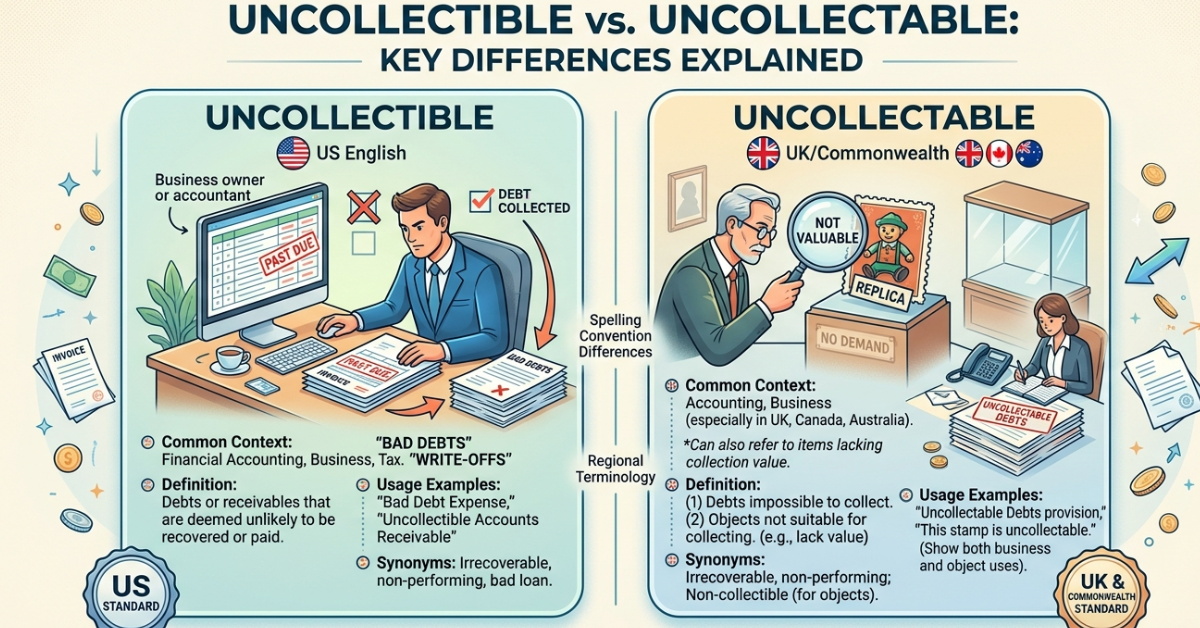
- Uncollectible: More commonly used in American English, especially in finance and accounting
- Uncollectable: More common in British English, though less frequently used in professional accounting contexts
Despite the spelling difference, both terms carry the same meaning.
The Accounting Perspective: Why It Matters
In accounting, the distinction becomes more about standard usage than meaning. The concept of uncollectible vs uncollectable is crucial in financial reporting, especially when dealing with bad debts.
Organizations like the Financial Accounting Standards Board (FASB) and the International Financial Reporting Standards (IFRS) use the term “uncollectible” more frequently in official documentation.
Key accounting usage:
- Accounts receivable deemed unlikely to be recovered are marked as uncollectible
- Businesses record this as “bad debt expense”
- Helps present realistic financial statements
So in professional finance, uncollectible vs uncollectable is less about meaning and more about standardized terminology.
Spelling Differences: US vs UK English
Language variation plays a major role in the uncollectible vs uncollectable debate.
American English
- Preferred spelling: Uncollectible
- Common in business, accounting, and legal documents
British English
- Preferred spelling: Uncollectable
- Used in general writing but less in financial reporting
Even though both are correct, consistency is key. Mixing both in the same document can look unprofessional.
Real-World Examples of Usage
Understanding uncollectible vs uncollectable becomes easier with examples:
In Accounting:
- The company wrote off several uncollectible accounts due to customer bankruptcy.
In General English:
- The antique dealer considered the damaged item uncollectable due to its condition.
Both sentences are correct; the difference lies only in regional preference.
When to Use Which Term
Choosing between uncollectible vs uncollectable depends on your audience and purpose.
Use “uncollectible” when:
- Writing financial reports
- Using American English
- Following corporate or academic standards
Use “uncollectable” when:
- Writing British English content
- Working in informal or general writing contexts
- No strict accounting standard applies
Common Mistakes People Make
Many writers misunderstand uncollectible vs uncollectable, leading to inconsistency.
Frequent errors:
- Mixing both spellings in one document
- Assuming one is incorrect (both are valid)
- Using “uncollectable” in formal accounting reports where “uncollectible” is preferred
Pro tip:
Always check your style guide (APA, Chicago, corporate manual) before finalizing usage.
Why This Small Difference Matters
At first glance, uncollectible vs uncollectable may seem like a minor spelling issue, but in professional communication, precision matters.
In finance, using the correct term ensures:
- Clear reporting standards
- Better compliance with accounting frameworks
- Improved readability for stakeholders
In writing, it maintains consistency and credibility.
Key Takeaways
- Both words mean “not able to be collected”
- “Uncollectible” is standard in American finance and accounting
- “Uncollectable” is more common in British English
- Context and consistency matter more than correctness alone
FAQ: Uncollectible vs Uncollectable
1. What is the difference between uncollectible vs uncollectable?
There is no difference in meaning. The difference lies only in spelling and regional usage.
2. Is uncollectible or uncollectable correct?
Both are correct, but “uncollectible” is preferred in American English and accounting.
3. Which term is used in accounting?
Most financial standards and professionals use “uncollectible,” especially in bad debt reporting.
4. Can I use uncollectable in formal writing?
Yes, but only if you are following British English conventions consistently.
5. Why are there two spellings?
English variations evolved over time between American and British usage, leading to both forms.
Conclusion
The debate over uncollectible vs uncollectable is less about right or wrong and more about context. Both terms describe the same financial or linguistic concept, but your choice should depend on audience, region, and professional standards.
If you stay consistent and understand when to use each, you’ll avoid confusion and communicate more clearly—especially in formal or financial writing.
In the end, mastering small distinctions like this improves both your writing precision and professional credibility.
Author
khatrialiraza31@gmail.com
Related Posts
Kill Two Birds With One Stone Alternative: 50 Better Options
- 0
- 1,569 word
Have you ever paused before saying “kill two birds with one stone” because it sounded too violent or simply didn’t fit the...
Read out all

Happy Sabbath Meaning: A Complete Guide to Its Significance
- 0
- 1,632 word
Have you ever received the message “Happy Sabbath” and wondered what it truly means? Is it simply another way of saying “have...
Read out all

I’m So Proud of You in Other Words: 120+ Heartfelt Alternatives
- 0
- 1,562 word
Have you ever wanted to tell someone you’re proud of them but felt like saying “I’m so proud of you” sounded repetitive?...
Read out all

How Do You Spell Happy Anniversary? Correct Spelling Guide
- 0
- 1,221 word
Have you ever paused before writing an anniversary card and wondered, “How do you spell happy anniversary?” You’re not alone. Whether you’re...
Read out all

Waiting for Your Response Email: Best Examples & Tips
- 0
- 1,483 word
Have you ever sent an important email and found yourself wondering whether you should follow up or simply wait? Whether you’re communicating...
Read out all

Great Asset to the Team: Meaning, Examples & Tips
- 0
- 1,494 word
Have you ever wanted to compliment a coworker but struggled to find words that sound professional and sincere? One of the most...
Read out all