
- 0
- 923 words
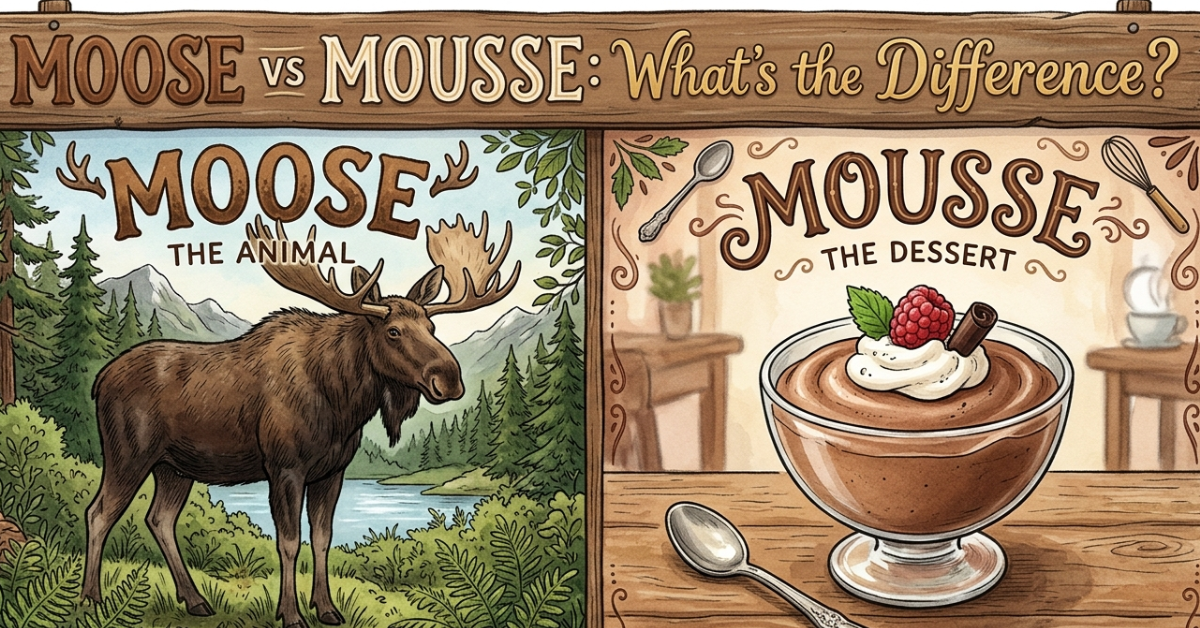
Have you ever stopped mid-sentence wondering whether it’s moose vs mousse? You’re not alone. These two words may sound somewhat similar, but they couldn’t be more different in meaning. One belongs deep in the forest, while the other is often found on dessert menus or beauty shelves.
In this guide, we’ll break down the differences in spelling, pronunciation, meaning, and usage so you never confuse them again. Whether you’re writing, speaking, or simply curious about language quirks, understanding these commonly mixed-up words is easier than you think.
What Is a Moose?
A moose is a large wild animal that belongs to the deer family. Known for its massive size and broad antlers, it is commonly found in colder regions like Canada, Alaska, Northern Europe, and parts of the northern United States.
Key Facts About a Moose
- It is the largest species in the deer family.
- Male moose grow huge antlers.
- They usually live near forests and wetlands.
- Moose are herbivores, meaning they eat plants.
People often recognize this animal for its towering height and long legs, which help it move through deep snow and marshy landscapes.
Example Sentences
- We spotted a moose near the lake during our road trip.
- A moose can weigh more than 1,000 pounds.
Because the word refers to an animal, it’s usually used in wildlife, travel, or nature-related discussions.
What Is Mousse?
Mousse is a French-derived word with two completely different meanings depending on context.
1. Mousse as a Dessert
The most common meaning is a light, fluffy dessert made with ingredients such as chocolate, cream, eggs, or fruit.
Popular types include:
- Chocolate mousse
- Strawberry mousse
- Lemon mousse
- Coffee-flavored mousse
Its airy texture makes it a favorite dessert in restaurants and home kitchens.
2. Mousse as a Hair Product
The second meaning refers to a styling foam used to add volume, texture, or hold to hair.
Hair mousse is especially popular for:
- Creating curls
- Adding body to thin hair
- Reducing frizz
- Styling waves
Example Sentences
- I ordered chocolate mousse after dinner.
- She applied mousse to her hair before styling it.
Moose vs Mousse: Main Differences
Although these words may seem close in spelling, their meanings are completely unrelated.
| Feature | Moose | Mousse |
| Meaning | A large deer-like animal | A fluffy dessert or hair product |
| Origin | Native wildlife term | French word |
| Pronunciation | “Moos” | “Moose” (same sound in English) |
| Category | Animal | Food/Beauty |
| Example | A moose crossed the road | Chocolate mousse tastes rich |
The biggest reason people confuse these words is pronunciation. In English, both are spoken almost identically.
Why Do People Confuse Moose and Mousse?
There are several reasons these words often get mixed up.
1. They Sound the Same
These are examples of homophones, words that sound alike but have different meanings and spellings.
For instance:
- Moose → forest animal
- Mousse → dessert or styling product
2. Similar Spelling
The only noticeable spelling difference is the extra “s” in mousse, making it easy to mistype.
3. Autocorrect and Fast Typing
Sometimes spelling tools or quick typing habits accidentally replace one word with the other, especially in informal writing.
Imagine writing:
“I saw a giant chocolate mousse in the forest.”
That sentence suddenly becomes very confusing.
How to Remember the Difference
A simple memory trick can help:
Think of the Extra “S”
The extra “s” in mousse can remind you of:
- Sweet dessert
- Salon hair styling product
Meanwhile, moose stays simple—just the giant animal in the woods.
Another easy reminder:
Moose = nature
Mousse = beauty or dessert
Common Mistakes in Usage
Here are some examples of incorrect and correct usage.
Incorrect:
I used moose in my hair.
Correct:
I used mousse in my hair.
Incorrect:
We photographed a giant mousse in Canada.
Correct:
We photographed a giant moose in Canada.
Paying attention to context usually makes the right choice obvious.
Language and Pronunciation Explained
Even though both words sound alike in English, their origins are very different.
Moose comes from Indigenous North American languages describing the animal.
Mousse comes from French, where it means “foam” or “froth,” which makes sense given both its fluffy dessert texture and foamy hair product form.
This difference in origin explains why the spelling looks unusual despite the similar pronunciation.
When Should You Use Each Word?
Use moose when talking about:
- Wildlife
- Forest animals
- Nature documentaries
- Travel in northern regions
Use mousse when talking about:
- Desserts
- Cooking and baking
- Hair styling
- Beauty products
Context matters more than anything else.
FAQs
Is mousse and moose pronounced the same?
Yes, in English they are generally pronounced the same way, which is why many people confuse them.
Is mousse only a dessert?
No. It can also refer to a hair styling foam used to add texture and volume.
What type of animal is a moose?
A moose is the largest member of the deer family and lives mainly in colder climates.
Why does mousse have an extra “s”?
The spelling comes from French origins, where the word means foam or froth.
Can a sentence contain both words?
Absolutely. For example:
“After spotting a moose on our trip, we celebrated with chocolate mousse.”
Conclusion
Understanding the difference between moose vs mousse is surprisingly simple once you know the context. One is a giant animal roaming forests, while the other appears either on dessert menus or in hair-care routines. Despite sounding nearly identical, their meanings are worlds apart.
The next time you write either word, pause for context: Are you talking about wildlife or something fluffy and delicious—or maybe a styling product? Getting it right becomes second nature once you remember the distinction.
Author

linguaezone.com@gmail.com
Related Posts
Kill Two Birds With One Stone Alternative: 50 Better Options
- 0
- 1,569 word
Have you ever paused before saying “kill two birds with one stone” because it sounded too violent or simply didn’t fit the...
Read out all
Happy Sabbath Meaning: A Complete Guide to Its Significance
- 0
- 1,632 word
Have you ever received the message “Happy Sabbath” and wondered what it truly means? Is it simply another way of saying “have...
Read out all
I’m So Proud of You in Other Words: 120+ Heartfelt Alternatives
- 0
- 1,562 word
Have you ever wanted to tell someone you’re proud of them but felt like saying “I’m so proud of you” sounded repetitive?...
Read out all
How Do You Spell Happy Anniversary? Correct Spelling Guide
- 0
- 1,221 word
Have you ever paused before writing an anniversary card and wondered, “How do you spell happy anniversary?” You’re not alone. Whether you’re...
Read out all
Waiting for Your Response Email: Best Examples & Tips
- 0
- 1,483 word
Have you ever sent an important email and found yourself wondering whether you should follow up or simply wait? Whether you’re communicating...
Read out all
Great Asset to the Team: Meaning, Examples & Tips
- 0
- 1,494 word
Have you ever wanted to compliment a coworker but struggled to find words that sound professional and sincere? One of the most...
Read out all