When writing emails, messages, or formal documents, the phrase “I hope” is often used to sound polite and considerate. However, repeating it too often can make your writing feel repetitive. That’s where finding the right i hope synonym becomes useful.
In this guide, we’ll explore natural, professional, and context-appropriate alternatives to “I hope,” especially for email and formal communication. Whether you’re writing to a colleague, client, or professor, using the right phrasing can instantly improve your tone and impact.
Understanding “I Hope Synonym” in Writing
The term i hope synonym refers to alternative phrases that express goodwill, expectation, or positive intention without directly using “I hope.” These alternatives help your writing sound more polished and varied.
Some common intentions behind “I hope” include:
- Expressing expectation
- Showing politeness
- Wishing something positive
- Softening a statement
Instead of repeating the same phrase, using varied expressions can make your communication more engaging and professional.
Best “I Hope Synonym” Options for Everyday Use
Here are some natural alternatives you can use depending on context:
1. I trust
- “I trust you are doing well.”
- Works well in semi-formal communication.
2. I believe
- “I believe everything is going smoothly.”
- Slightly more confident tone.
3. I assume
- “I assume you have received the documents.”
- Useful in professional follow-ups.
4. I expect
- “I expect to hear from you soon.”
- Direct and formal.
5. I’m confident
- “I’m confident this will meet your expectations.”
- Positive and assertive.
These alternatives can replace the basic i hope synonym usage in most daily writing situations.
i hope synonym formal: Professional Alternatives
When writing in business or academic settings, tone matters a lot. Choosing the right i hope synonym formal expression helps maintain respect and professionalism.
Here are some refined options:
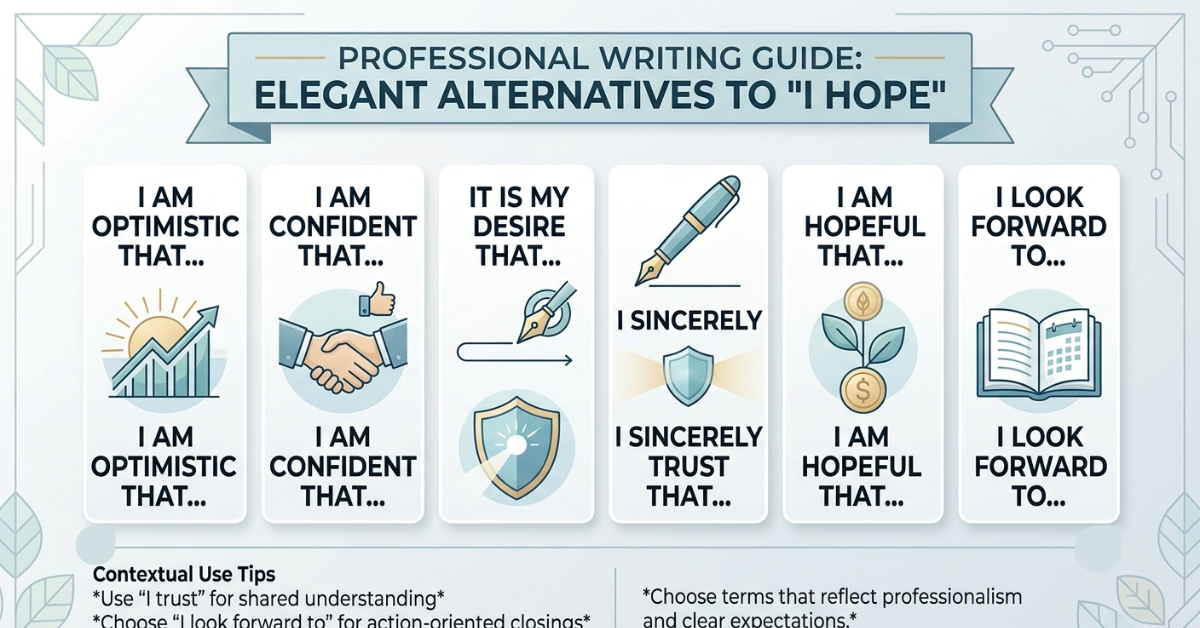
- “I trust this message finds you well.”
- “I am confident that…”
- “It is my expectation that…”
- “I would appreciate your response.”
- “I look forward to your feedback.”
These phrases are commonly used in professional emails, reports, and official correspondence.
i hope synonym email: Better Email Expressions
Emails often start or end with “I hope,” but using varied phrases can make your communication sound more polished. Here are better options for i hope synonym email usage:
Email Opening Alternatives:
- “I trust you are doing well.”
- “I hope this email finds you well.” (classic but can be varied)
- “I hope your week is going smoothly.”
Email Closing Alternatives:
- “Looking forward to your response.”
- “I await your feedback.”
- “Thank you in advance for your time.”
Using these variations helps your emails feel more natural and less repetitive.
Quick List of Useful Synonyms
Here’s a simple breakdown for easy reference:
- I trust
- I believe
- I expect
- I’m confident
- I look forward to
- I assume
- I anticipate
These can replace the basic i hope synonym depending on tone and context.
Common Mistakes to Avoid
When replacing “I hope,” avoid:
- Overusing formal phrases in casual messages
- Using overly complex wording
- Sounding too robotic or unnatural
- Repeating the same alternative too often
The goal is to sound clear, polite, and human—not overly stiff.
FAQs
1. What is the best i hope synonym for formal writing?
“I trust” and “I am confident” are commonly used in formal writing.
2. Can I use i hope synonym email in professional communication?
Yes, but choose polite alternatives like “I trust this email finds you well.”
3. What is a simple replacement for “I hope”?
“I believe” or “I expect” are simple and natural replacements.
4. Is it okay to avoid “I hope” completely?
Yes, but it depends on context. Sometimes “I hope” is still the most natural choice.
Conclusion
Using the right i hope synonym can significantly improve the clarity and professionalism of your writing. Whether you are crafting a casual message or a formal business email, choosing the right expression helps you communicate more effectively.
From i hope synonym formal alternatives to i hope synonym email variations, the key is to match your tone with the situation. Instead of repeating the same phrase, experiment with different options to keep your writing fresh, natural, and engaging.
If you regularly write emails or formal documents, practicing these alternatives will quickly improve your communication style and confidence.