
- 0
- 1,407 word
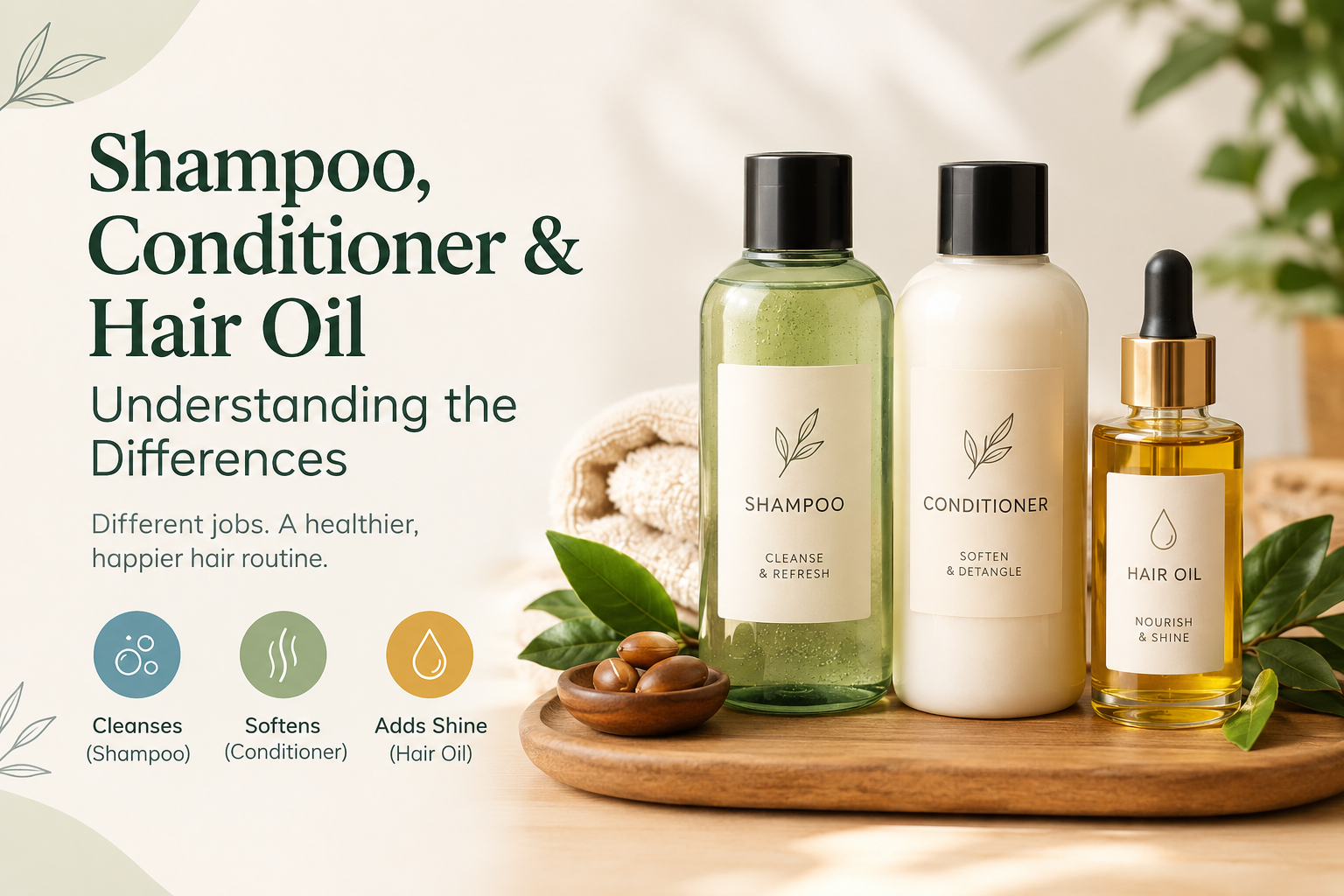
Shampoo, conditioner, and hair oil each play a different role in a haircare routine. Shampoo cleanses the scalp and hair, conditioner makes hair softer and easier to manage, and hair oil helps reduce friction while adding smoothness and shine.
Understanding how these products work can help you choose the right ones for your hair type, avoid unnecessary buildup, and keep your routine simple.
Shampoo, Conditioner & Hair Oil: Key Differences
The main difference between these three products is their purpose. Shampoo cleanses, conditioner improves softness and manageability, and hair oil provides lubrication and helps smooth the hair.
Shampoo
Shampoo cleanses the scalp and hair by removing excess oil, dirt, sweat, and product buildup. Its cleansing ingredients help lift away unwanted residue, leaving your scalp and hair clean.
However, using a shampoo that is too harsh or washing too frequently for your hair type can leave your hair feeling dry.
How to use shampoo:
- Wet your hair and scalp thoroughly.
- Apply an appropriate amount of shampoo to your scalp.
- Gently massage with your fingertips.
- Rinse thoroughly.
Focus on cleansing your scalp rather than scrubbing the lengths of your hair. Let the shampoo run through your hair as you rinse. If you have an oily scalp or frequently use styling products, you may need to adjust how often you wash your hair.
Conditioner
Conditioner helps soften hair, reduce friction and static, and make detangling easier. It can be particularly useful for dry, curly, frizzy, chemically treated, or damaged hair.
Although conditioner improves the feel and appearance of hair, it cannot permanently reverse structural damage.
How to use conditioner:
- After shampooing, gently squeeze excess water from your hair.
- Apply conditioner mainly to the mid-lengths and ends.
- Leave it on for the recommended time.
- Rinse thoroughly, unless you are using a leave-in conditioner.
Choose a lightweight conditioner if your hair is fine or easily weighed down. Thicker, curlier, or drier hair may benefit from a richer formula.
If you have an oily scalp, avoid applying heavy conditioner directly to your roots unless the product is designed for scalp use.
Hair Oil
Hair oil helps lubricate the strands, reduce friction, smooth rough ends, and add shine. Depending on the type of oil, it can be used as a pre-wash treatment or applied sparingly to damp or dry hair.
Different oils offer different benefits. For example, coconut oil has evidence supporting its ability to reduce protein loss from hair under certain conditions. Other oils may primarily coat the hair and improve its smoothness.
Hair oil does not replace water-based hydration. It may help reduce moisture loss, but more oil will not necessarily hydrate your hair better.
How to use hair oil:
- Apply an appropriate amount before washing if you prefer pre-wash oiling.
- Use a few drops on dry ends to improve smoothness and shine.
- Start with a small amount and add more only if needed.
- Avoid applying excessive oil to an already oily scalp.
Always follow the product instructions. If you have a sensitive or irritated scalp, use fragranced oils and products containing essential oils with caution.
Shampoo vs Conditioner vs Hair Oil: A Quick Comparison
| Feature | Shampoo | Conditioner | Hair Oil |
| Main purpose | Cleanses | Softens and detangles | Lubricates and adds shine |
| Main application | Scalp and roots | Mid-lengths and ends | Scalp or hair lengths, depending on use |
| Key benefits | Removes dirt and excess oil | Improves softness and manageability | Helps reduce friction and smooth hair |
| Typical use | During washing | After shampooing | Before washing or as needed afterward |
| Best suited for | Cleansing the scalp | Dry, tangled, or frizzy hair | Dry ends, roughness, and dullness |
- Each product serves a different purpose, so choosing the right combination depends on your hair and scalp needs.
Can Hair Oil Replace Conditioner?
Generally, no. Hair oil and conditioner work differently.
Conditioner contains ingredients that help smooth the hair surface, improve detangling, and make strands easier to manage. Hair oil can also reduce friction and improve smoothness, but it may not provide the same conditioning benefits.
Likewise, conditioner does not replace shampoo when you need to remove excess oil, sweat, dirt, or styling-product buildup.
For most people, shampoo and conditioner form the foundation of a basic haircare routine. Hair oil can be added when extra smoothness or lubrication is needed.
How to Use Shampoo, Conditioner, and Hair Oil
A simple haircare routine usually follows these steps:
Step 1: Shampoo your scalp. Choose a shampoo suited to your scalp and hair type. Massage gently and rinse thoroughly.
Step 2: Apply conditioner. Focus on the mid-lengths and ends to improve softness and detangling. Rinse according to the product instructions.
Step 3: Apply hair oil if needed. Use a small amount on damp or dry hair to smooth the strands and add shine.
You can also use hair oil before shampooing as a pre-wash treatment. This may help reduce friction during washing, depending on the oil and your hair type.
You do not need to use hair oil after every wash. If you have fine hair or an oily scalp, occasional use or a few drops on the ends may be enough.
Which Products Should You Use for Your Hair Type?
The best routine depends on your hair texture, scalp condition, and styling habits.
Oily hair: Choose a shampoo that cleanses effectively without leaving your hair excessively dry. Use a lightweight conditioner on the ends and avoid heavy oil application near the roots.
Dry or frizzy hair: Consider a gentle shampoo, a conditioner that improves detangling, and a small amount of hair oil to smooth dry ends.
Thick or curly hair: Conditioner can make detangling easier. A richer formula may be helpful if your hair needs more conditioning.
Fine hair: Choose lightweight products and use conditioner and oil sparingly. Heavy formulas can weigh your hair down and make it look greasy.
Dry or sensitive scalp: Choose products carefully and avoid assuming that every oil will help your scalp. If you experience persistent itching, redness, flaking, or irritation, consult a dermatologist.
If you want to explore products suited to different haircare needs, browse haircare products for different hair types.
Common Haircare Mistakes to Avoid
Even suitable products may not deliver the results you want if you use them incorrectly. Here are some common mistakes to avoid:
- Using too much shampoo: Excessive cleansing can leave some hair types feeling dry. Adjust the amount and frequency to suit your needs.
- Skipping conditioner: Hair may become harder to detangle and manage, particularly if it is dry, curly, or damaged.
- Applying too much hair oil: Excessive oil can make your hair greasy and contribute to buildup.
- Expecting oil to repair split ends permanently: Oil may temporarily smooth the appearance of split ends, but it cannot permanently repair them.
- Ignoring your scalp condition: Consider whether your scalp is oily, dry, or sensitive when choosing haircare products.
A simple routine with suitable products is often more effective than using too many products without a clear purpose.
Frequently Asked Questions
1. Should I use shampoo instead of conditioner?
No. Shampoo removes dirt, excess oil, and product buildup, while conditioner helps soften hair and improve detangling. They serve different purposes, and many people benefit from using both.
2. Should I apply hair oil before or after shampooing?
Both approaches can work. Applying oil before shampooing may help reduce friction during washing, while a small amount afterward can smooth the hair and add shine. Follow the instructions for your chosen product.
3. Can I use shampoo, conditioner, and hair oil every day?
It depends on your scalp, hair type, and lifestyle. Shampoo frequency should suit your cleansing needs, and conditioner can be used after washing when needed. Hair oil does not have to be applied daily.
4. Does hair oil help hair growth?
Some oils can help reduce friction and breakage, but that does not mean all hair oils stimulate new growth or treat hair loss. If you experience sudden or persistent hair loss, consult a healthcare professional.
5. Can I use conditioner and hair oil together?
Yes. Conditioner helps improve softness and detangling, while hair oil can add smoothness and shine. If your hair feels rough or tangles easily after washing, conditioner may be particularly beneficial.
Final Thoughts
Shampoo, conditioner, and hair oil each have a different role in haircare. Shampoo cleanses the scalp and hair, conditioner improves softness and manageability, and hair oil helps reduce friction and add shine.
Focus on what your hair and scalp actually need. Start with a suitable shampoo and conditioner, then add hair oil when it provides an extra benefit. The right combination can help keep your hair clean, smooth, and easier to manage without making your routine unnecessarily complicated.
Author

linguaezone.com@gmail.com
Related Posts

LK210: Features, Uses, Benefits, and Everything You Need to Know
- 0
- 2,340 words
Technology continues to make everyday life more convenient, especially when it comes to vehicle security and location tracking. GPS tracking devices have...
Read out all
Hair Growth Tablets for Women: Biotin vs Collagen
- 0
- 1,041 word
In order for hair to thrive, women need certain essential nutrients. Biotin and collagen are among the most common hair supplements available,...
Read out all
4 Habits That Strengthen Your Teeth Over Time
- 0
- 1,136 word
You brush when you remember, you try to avoid too much sugar, and you hope that is enough. A lot of people...
Read out all
How Detailed Lumber Quantities Help Reduce Construction Waste and Overordering
- 0
- 2,138 words
Head on a Friday afternoon to any home site and you’ll find the same scene. A stack of offcuts is next to...
Read out all
Shisha Delivery Dubai: Enjoy Premium Shisha at Your Doorstep
- 0
- 2,506 words
Looking for convenient Shisha Delivery Dubai services? Enjoy the convenience of ordering shisha directly to your doorstep, whether you are relaxing at...
Read out all
5 Dental Cosmetic Enhancements That Pair Well With Regular Dental Checkups
- 0
- 1,220 word
You brush, you floss when you can, and you still catch yourself hiding your smile in photos or covering your mouth when...
Read out all