
×
Sore vs Soar: Meaning, Difference & Easy Guide
In

Ever found yourself pausing while writing a sentence, wondering whether it should be “sore” or “soar”? You’re not alone. The confusion between sore vs soar is very common because these two words sound exactly the same but mean completely different things.

In this guide, we’ll break it down in a simple, practical way so you’ll never mix them up again. By the end, you’ll clearly understand how to use both words correctly in everyday writing and speech.

What Does “Sore” Mean? (Pain or Discomfort)

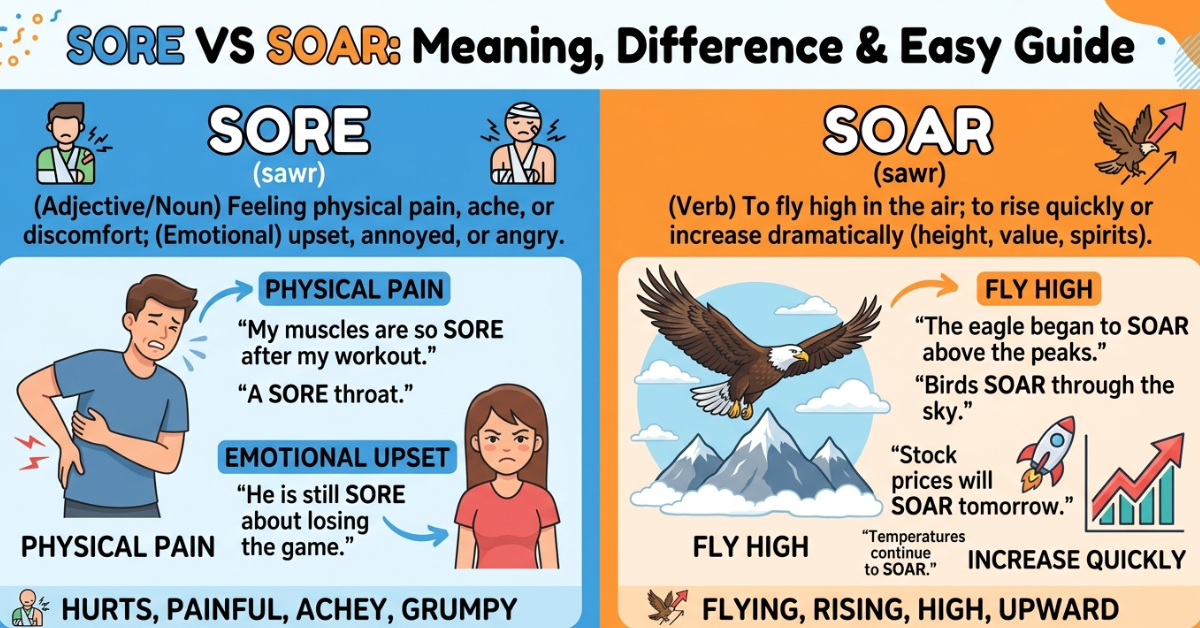
The word sore is usually related to physical pain, discomfort, or irritation. It can describe how your body feels or even emotional hurt in some contexts.

Common meanings of “sore”:

  • A painful or tender body part
  • Muscle pain after exercise
  • Emotional hurt or upset feelings

Examples of “sore” in sentences:

  • My legs are sore after yesterday’s workout.
  • She has a sore throat and can’t speak properly.
  • He felt sore after being ignored by his friends.

 Think of “sore” as something that hurts or feels uncomfortable.

What Does “Soar” Mean? (To Rise or Fly High)

On the other hand, soar has a completely different meaning. It refers to rising, flying high, or increasing quickly.

Common meanings of “soar”:

  • A bird flying high in the sky
  • Something increasing rapidly (prices, success, etc.)
  • Moving upward with strength or freedom

Examples of “soar” in sentences:

  • The eagle can soar above the mountains.
  • Gas prices continue to soar this year.
  • Her confidence began to soar after success.

 Think of “soar” as something going up—literally or figuratively.

Sore vs Soar: Key Differences Explained

Understanding sore vs soar becomes much easier when you compare them side by side.

Feature Sore Soar
Meaning Pain or discomfort To rise or fly high
Type Adjective (mostly) Verb
Feeling Negative (pain) Positive (growth, freedom)
Example sore muscles birds soar

Simple trick to remember:

  • Sore = pain (ouch!)
  • Soar = sky (upward movement)

Common Confusion Between Sore vs Soar

People often confuse these words because:

  • They are homophones (sound the same)
  • They have completely unrelated meanings
  • Spelling differences are small but impactful

Quick memory tip:

Imagine your body saying “ouch” for sore and a bird flying upward for soar. This mental picture helps lock in the difference instantly.

Real-Life Usage Examples

Here are some practical sentences showing sore vs soar in real-life context:

  • After running a marathon, my feet were very sore.
  • The company’s profits began to soar after the new product launch.
  • She has a sore back from sitting too long.
  • Hot air balloons soar into the sky during festivals.

Why Learning Homophones Matters

Understanding words like sore vs soar is important because:

  • It improves writing accuracy
  • Helps avoid embarrassing spelling mistakes
  • Strengthens vocabulary and communication skills
  • Makes your English sound more natural and professional

Even small differences in spelling can completely change meaning, which is why mastering homophones is so useful.

Easy Memory Hacks to Never Confuse Them Again

Try these simple tricks:

1. Associate “Sore” with Pain

Think of:

  • Sore throat
  • Sore muscles
  • Sore injury

2. Associate “Soar” with Sky

Think of:

  • Birds soaring
  • Airplanes soaring
  • Dreams soaring high

3. Visual Trick

  • Sore = Bandage (injury)
  • Soar = Wings (flight)

Common Mistakes to Avoid

When learning sore vs soar, people often:

  • Spell “soar” as “sore” in sentences about flying or rising
  • Use “soar” when describing pain (incorrect)
  • Confuse meanings in exams or professional writing

A quick proofreading habit can easily fix this.

FAQs About Sore vs Soar

1. What is the main difference between sore vs soar?

“Sore” refers to pain or discomfort, while “soar” means to rise or fly high.

2. Are sore and soar pronounced the same?

Yes, they are homophones, meaning they sound identical but have different meanings.

3. Can “sore” describe emotions?

Yes, it can sometimes describe emotional hurt or feeling upset.

4. What are examples of soar in daily life?

Birds flying, prices increasing, or success growing are common examples.

5. How can I remember sore vs soar easily?

Link “sore” with pain and “soar” with sky or flying upward.

Conclusion

The confusion between sore vs soar is common, but once you understand their meanings, it becomes easy to remember. One represents pain and discomfort, while the other represents rising and flying high.

Next time you write, just pause for a second and ask yourself: Is this about pain or about going upward? That simple check will help you choose the correct word every time.

If you found this guide helpful, keep practicing with more homophones to strengthen your English skills even further.

Leave a Reply

Your email address will not be published. Required fields are marked *

Author

britsx85@gmail.com

Related Posts

Leak vs Leek: Meaning, Difference & Easy Guide
In

Leak vs Leek: Meaning, Difference & Easy Guide

Have you ever seen the words leak and leek and wondered why they look almost identical but mean completely different things? This...

Read out all
Knead vs Need: Meaning, Difference & Usage Guide
In

Knead vs Need: Meaning, Difference & Usage Guide

English can be tricky, especially when two words sound the same but mean completely different things. One such confusing pair is Knead...

Read out all
Jam vs Jamb: Meaning, Difference & Usage Explained
In

Jam vs Jamb: Meaning, Difference & Usage Explained

The confusion around jam vs jamb is more common than you might think, especially among English learners and even native speakers. At...

Read out all
Incite vs Insight: Meaning, Difference & Usage Explained
In

Incite vs Insight: Meaning, Difference & Usage Explained

Have you ever stumbled while writing and wondered whether to use incite vs insight? You’re not alone. These two words sound similar...

Read out all
Idle vs Idol: Meaning, Difference & Usage Guide
In

Idle vs Idol: Meaning, Difference & Usage Guide

The confusion between idle vs idol is more common than you might think, especially in spoken and written English where both words...

Read out all
Hanged vs Hung: Meaning, Grammar & Usage Explained
In

Hanged vs Hung: Meaning, Grammar & Usage Explained

The confusion between hanged vs hung often troubles English learners and even native speakers. Many people mix them up because both forms...

Read out all