
- 0
- 617 words
Have you ever stopped mid-sentence wondering whether it is wierd or weird? You’re not alone. This is one of the most commonly confused spellings in English writing, especially for learners and even native speakers.
The correct spelling is weird, but the confusion around wierd or weird continues to appear in texts, social media posts, and everyday writing. In this article, we’ll break down the correct spelling, meaning, usage, and why this mistake happens so often.
By the end, you’ll never second-guess it again.
What is the Correct Spelling: Wierd or Weird?
Let’s clear it up immediately:
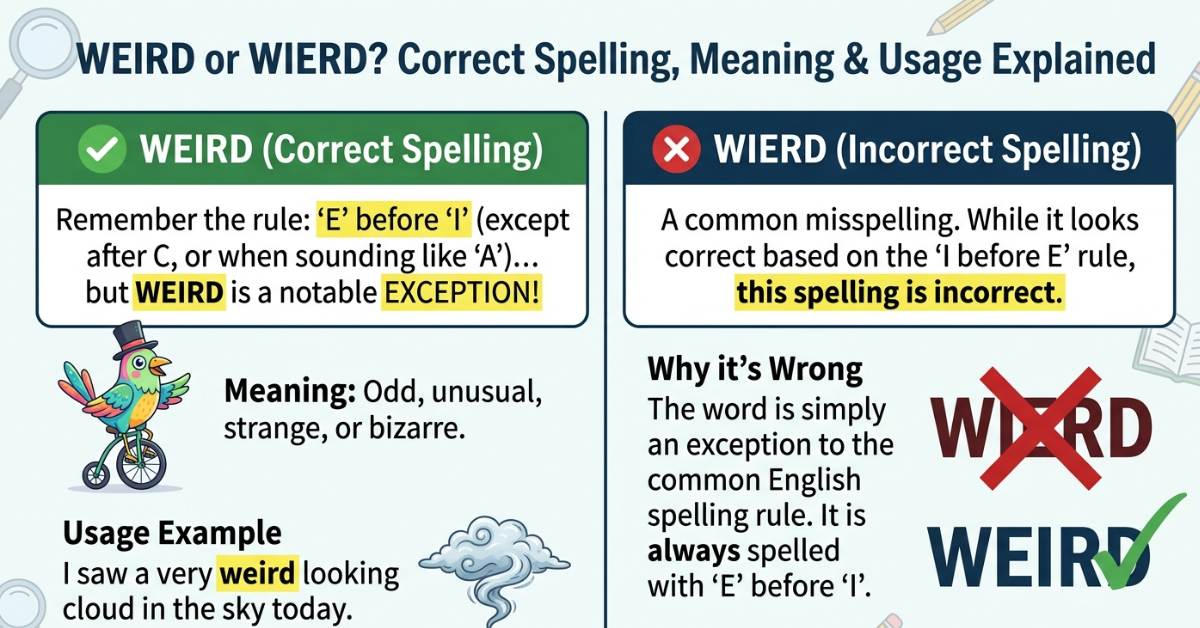
The correct spelling is weird, not “wierd.”
So when you’re deciding between wierd or weird spelling, always choose “weird.”
Why is “wierd” incorrect?
The confusion comes from how English spelling rules sometimes feel inconsistent. However, “weird” follows a specific historical pattern from Old English, where words don’t always match pronunciation logic.
Weird Meaning Explained Simply
To understand its meaning, let’s break it down.
The word weird is used to describe something:
- Strange or unusual
- Unexpected or abnormal
- Hard to explain or understand
- Slightly eerie or odd
Examples of “weird” in sentences:
- That movie had a weird ending.
- He gave me a weird look.
- It feels weird to be back after so long.
So whenever you’re unsure, remember it describes something unusual or out of the ordinary.
Why People Get Confused Between Wierd or Weird
The confusion between spelling usually happens because:
1. Sound vs. spelling mismatch
The word sounds like it could start with “ie,” which tricks the brain.
2. Typing habits
Fast typing often leads to “wierd” being written accidentally.
3. Similar English words
Words like “friend” or “field” influence incorrect spelling guesses.
4. Lack of visual memory
Many people hear the word more often than they see it written.
Easy Trick to Remember the Correct Spelling
Here’s a simple memory trick to avoid confusion:
Think: “We are weird” → W-E-I-R-D
This helps lock in the correct order of letters.
Another tip:
- “Weird” starts with WE (like “we”) not “wi.”
Common Mistakes Related to Weird
People often misuse or misspell the word in different ways:
- Writing “wierd” instead of weird
- Confusing “weird” with “wired”
- Overusing it in casual writing without context
Weird vs Wired
- Weird = strange or unusual
- Wired = connected with wires or feeling energetic
Example:
- That situation was weird, not wired.
Grammar Tip: Using “Weird” Correctly
To use the meaning correctly in writing, remember:
- It is an adjective
- It describes nouns or situations
- It does not change form for tense
Correct usage:
- A weird sound
- A weird situation
- A weird experience
Quick Summary Table
| Word | Correct? | Meaning |
| weird | Yes | Strange or unusual |
| wierd | No | Incorrect spelling |
FAQs About Wierd or Weird
1. Is it wierd or weird?
The correct spelling is weird. “Wierd” is incorrect.
2. What is the meaning of weird?
Weird means something strange, unusual, or difficult to explain.
3. Why do people write wierd instead of weird?
It happens due to typing errors and confusion in letter order.
4. Is “weird” a negative word?
Not always. It can be neutral, negative, or even playful depending on context.
5. How can I remember the correct spelling?
A simple trick is: “We are weird” → W-E-I-R-D.
Conclusion
Now you know the truth behind wierd or weird—and it’s clear that weird is the only correct spelling. Understanding the wierd or weird meaning helps you use the word confidently in writing and conversation.
Next time you hesitate between wierd or weird spelling, just remember the simple rule and examples shared above. With a little practice, you’ll never make this mistake again.
If you found this helpful, explore other commonly confused English words to sharpen your writing skills even further.
Author

linguaezone.com@gmail.com
Related Posts

Kill Two Birds With One Stone Alternative: 50 Better Options
- 0
- 1,569 word
Have you ever paused before saying “kill two birds with one stone” because it sounded too violent or simply didn’t fit the...
Read out all
Happy Sabbath Meaning: A Complete Guide to Its Significance
- 0
- 1,632 word
Have you ever received the message “Happy Sabbath” and wondered what it truly means? Is it simply another way of saying “have...
Read out all
I’m So Proud of You in Other Words: 120+ Heartfelt Alternatives
- 0
- 1,562 word
Have you ever wanted to tell someone you’re proud of them but felt like saying “I’m so proud of you” sounded repetitive?...
Read out all
How Do You Spell Happy Anniversary? Correct Spelling Guide
- 0
- 1,221 word
Have you ever paused before writing an anniversary card and wondered, “How do you spell happy anniversary?” You’re not alone. Whether you’re...
Read out all
Waiting for Your Response Email: Best Examples & Tips
- 0
- 1,483 word
Have you ever sent an important email and found yourself wondering whether you should follow up or simply wait? Whether you’re communicating...
Read out all
Great Asset to the Team: Meaning, Examples & Tips
- 0
- 1,494 word
Have you ever wanted to compliment a coworker but struggled to find words that sound professional and sincere? One of the most...
Read out all