
- 0
- 509 words
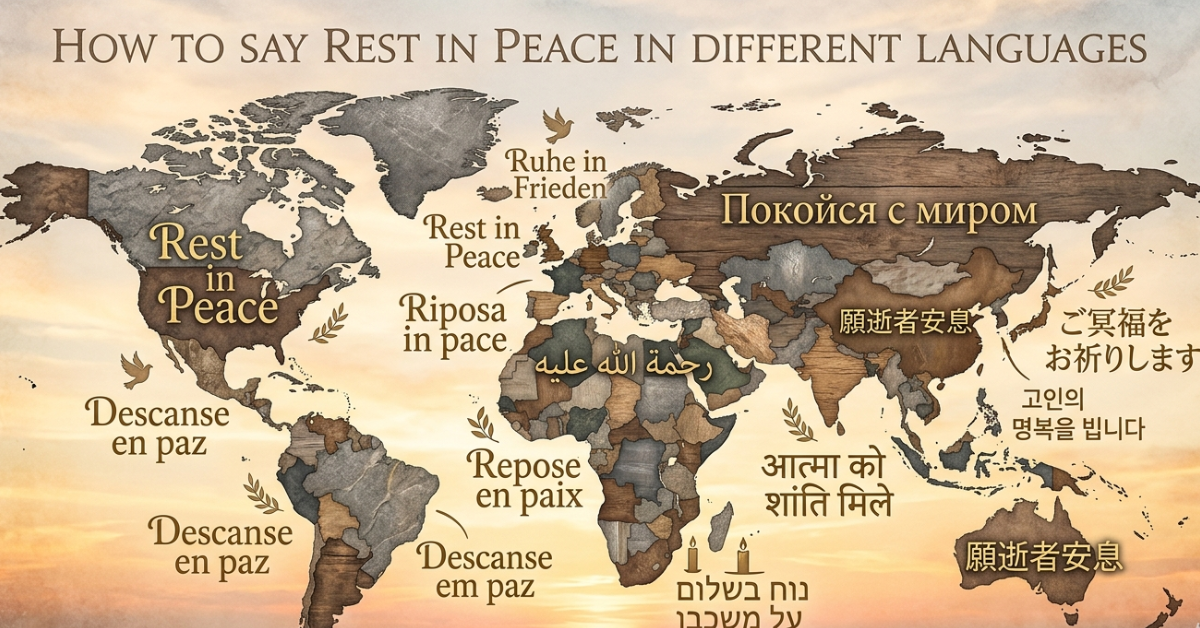
If you’ve ever wondered how people express condolences across languages, the phrase “rest in peace” is one of the most universal. It is often used in messages, obituaries, and memorials to show respect for someone who has passed away.
In this guide, we’ll explore its meaning, cultural importance, and how it translates into different languages—especially focusing on Spanish and Italian expressions used in real-life communication.
What Does Rest in Peace Mean?
“Rest in peace” is a traditional expression used to wish eternal peace for someone who has died. It is commonly shortened to RIP, especially in digital communication.
Common meanings include:
- A respectful farewell to the deceased
- A wish for peace and calm in the afterlife
- A way to express sympathy and emotional support
Despite its simplicity, it carries deep emotional and cultural value across the world.
How to Say Rest in Peace in Spanish
In Spanish-speaking cultures, the most common translation is:
“Descansa en paz”
This phrase is widely understood in Spain and Latin America and is used in both spoken and written form.
Examples of usage:
- “Descansa en paz, amigo querido”
- “Que descanses en paz” (a softer, more emotional variation)
In everyday communication, this phrase is often used in condolence messages and social media tributes. It reflects warmth, respect, and emotional closeness.
How to Say Rest in Peace in Italian
In Italian, the equivalent expression is:
“Riposa in pace”
This is the standard phrase used in funerals, memorial cards, and formal condolences.
Examples of usage:
- “Riposa in pace, nonno caro”
- “Che tu possa riposare in pace” (a more formal and heartfelt version)
Italian expressions tend to sound poetic and emotional, making them especially meaningful in written tributes.
Why This Phrase Matters Across Cultures
Expressions like “rest in peace” are more than just words—they are emotional bridges between people.
They help to:
- Show respect for the deceased
- Comfort grieving families
- Express shared human emotions
Across cultures, similar phrases exist because grief is a universal experience.
Alternative Ways to Express Condolences
If you want to avoid repetition, here are some meaningful alternatives:
- “Rest peacefully”
- “Forever in our hearts”
- “Gone but not forgotten”
- “May their soul find peace”
These variations are often used in messages, captions, and memorial posts.
FAQs
1. What is the most common way to say rest in peace in Spanish?
The most common expression is “Descansa en paz.”
2. What is the Italian version of rest in peace?
It is “Riposa in pace.”
3. Is RIP still appropriate today?
Yes, “RIP” is widely used online, especially in informal settings.
4. Can I use different variations of this phrase?
Yes, many cultures have alternative expressions with similar meanings.
5. Why is this phrase used globally?
Because it expresses respect, sympathy, and remembrance in a simple way.
Conclusion
Understanding how people express condolences helps us communicate more respectfully across cultures. Whether it’s Spanish “Descansa en paz” or Italian “Riposa in pace,” the meaning remains universal—peace, remembrance, and respect.
Instead of overusing one phrase, learning its variations helps you express emotions more naturally and meaningfully in different situations.
Author

linguaezone.com@gmail.com
Related Posts

Kill Two Birds With One Stone Alternative: 50 Better Options
- 0
- 1,569 word
Have you ever paused before saying “kill two birds with one stone” because it sounded too violent or simply didn’t fit the...
Read out all
Happy Sabbath Meaning: A Complete Guide to Its Significance
- 0
- 1,632 word
Have you ever received the message “Happy Sabbath” and wondered what it truly means? Is it simply another way of saying “have...
Read out all
I’m So Proud of You in Other Words: 120+ Heartfelt Alternatives
- 0
- 1,562 word
Have you ever wanted to tell someone you’re proud of them but felt like saying “I’m so proud of you” sounded repetitive?...
Read out all
How Do You Spell Happy Anniversary? Correct Spelling Guide
- 0
- 1,221 word
Have you ever paused before writing an anniversary card and wondered, “How do you spell happy anniversary?” You’re not alone. Whether you’re...
Read out all
Waiting for Your Response Email: Best Examples & Tips
- 0
- 1,483 word
Have you ever sent an important email and found yourself wondering whether you should follow up or simply wait? Whether you’re communicating...
Read out all
Great Asset to the Team: Meaning, Examples & Tips
- 0
- 1,494 word
Have you ever wanted to compliment a coworker but struggled to find words that sound professional and sincere? One of the most...
Read out all