
- 0
- 1,816 word
I’m Patient: What Does It Really Mean?
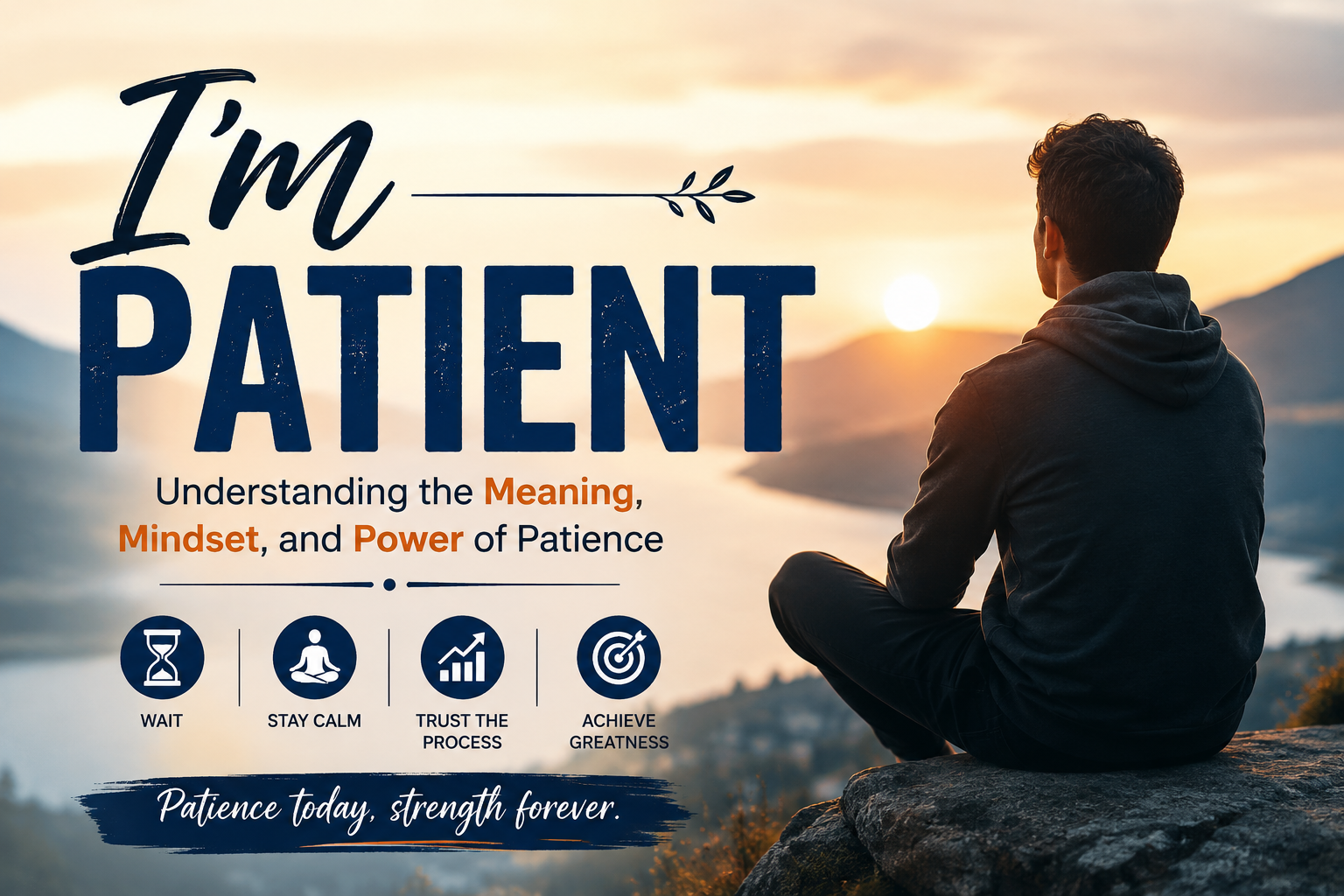
Have you ever found yourself waiting for something important and realized that getting frustrated will not make it happen any faster? That is where the simple statement “I’m patient” carries more meaning than it first appears to. Being patient is not simply about waiting quietly. It is the ability to remain calm, thoughtful, and emotionally balanced while something takes time.
When someone says, “I’m patient,” they are usually describing a personal quality. A patient person can deal with delays, uncertainty, mistakes, and difficult situations without immediately reacting with anger or frustration. This does not mean the person never becomes annoyed. Instead, patience means having enough self-control to respond sensibly even when circumstances are inconvenient.
Patience is also closely connected with maturity. Life rarely follows the exact schedule we want. People make mistakes. Plans change. Progress can be slow. Opportunities may take longer to appear than expected. A person who understands this can handle uncertainty better because they recognize that some things simply require time.
The phrase “I’m patient” can therefore describe both an attitude and a choice. You may naturally have a calm personality, but patience can also be developed through experience. Every time you choose to pause instead of reacting immediately, you strengthen your ability to handle future challenges.
Why Patience Is an Important Personal Quality
Patience is valuable because it changes the way we respond to everyday problems. Imagine waiting in a long line, dealing with a slow internet connection, learning a difficult skill, or working with someone who needs extra time to understand something. An impatient reaction can make an ordinary situation much more stressful. A patient response can keep the same situation manageable.
Another reason patience matters is that many worthwhile achievements take time. Learning a language, building a career, improving relationships, developing a business, or becoming better at a sport does not usually happen overnight. If someone expects immediate results, they may give up before their effort has had enough time to produce meaningful progress.
Patience also gives people space to think. When emotions are running high, it is easy to say something unnecessarily harsh or make a decision that creates a bigger problem. Taking a moment before responding can make a significant difference. A patient person often has the advantage of being able to consider the situation rather than simply reacting to it.
Most importantly, patience can make life feel less rushed. Modern life encourages people to expect instant answers, instant messages, instant entertainment, and instant results. While technology has made many things faster, human development still takes time. Understanding this can make it easier to accept delays without feeling that something has gone wrong.
I’m Patient, But That Does Not Mean I Accept Everything
There is an important difference between patience and passivity. Saying “I’m patient” does not mean that you should tolerate every form of disrespect, poor treatment, or unnecessary delay. Patience should not require a person to ignore their boundaries or allow others to take advantage of their kindness.
A patient person can still speak up. For example, if someone repeatedly arrives late without explanation, you can calmly tell them that their behavior is affecting your plans. You do not have to become aggressive to communicate your expectations. In fact, patience can help you communicate more effectively because you are less likely to let anger control your words.
Patience also does not mean waiting forever. Sometimes a situation requires action. If you have been waiting for a response, you can send a polite follow-up message. If a project is not progressing, you can discuss the problem with the people involved. Being patient means allowing reasonable time for things to develop while still recognizing when action is necessary.
This balance is important because patience should be paired with self-respect. A healthy mindset sounds more like, “I can give this situation time, but I also know when I need to act.” That approach is much more practical than believing that patience means doing nothing.
How to Become More Patient in Everyday Life
The good news is that patience is not something reserved for naturally calm people. It can be practiced. One of the easiest ways to begin is to notice your reaction when something does not happen according to your expectations. Instead of immediately asking, “Why is this taking so long?” try asking, “Can I control this situation?”
That small change in thinking can reduce unnecessary frustration. If you cannot control the delay, worrying about it will not make the process faster. You can use the waiting period to do something useful, relax, organize your thoughts, or simply accept that the situation requires more time.
Another useful habit is creating a pause between emotion and action. When you feel irritated, take a few slow breaths before responding. This does not need to become a complicated meditation routine. Even a short pause can give your brain enough time to move away from an emotional reaction and toward a more reasonable response.
It is also helpful to set realistic expectations. Sometimes impatience comes from expecting everything to happen immediately. If you understand that certain goals require weeks, months, or even years, temporary setbacks become easier to handle. Progress does not always look dramatic. Small improvements can eventually create major results.
The Role of Patience in Relationships
Relationships are one of the clearest areas where patience matters. Friends, family members, partners, and coworkers all have different personalities, habits, communication styles, and emotional needs. Expecting everyone to think and behave exactly as you do can create unnecessary conflict.
A patient person understands that communication sometimes requires repetition. Someone may need time to explain what they mean. Another person may need space before discussing an emotional issue. Giving people that space can prevent arguments from becoming worse.
Patience is especially valuable during disagreements. When two people are upset, rushing to prove who is right can make the situation more complicated. A patient approach involves listening, considering the other person’s perspective, and responding after the initial emotions have settled.
However, patience in relationships should work both ways. Healthy relationships involve mutual respect. You can be understanding when someone makes an occasional mistake while still expecting honesty, consideration, and appropriate behavior. Patience becomes meaningful when it exists alongside communication and boundaries.
Patience at Work and in Professional Life
The workplace provides countless opportunities to practice patience. Projects can change direction. Meetings can run longer than expected. Clients may ask repeated questions. Coworkers may make mistakes. Technical problems can appear at the worst possible moment. Losing your temper in these situations rarely improves the outcome.
Professional patience helps people remain focused when circumstances become stressful. Instead of immediately blaming someone, a patient employee may first identify what went wrong and determine what can be done next. This approach is usually more productive and can also improve teamwork.
Patience is particularly important when developing professional skills. Beginners often become frustrated because they compare their current abilities with those of experienced professionals. That comparison can create unrealistic expectations. Expertise usually comes from repeated practice, feedback, mistakes, and gradual improvement.
A patient professional understands that competence is built over time. They continue learning even when progress feels slow. This mindset can be especially useful for people starting a new career, learning technology, building a business, or taking on responsibilities for the first time.
Why Patience Can Improve Decision-Making
Good decisions often require time. When people feel pressured to make an immediate choice, they may focus on short-term emotions rather than long-term consequences. Patience creates room for reflection.
For example, imagine receiving an upsetting message. Your first instinct might be to reply immediately. However, if you wait and reread the message later, you may realize that your original reaction was stronger than necessary. Taking time can help you choose better words and avoid creating unnecessary conflict.
Patience is also useful when making financial, career, or personal decisions. Not every opportunity needs an immediate answer. Sometimes gathering more information can reveal details that were not obvious at first. A short delay can therefore protect you from an impulsive decision.
This does not mean every decision should take a long time. Some situations require quick action. The key is knowing when speed is useful and when reflection is more valuable. Patience gives you the ability to make that distinction instead of automatically reacting to pressure.
The Difference Between Patience and Giving Up
At first glance, patience and giving up may seem connected because both can involve stepping back. In reality, they are very different. Patience involves continuing to care about an outcome while accepting that progress may take time. Giving up means deciding that the effort is no longer worth continuing.
Suppose you are learning a difficult skill. After a few unsuccessful attempts, you might feel tempted to quit. Patience allows you to recognize that failure is part of learning. You can adjust your approach, practice again, and give yourself time to improve.
At the same time, patience does not require endless persistence in every situation. Sometimes a goal is no longer realistic or appropriate. Recognizing that can be a sign of wisdom rather than failure. The important thing is to make the decision thoughtfully instead of quitting simply because progress is slower than expected.
A patient mindset therefore asks better questions. Instead of asking, “Why haven’t I succeeded yet?” you can ask, “What have I learned so far, and what should I change next?” That shift can turn frustration into useful information.
Simple Ways to Practice Patience Every Day
You do not need major life changes to become more patient. Start with ordinary situations. When you are waiting for an elevator, standing in a queue, sitting in traffic, or waiting for someone to respond to a message, notice your emotions instead of immediately fighting them.
You can also practice listening without interrupting. Many people believe they are patient listeners, but they are already preparing their response while another person is speaking. Giving someone your full attention encourages better communication and helps you understand their actual point.
Another practical method is to avoid making important decisions when you are extremely angry or stressed. Give yourself time to calm down whenever circumstances allow it. Your feelings are real, but you do not have to act on every feeling immediately.
Finally, remember that patience includes patience with yourself. People often expect themselves to improve instantly. When they make mistakes, they become their own harshest critics. Treating yourself with reasonable understanding can make it easier to remain patient with other people as well.
Final Thoughts on Saying “I’m Patient”
The statement “I’m patient” may sound simple, but patience is a powerful quality that affects almost every part of life. It helps people handle delays, manage emotions, communicate better, make thoughtful decisions, and continue working toward goals that take time.
Author

linguaezone.com@gmail.com
Related Posts
Do and Not: Understanding the Difference and Using Both Correctly
- 0
- 2,303 words
Introduction: Why “Do and Not” Matters in Everyday Communication Have you ever written a sentence and wondered whether you should use “do,”...
Read out all
Proscribed: Meaning, Definition, Examples, and Correct Usage
- 0
- 2,338 words
Introduction: What Does “Proscribed” Mean? Have you ever come across the word proscribed and wondered what it actually means? It is one...
Read out all
Imput: Meaning, Common Usage, and Why People Often Use It Instead of Input
- 0
- 1,592 word
What Does Imput Mean? Have you ever typed “imput” instead of “input” and wondered whether you made a mistake? You are certainly...
Read out all
Emaculate vs Demasculate: Understanding the Difference and Correct Usage
- 0
- 2,156 words
Introduction: Emaculate vs Demasculate Have you ever come across the words emasculate and demasculate and wondered whether they mean the same thing?...
Read out all
What Does LYK Mean in Text? Simple Guide
- 0
- 1,029 word
Ever received a message that says “LYK” and paused for a second? You are not alone. If you have been wondering what...
Read out all
Thank You for Your Prompt Response Meaning Explained
- 0
- 1,172 word
Have you ever received a quick reply and wanted to sound polite, professional, and appreciative in return? That is exactly where thank...
Read out all