
×
Rest in Peace Alternatives: Meaningful Phrases Explained
In

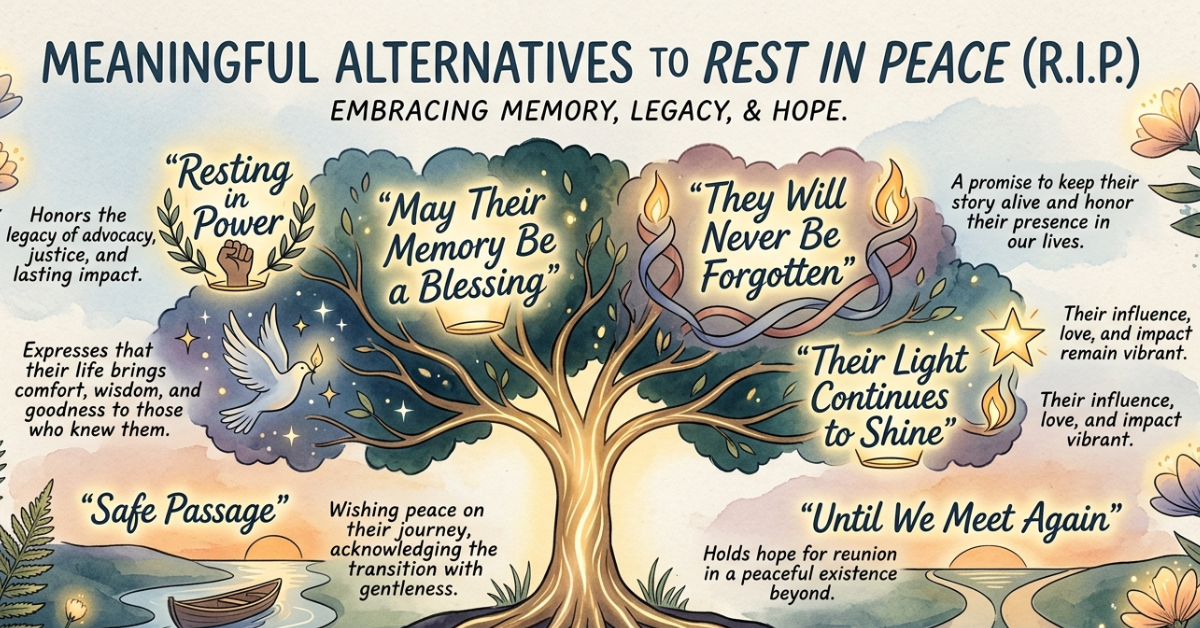
When we lose someone, finding the right words often feels impossible. One of the most commonly used phrases is “rest in peace,” but language is rich with emotion, culture, and nuance. That’s why many people search for other ways to say rest in peace—to express sympathy in a more personal, heartfelt, or culturally appropriate way.

In this guide, we’ll explore respectful alternatives, their meanings, and when to use them. Whether you’re writing a condolence message, a social media tribute, or a sympathy card, these phrases can help you communicate care and compassion in a more meaningful way.

Why People Look for Alternatives to “Rest in Peace”

The phrase “rest in peace” (often shortened as RIP) is traditional and widely understood. However, not everyone connects with it emotionally or culturally.

Here’s why people often search for other ways to say rest in peace:

  • It can feel too formal or repetitive
  • Some cultures prefer spiritual or religious variations
  • People want more personalized or emotional expressions
  • Social media tributes often need fresh wording

Language evolves, and expressing grief is deeply personal. That’s why alternatives matter.

Common and Respectful Ways to Say Rest in Peace

Below are widely used phrases that carry similar meaning but offer different tones and emotional depth.

1. “May they rest in eternal peace”

A more spiritual and extended version of RIP, often used in formal condolences.

2. “Gone but never forgotten”

This phrase focuses on memory and legacy rather than rest.

3. “Forever in our hearts”

A soft, emotional expression often used in tributes and memorial posts.

4. “May their soul find peace”

Common in religious and spiritual contexts.

5. “Rest peacefully”

A simpler, modern variation that feels gentle and natural.

6. “In loving memory”

Often used on memorial cards, gravestones, or tribute messages.

Religious and Spiritual Alternatives

Different faiths and beliefs influence how people express sympathy. Here are some respectful variations:

  • “May God grant them peace and mercy”
  • “May their soul be guided to heaven”
  • “In God’s care they rest”
  • “As-salamu alaykum in peace” (Islamic context when expressing peace upon the deceased)

These expressions are often chosen when people want to reflect spiritual hope and comfort.

Emotional and Modern Expressions

In recent years, especially on social media, more personal phrases have become popular.

Popular modern alternatives include:

  • “You will always be remembered”
  • “Your memory lives on”
  • “Taken too soon, never forgotten”
  • “Rest easy”
  • “Fly high”

These phrases feel less formal and more emotionally expressive, making them ideal for captions and posts.

How to Choose the Right Phrase

Choosing the right expression depends on context, relationship, and tone.

Here’s a simple guide:

  • Formal situations: “In loving memory,” “May they rest in eternal peace”
  • Personal messages: “Forever in our hearts,” “Gone but never forgotten”
  • Religious contexts: Faith-based prayers or blessings
  • Social media tributes: Short emotional phrases like “Rest easy” or “Fly high”

When using other ways to say rest in peace, always consider the emotional sensitivity of the situation.

Cultural Sensitivity Matters

Grief is expressed differently across cultures. Some communities prefer prayers, while others prefer simple statements of remembrance.

Being mindful ensures your message is respectful and appropriate. Avoid overly casual language in serious contexts, and always prioritize empathy over creativity.

Examples in Real Sentences

To help you use these phrases naturally, here are some examples:

  • “You will always be remembered, forever in our hearts.”
  • “May your soul find peace and comfort.”
  • “Gone but never forgotten, your legacy lives on.”
  • “Rest peacefully, you will be deeply missed.”

These examples show how other ways to say rest in peace can fit into real-life messages.

FAQs About Rest in Peace Alternatives

1. What is another way to say rest in peace?

Common alternatives include “forever in our hearts,” “gone but not forgotten,” and “may they rest peacefully.”

2. Is it okay to use RIP in messages?

Yes, RIP is widely accepted, but some people prefer more personalized or emotional expressions.

3. What is the most respectful alternative to rest in peace?

“In loving memory” and “may they rest in eternal peace” are considered very respectful and formal.

4. Can I use these phrases on social media?

Absolutely. Many modern expressions like “fly high” or “rest easy” are commonly used in online tributes.

5. Are religious phrases appropriate for everyone?

Only use religious expressions if you are aware of the person’s beliefs or if it is culturally appropriate.

Conclusion

Finding other ways to say rest in peace helps us express grief in a more personal and meaningful way. While “rest in peace” remains timeless, alternatives like “forever in our hearts,” “gone but never forgotten,” and “may their soul find peace” allow us to tailor our words to emotion, culture, and context.

At the end of the day, what matters most is sincerity. The right words don’t have to be perfect—they just need to come from the heart.

Leave a Reply

Your email address will not be published. Required fields are marked *

Author

britsx85@gmail.com

Related Posts

Aura vs Ora: Key Differences, Meaning & Easy Guide
In

Aura vs Ora: Key Differences, Meaning & Easy Guide

When people come across Aura vs Ora, it’s easy to get confused. These two words sound similar, but their meanings, usage, and...

Read out all
Arcade vs Arcane: Meaning, Differences & Uses Explained
In

Arcade vs Arcane: Meaning, Differences & Uses Explained

The confusion between Arcade vs Arcane is more common than you might think, especially because the words look and sound somewhat similar...

Read out all
Altar vs Alter: Meaning, Differences & Examples Explained
In

Altar vs Alter: Meaning, Differences & Examples Explained

The confusion between altar vs alter is more common than you might think. These two words sound exactly the same, but they...

Read out all
Aisle vs Isle: Meaning, Difference & Examples Explained
In

Aisle vs Isle: Meaning, Difference & Examples Explained

Ever found yourself stuck between two words Aisle vs Isle that look or sound similar but mean completely different things? That’s exactly...

Read out all
On the Other Hand Transition Words: Meaning & Usage Guide
In

On the Other Hand Transition Words: Meaning & Usage Guide

Writing becomes much clearer when ideas are connected smoothly, and that’s exactly where on the other hand transition words come in. These...

Read out all
Thank You As Always – Meaning, Usage & Examples
In

Thank You As Always – Meaning, Usage & Examples

In everyday communication, small phrases can carry a lot of meaning. One such expression is “thank you as always”, a polite and...

Read out all