
- 0
- 762 words
A lot of proxy headaches go back to one early decision nobody thought much about. Someone grabs a rotating residential plan because it sounds safer, points it at a dozen ad accounts, and spends the next week typing in SMS verification codes.
Or it goes the other way. A team buys five static IPs, aims a scraper at a big retailer and gets every one of them blocked before lunch.
Both setups are fine. They’re just built for different jobs, and the cost of mixing them up usually shows up as burned accounts, wasted bandwidth or a scraper that quietly returns half-empty results.
Quick Refresher on What You’re Actually Buying
Static proxies keep one IP for the whole rental, which is usually a month. Most “static residential” listings these days are ISP proxies, meaning addresses that belong to a regular broadband provider but sit on a server rack somewhere in Frankfurt or Ashburn.
The trick is in the registration. When a website runs the IP through something like MaxMind’s GeoIP2, it sees a consumer ISP rather than a hosting company, so the visitor gets treated more like someone at home. Datacenter ranges from AWS or Hetzner don’t get that benefit of the doubt.
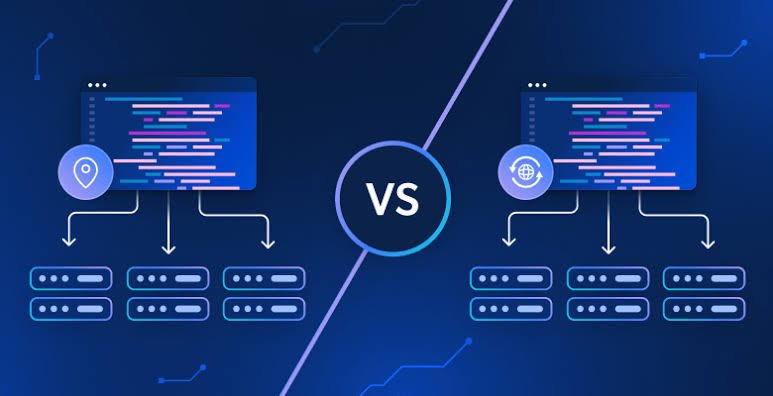
Rotating residential works the other way around. Traffic exits through real people’s devices, and the IP changes on every request or after a sticky window (usually 10 or 30 minutes). The isp proxies vs residential proxies difference mostly comes down to that: one fixed identity versus a huge pool of throwaway ones.
Logins, Accounts and Anything That Remembers You
Static IPs are the obvious pick here. Google Ads, Amazon Seller Central and the Shopify admin all log where each session comes from, and an account that hops from Ohio to Lisbon overnight is going to get a “confirm it’s you” screen. Maybe a suspension.
Give each account its own fixed address, keep the browser profile the same, and it just looks like somebody logging in from their kitchen table every morning. Boring is good here.
Speed’s a bonus. With no consumer router or patchy 4G hop in the chain, latency tends to be a fraction of what peer-based nodes manage, and that adds up when a script hits an API every few seconds.
Pricing is per IP per month, too. Forty accounts cost the same whether they push 2 GB or 200 GB, which keeps the finance team happy.
Scraping and Other High-Volume Work
Flip the job around and rotation wins. One IP sending 10,000 requests to a product search page will get throttled, doesn’t matter how clean the address is. Price monitoring, rank tracking and ad verification all hit this wall pretty fast.
A rotating pool splits that load across thousands of household IPs, a few requests each. There’s a quieter advantage as well: lots of home and mobile users already share public addresses through carrier-grade NAT, so sites can’t ban those ranges without also locking out paying customers.
The trade-offs aren’t small, though. Bandwidth is billed per GB, some nodes are just bad (a phone on one bar of signal in a basement, for example), and multi-step tasks break if the IP rotates mid-flow. Sticky sessions help, mostly.
The IPv4 Shortage Nobody Puts on the Pricing Page
Here’s the less obvious bit. IPv4 tops out at roughly 4.3 billion addresses, and ARIN, North America’s registry, gave out its last free block in September 2015.
It got bad enough that the IETF carved out 100.64.0.0/10 purely for ISPs to share among subscribers (that’s RFC 6598, if you want the dry details). Clean, ISP-registered IPs are a finite thing, and that’s a big reason static plans cost what they do.
Then there’s reputation. Anti-bot vendors score the autonomous system behind each IP, so if the previous renter of your block was spamming signup forms, you inherit that mess for months. A rotating pool mostly sidesteps this; a burned IP just cycles out.
Picking One (or Not)
Most teams that do this seriously end up running both. Static ISP IPs for the accounts, rotating residential for the crawling, and a firm rule that the two never get mixed up. It costs a bit more to run, but it saves a lot of debugging.
Where it’s all heading is harder to call. IPv6 is spreading, slowly, and anti-bot tools keep leaning on behavioral signals like request timing and mouse movement. Give it a couple of years and the type of IP might matter less than how sloppy the traffic coming from it looks.
Author

gp.hdbacklinks@gmail.com
Related Posts

Cesars Concrete: Building Strength and Trust, One Project at a Time
- 0
- 922 words
When it comes to building something that lasts, the foundation matters more than anything else. A home, a driveway, a commercial space—all...
Read out all
Isee Hair Crochet Hair Extensions: Easy Styling for a Natural Look
- 0
- 1,451 word
Changing your hairstyle can be fun, but spending hours in front of the mirror to get the look you want? Not so...
Read out all
SEO vs PPC: Which Is Better for Your Business?
- 0
- 3,742 words
SEO vs PPC is a common choice for businesses that want more website traffic, leads, and sales. Search engine optimization (SEO) helps...
Read out all
Harouxinn: Exploring Its Features, Benefits, and Growing Online Interest
- 0
- 1,470 word
Introduction to Harouxinn The internet is constantly introducing new names, platforms, and digital experiences that attract the attention of curious users. Harouxinn...
Read out all
Building a More Flexible Material Handling Strategy With Reliable Equipment Access
- 0
- 2,306 words
Material handling plays an important role in warehouses, distribution centers, manufacturing facilities, construction operations, logistics environments, and many other workplaces where products...
Read out all
Why a Hot Water Pressure Washer Degreases What Pressure Cannot
- 0
- 810 words
Why a Hot Water Pressure Washer Degreases What Pressure Cannot Pressure washers are sold by pressure, and on most surfaces pressure is...
Read out all